1. Home
  2. Mobile
  3. Legacy Archives

Norwegian fox snatches smartphone, sends text message

Add as a preferred source on Google
Image used with permission by copyright holder

In Norway, one unsuspecting neighbor snagged a teenager’s phone before dashing off into the woods to send a text message. The catch: this thief wasn’t human.

A fox reportedly stole Lars Andreas Bjercke’s cell phone from his back yard, Discovery News reports. The 16-year-old Norwegian teenager had downloaded an app that allowed his smartphone to emit rabbit noises, which turned out to be surprisingly effective. After playing the sound effects in his back yard, a local fox began to circle the yard over the course of several nights.

Recommended Videos

Bjercke and his friend Sigurd Grønvik Bachke decided to put this app to the test and see what they could capture on video. Bachke filmed as Bjercke placed his smartphone on the ground just before a fox came over to investigate the noise. After the canine crook snatched the device, Bachke tried calling the cell phone to track its location. The most interesting part: the fox allegedly answered. Bachke told Verdens Gang, a local Norwegian newspaper, that he heard a crunching sound on the other end, as if the fox had been fiddling with the phone.

But the fox appeared to find more uses for the smartphone than just answering basic calls. The tech-savvy creature also reportedly sent a text message to one of Bjercke’s pals. A friend contacted him through Facebook to tell him that she’d received a weird text message from his phone.

The phone’s whereabouts are still unknown, but Bjercke has since turned off the lost device. He told Verdens Gang reporters that he hopes to recover the stolen phone at some point, but until then it will remain in the paws of his four-legged friend.

See the video below to see the fox investigating what was initially thought to be its prey. 

Lisa Eadicicco
Former Digital Trends Contributor
Lisa Eadicicco is a technology and video game reporter based in New York City. She graduated from Purchase College in 2012…
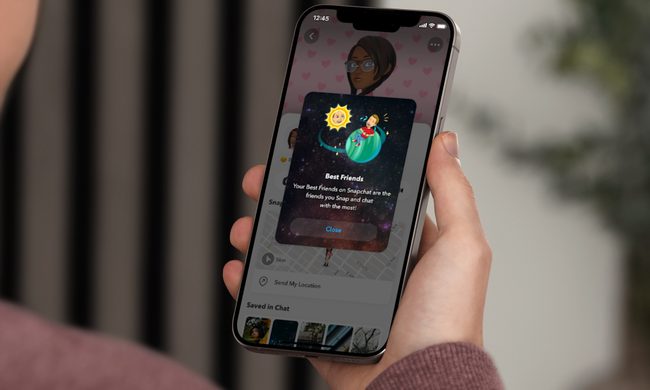
Snapchat Planets: What’s the order, and what do they mean?
Snapchat Planets turns your best friends list into a solar system, and yes, your orbit says a lot
Snapchat Planets being shown on the Snapchat app on iPhone.

Snapchat is already packed with little symbols that can be weirdly hard to decode. You have streaks, emojis, badges, scores, Best Friends, and if you use Snapchat Plus, a tiny solar system that shows where you sit in someone’s closest-friends list.

The feature is called Friend Solar System, though most people just call it Snapchat Planets. It takes your position in a friend’s Snapchat orbit and turns it into a planet. From Mercury to Neptune, these celestial bodies signify how close a person is to you.

Read more
How to use WhatsApp Web
We'll show you how to use WhatsApp on your desktop or laptop
WhatsApp Web

As one of the most popular messaging services, you’ve already heard of WhatsApp. From its humble beginnings in 2009—two years before Apple introduced iMessage—to its acquisition by Facebook (now Meta) in 2014, WhatsApp has become the dominant messaging platform around the globe.

In recent years, it's grown even more potent with new features like video messages, self-destructing voice messages, the ability to edit sent messages, and more. We even finally got an WhatsApp iPad app in May 2025.

Read more
What is WhatsApp? How to use the app, tips, tricks, and more
From setting it up to mastering hidden features, here is your complete guide to WhatsApp.
Electronics, Phone, Mobile Phone

There's no shortage of messaging apps out there. The past decade has given us more options than we know what to do with, largely because smartphones demanded something better than plain old SMS.

Both the App Store and the Play Store are packed with apps that promise to revolutionize the way we communicate. Most of them didn't make it. The truth is, a messaging app is only as good as the number of people using it, and most apps never cross that threshold.

Read more