Did you think the next hot Android phone you’d be clamoring to buy would be made by Samsung? How about Sony, or HTC? Any of these manufacturers would be a solid bet, and their future hardware is sure to be highly desirable. However, we’re talking about the next white hot phone, one which moves the game forward and becomes a genre phenomenon. Judging by recent performance and hardware, and some well-timed comprehensive leaks, we think it’s going to come from LG.
Yes, you read that right: LG. Over the past year, the manufacturer has slowly left behind its apparent desire to be a less appealing version of Samsung, and emerged as not only a maker of fine smartphones, but also one which isn’t afraid to try out new things. Here’s the important distinction between it and throw-it-against-the-wall-and-see-what-sticks Samsung: The ideas are innovative, well thought out and effectively executed.
Now, LG’s not faultless, but it has produced three standout phones in the past year, and all are quite different from each other. They’re not variations on an existing theme, they don’t try to capitalize on an existing success (mainly because LG doesn’t really have one to latch onto), so they can’t be viewed as shameless cash-ins or half-baked reactionary concepts. It’s the mark of a mature company thinking about how it can impress jaded buyers, and it makes LG really exciting to watch.
 The Nexus 4 changed everything at LG

Just twelve months ago, LG was taking the Samsung approach of filling its phones with crap software nobody wanted to use. Then it released the Nexus 4, a clear turning point for the company. Perhaps not financially, but something clicked inside the company’s headquarters. While the price made it really attractive, we shouldn’t forget the Nexus 4 is a damn fine looking smartphone with a very respectable spec sheet. It’s not pretentious, there’s only a small amount of look-at-me flash about it, and thanks to stock Android Jelly Bean, its geeky credentials were through the roof. If you’d never taken much notice of LG before – and honestly, there was little reason to – the Nexus 4 was a revelation.
The surprising part is, the Nexus 4 was based on the Optimus G, a phone so painfully generic, it could get lost in a crowd of one. It wasn’t LG’s first faceless phone either: Besides their specs, both the Optimus 2X and Optimus 4X were terribly ordinary in every other way too. The big-screen Optimus G Pro gave the world little more than a way to use both the front and rear cameras at the same time. Oh, and some cheap buttons and a creaky chassis.
Not that it mattered, as by this time the Nexus 4 was the darling of the tech world, and any mobile fan worth their salt was recommending it to their friends and family.
Goodbye Optimus, hello G2
LG realized this was the ideal time for a reinvention, and it’s amazing what a simple re-brand can do. LG announced it would be dropping the Optimus brand name from its top-end hardware, but would continue using the name on its low to mid-range phones. Instead, LG would use the letter G to separate its expensive hardware from the budget models, and the new name made its debut with the LG G2.
 Haven’t tried the LG G2 out? You really should. We gave it an exceptional 4.5 out of five in our review, an Editor’s Choice award, and called it, “One of the best phones we’ve ever used.” High praise indeed, and it’s justified. The Snapdragon 800 – the G2 was the first phone to be announced with Qualcomm’s fastest chip inside – absolutely flies, and the 1080p, 5.2-inch screen is deliciously bright and colorful.
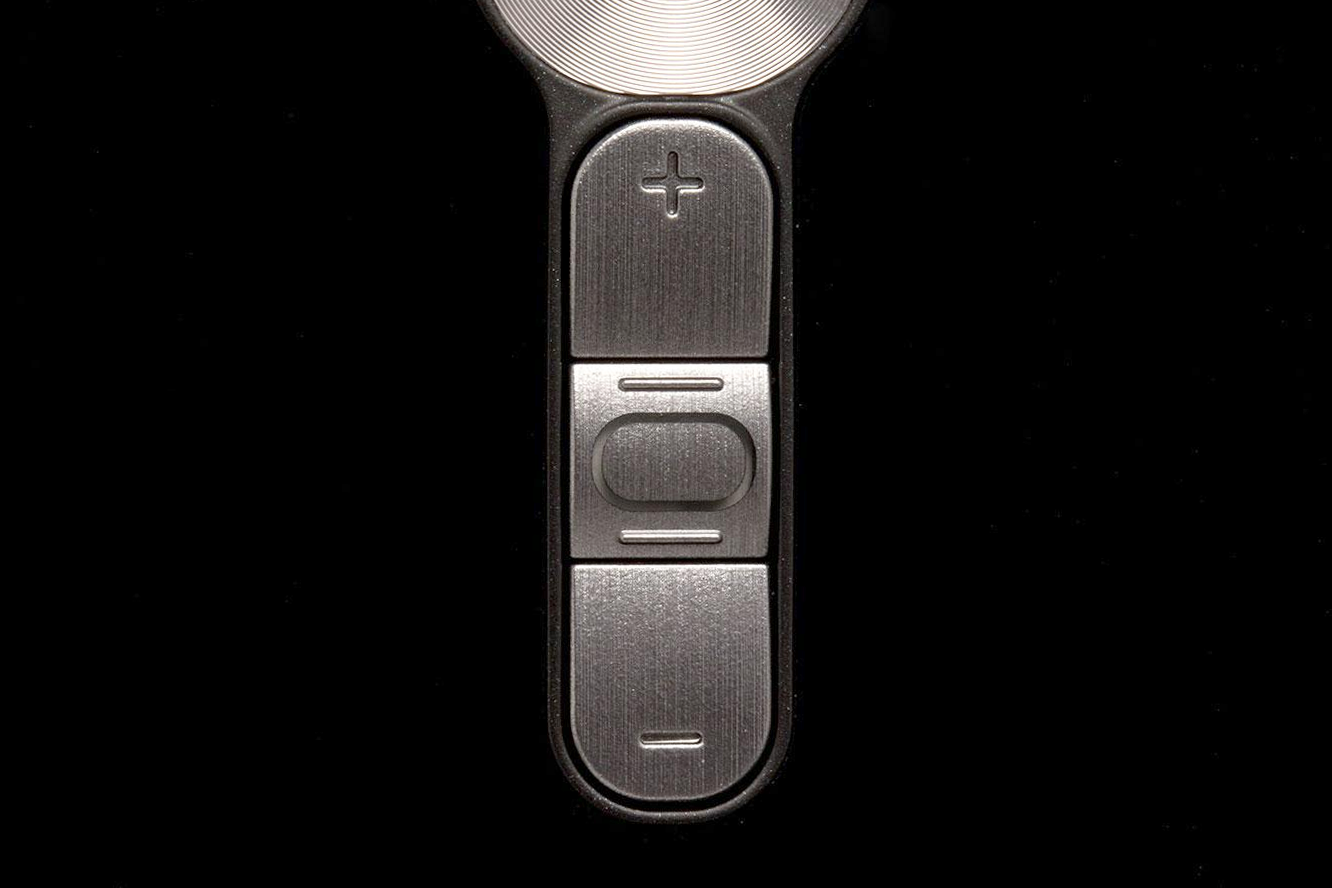
The G2’s party piece, those unique rear-mounted buttons, are a complete surprise. Not only do they have a beautifully tactile action, but they also work in the way LG intended. By this I mean, they actually make using the phone a new, and most of the time, better experience. It also allows the screen’s bezel to be shrunk down to almost nothing. The chassis doesn’t creak like the G Pro, either. The LG G2 could have been a brave purchasing decision against than the safe Galaxy S4, but for once, it would have paid off.
Flexible screens, batteries, and Quad HD resolutions
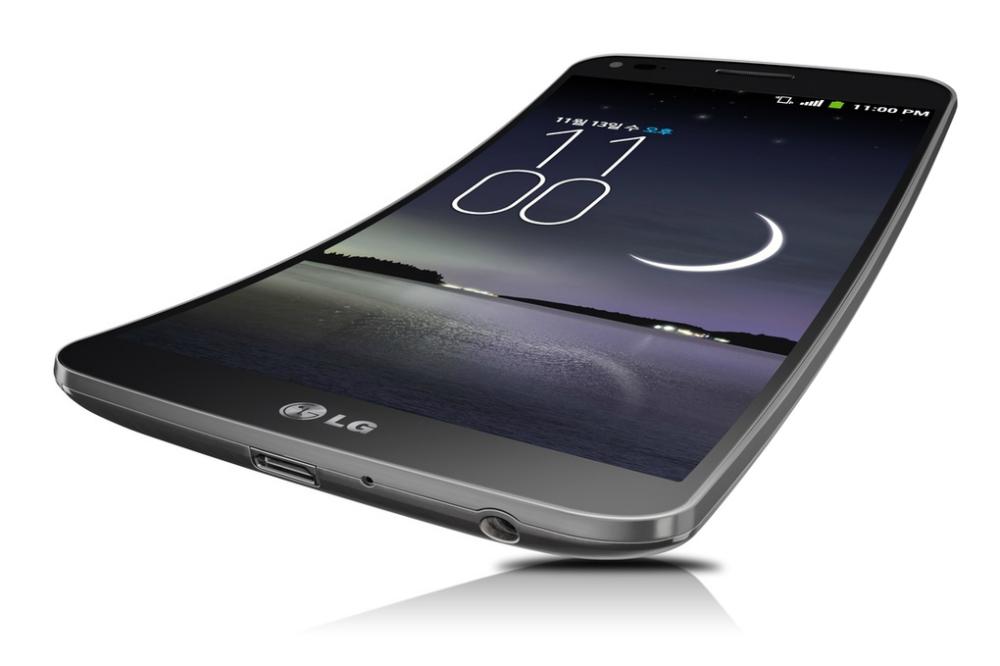
So, the Nexus 4 kickstarted a change at LG, which then gave us the LG G2, one of the most interesting smartphones to be announced this year, alongside the Oppo N1. To prove the G2 wasn’t a fluke, LG has revealed the G Flex, its first smartphone with a flexible screen. Samsung may have got there first, but the Galaxy Round is little more than an oddly shaped Galaxy Note 3.
The G Flex’s super-durable screen is curved the right way – to the shape of your face – which LG says improves audio quality while on calls, and video performance when watching a movie. We won’t be able to confirm either until we can test it, but they sound realistic claims. The difficult-to-break screen isn’t the only innovation here, either. The G Flex’s rear panel is made from an elastic material, which is supposed to absorb scratches over time, keeping the phone looking factory fresh.
Inside it’s clever too, as the 3,500mAh battery is one of LG Chem’s new stepped cells, which uses space inside a mobile phone more effectively, plus it’s more energy efficient. The same design was used in the LG G2, and we found its 3,000mAh battery had no problem lasting a full day. The G Flex has a 6-inch display, but the resolution is lower at 720p, so it should balance out to something very similar.
 LG’s marketing department has been sending out attention-grabbing press releases about its upcoming technical innovations, giving us a glimpse of what’s to come in 2014. Twisty, turny batteries are one – ideal for wearable tech – and super high-resolution, 1440p Quad HD touchscreens are another. These, based on the evolutionary jump between the Nexus 4, the G2, and the G Flex, make us very excited about LG’s future hardware.
Most improved manufacturer of the year?
Think we’re over-exaggerating LG’s potential here? When was the last time a Samsung or HTC phone could be discussed in the same way? The Galaxy S4 and the Galaxy Note 3 are fine incremental updates, but there’s nothing unexpected in either. When the Galaxy S4 was announced, we mostly discussed the pointless software installed and the badly-pitched launch event, because the phone was business as usual.
An LG device isn’t some smartphone utopia though; its proprietary software is still way too complicated and its UIs are over-designed. Also, the G2 may look much better than previous examples, but a premium Sony-style feel still eludes the Korean firm, as does the dedicated fandom of Apple.
Even with these shortcomings, LG is nearing the crest of a wave. The momentum is there, making its next release is crucial. What’s really exciting is we know LG’s next major release is almost certainly going to be the Nexus 5, a phone which will have to try astonishingly hard to fail. If it’s as good as we hope, then LG’s got the award for “Most improved smartphone manufacturer of the year” in the bag. As someone who never much cared for LG’s hardware, it’s a very pleasant surprise to hear myself saying, “Wow, I can’t wait to see what LG’s got planned for us next.”