  1. Home
  2. Mobile
  3. Legacy Archives

MetroPCS shareholders approve merger with T-Mobile

Add as a preferred source on Google
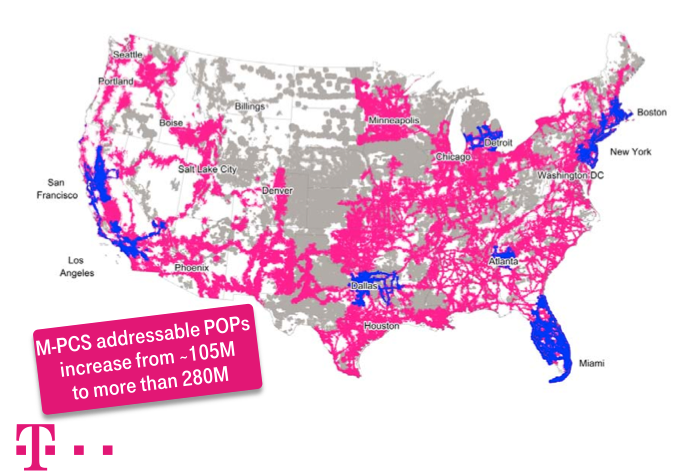
T-Mobile + MetroPCS coverage (plus roaming)
Image used with permission by copyright holder

We’ve all heard the rumors, but it looks like it’s finally official: T-Mobile will merge with MetroPCS.

Shareholders from MetroPCS have approved the merger with T-Mobile’s network after its parent company, Deutsche Telekom, decided to “sweeten the deal” with a lower interest rate for a proposed loan, according to Reuters. It was only a matter of time after the government gave the merger a thumbs up. We were only waiting for the shareholders to get on board with it and now that they have, the completion date is thought to be May 1.

Recommended Videos

“We voted for it because we were happy to see that Deutsche Telekom realized the value contribution MetroPCS made to the combined companies,” Roy Behren, a co-manager of the $4.7 billion Merger Fund told Bloomberg. “We look forward to having another strong competitor in the wireless industry.”

The deal would see MetroPCS subscribers, numbering more than 9 million, transferring to T-Mobile’s ever-growing network. But it isn’t just the added subscriptions that work in T-Mobile’s favor, MetroPCS’ wireless technology will also allow T-Mobile to further improve and expand its LTE network.

With the added speed and coverage, the network will be able to compete with the bigger carriers like Verizon and AT&T. T-Mobile needs all the help it can get to achieve the rather lofty goals of LTE coverage for 100 million people by mid-year and 200 million by the end of 2013. T-Mobile was losing customers pretty steadily before now, with 13 percent moving to other networks between 2009 and 2012 because the carrier had slower data speeds and no iPhone in sight.

But now it seems like everything’s coming up T-Mobile with this news following the carrier’s much-applauded announcement of no-contract cellular plans – basically allowing customers to pay off the cost of a new phone over time rather than enforcing a set contract. And, of course, the added availability of the iPhone has helped T-Mobile compete in the market.

Andrew Kalinchuk
Andrew covers news and opinions pertaining to smartphones, tablets, and all else mobile for Digital Trends. He recently…
Snapchat Planets: What’s the order, and what do they mean?
Snapchat Planets turns your best friends list into a solar system, and yes, your orbit says a lot
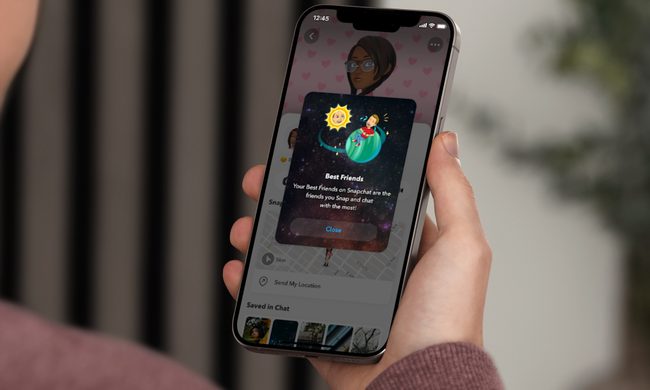
Snapchat Planets being shown on the Snapchat app on iPhone.

Snapchat is already packed with little symbols that can be weirdly hard to decode. You have streaks, emojis, badges, scores, Best Friends, and if you use Snapchat Plus, a tiny solar system that shows where you sit in someone’s closest-friends list.

The feature is called Friend Solar System, though most people just call it Snapchat Planets. It takes your position in a friend’s Snapchat orbit and turns it into a planet. From Mercury to Neptune, these celestial bodies signify how close a person is to you.

Read more
How to use WhatsApp Web
We'll show you how to use WhatsApp on your desktop or laptop
WhatsApp Web

As one of the most popular messaging services, you’ve already heard of WhatsApp. From its humble beginnings in 2009—two years before Apple introduced iMessage—to its acquisition by Facebook (now Meta) in 2014, WhatsApp has become the dominant messaging platform around the globe.

In recent years, it's grown even more potent with new features like video messages, self-destructing voice messages, the ability to edit sent messages, and more. We even finally got an WhatsApp iPad app in May 2025.

Read more
What is WhatsApp? How to use the app, tips, tricks, and more
From setting it up to mastering hidden features, here is your complete guide to WhatsApp.
Electronics, Phone, Mobile Phone

There's no shortage of messaging apps out there. The past decade has given us more options than we know what to do with, largely because smartphones demanded something better than plain old SMS.

Both the App Store and the Play Store are packed with apps that promise to revolutionize the way we communicate. Most of them didn't make it. The truth is, a messaging app is only as good as the number of people using it, and most apps never cross that threshold.

Read more