1. Home
  2. Mobile
  3. Legacy Archives

Goodbye Symbian: Nokia confirms that its 808 PureView smartphone will mark the end of the OS

Add as a preferred source on Google
Nokia Office Logo
Image used with permission by copyright holder

While many suspected that Nokia would completely eradicate the Symbian software from its mobile devices, it looks like the manufacturer has finally pulled the trigger. On Thursday the company confirmed that its 808 PureView smartphone, which launched last year, would be its last Symbian-based handset.

“During our transition to Windows Phone through 2012, we continued to ship devices based on Symbian,” the company wrote in its earnings announcement. “The Nokia 808 PureView, a device which showcases our imaging capabilities and which came to market in mid-2012, was the last Symbian device from Nokia.”

Recommended Videos

Rumors about the disappearance of Symbian are nothing new for Nokia. CEO Stephen Elop announced a while ago that the company would begin selling less Symbian devices, and now the handset maker is officially true to its word. This may come as no surprise, considering there was a significant discrepancy in the number of Symbian-based phones vs. Windows Phone-based devices sold in 2012. According to the company’s earnings report, Nokia pushed out 2.2 million Symbian handsets in Q4 2012, while it managed to sell 4.4 million Windows Phone Lumia smartphones during the same time period.

Symbian was one of the world’s leading smartphone platforms until it was dethroned by Android in 2011. The mobile medium has been in existence since 1998, when it was initially intended to act as a common smartphone platform to be shared between Nokia, Ericsson, Motorola, and Psion.

But, as the smartphone industry began to evolve and Apple and Google created their own successful mobile operating systems, Nokia acquired the lion’s share of Symbian. To further compete with the likes of Android, Nokia also decided to make Symbian an open-source mobile platform.

However, in recent times, Symbian has struggled to keep up with the over-saturated mobile market. Last quarter Symbian only accounted for 2.6 percent of smartphone shipments, paling in comparison to Android’s 72 percent of the market share.

Nokia executives noted that this would be the “last significant quarter for Symbian,” according to TechCrunch, as the company has been putting less effort toward its Symbian handsets. It seems that we can expect Nokia to be hooked on Windows Phone for the foreseeable future.

Lisa Eadicicco
Former Digital Trends Contributor
Lisa Eadicicco is a technology and video game reporter based in New York City. She graduated from Purchase College in 2012…
Snapchat Planets: What’s the order, and what do they mean?
Snapchat Planets turns your best friends list into a solar system, and yes, your orbit says a lot
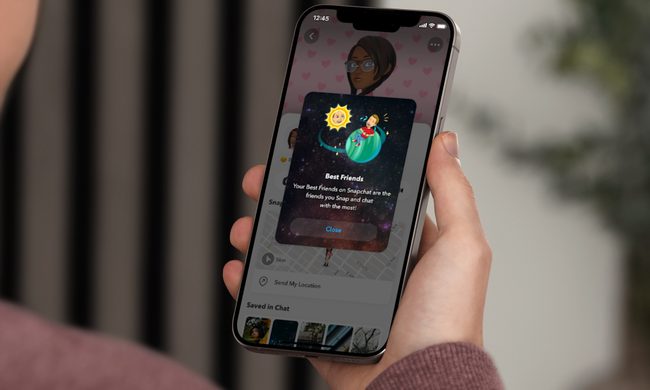
Snapchat Planets being shown on the Snapchat app on iPhone.

Snapchat is already packed with little symbols that can be weirdly hard to decode. You have streaks, emojis, badges, scores, Best Friends, and if you use Snapchat Plus, a tiny solar system that shows where you sit in someone’s closest-friends list.

The feature is called Friend Solar System, though most people just call it Snapchat Planets. It takes your position in a friend’s Snapchat orbit and turns it into a planet. From Mercury to Neptune, these celestial bodies signify how close a person is to you.

Read more
How to use WhatsApp Web
We'll show you how to use WhatsApp on your desktop or laptop
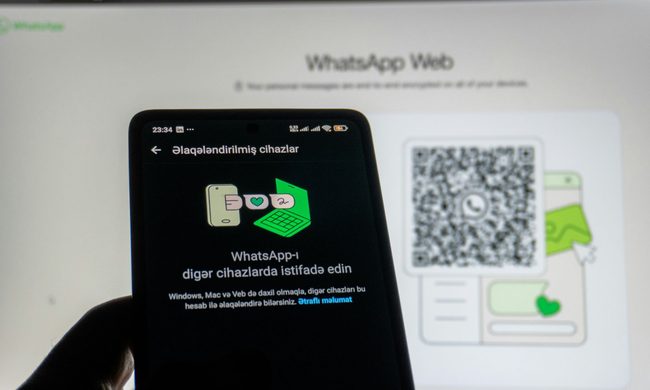
WhatsApp Web

As one of the most popular messaging services, you’ve already heard of WhatsApp. From its humble beginnings in 2009—two years before Apple introduced iMessage—to its acquisition by Facebook (now Meta) in 2014, WhatsApp has become the dominant messaging platform around the globe.

In recent years, it's grown even more potent with new features like video messages, self-destructing voice messages, the ability to edit sent messages, and more. We even finally got an WhatsApp iPad app in May 2025.

Read more
What is WhatsApp? How to use the app, tips, tricks, and more
From setting it up to mastering hidden features, here is your complete guide to WhatsApp.
Electronics, Phone, Mobile Phone

There's no shortage of messaging apps out there. The past decade has given us more options than we know what to do with, largely because smartphones demanded something better than plain old SMS.

Both the App Store and the Play Store are packed with apps that promise to revolutionize the way we communicate. Most of them didn't make it. The truth is, a messaging app is only as good as the number of people using it, and most apps never cross that threshold.

Read more