  1. Home
  2. Mobile
  3. Legacy Archives

Samsung’s anti-fanboy ads are killing Apple’s iPhone 4S buzz

Add as a preferred source on Google
Samsung-ad
Image used with permission by copyright holder

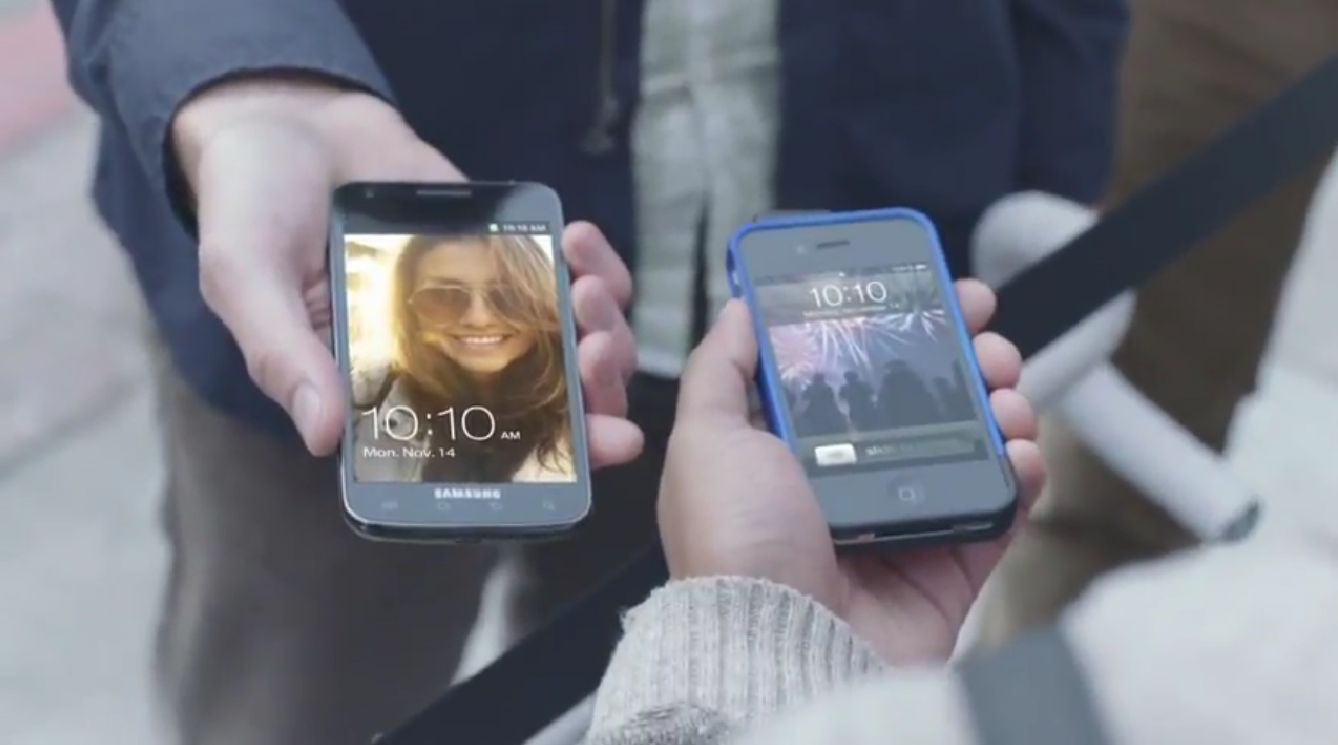
Samsung’s Galaxy S II ads, which take direct aim at Apple’s iPhone 4S and the people who adore it, are doing their job, reports Philip Elmer-Dewitt in Fortune. According to a study by market research firm YouGov, consumer perception of the iPhone 4S has fallen as a result of the Samsung ads. Conversely, positive buzz surrounding Samsung has risen. The two brands are now about equal, though Samsung may have a slight edge.

“Samsung has just edged past the iPhone in consumer perception in the US (adults 18+), likely powered by their new set of ads bashing the Apple fanboys who camp out for hours to buy the new iPhone,” writes YouGov’s Ted Marzilli in a press release.

Samsung and iPhone
Image used with permission by copyright holder

Consumer attitudes towards Samsung and the iPhone were measured by asking an undisclosed number of respondents: “If you’ve heard anything about the brand in the last two weeks, through advertising, news or word of mouth, was it positive or negative?”

Recommended Videos

The responses were then placed on a scale from 100 to -100. On November 28, when the iPhone’s buzz began to shrink, Apple’s device had a score of 33. It is now at 25. Samsung had a score of 19 on October 3 (when the iPhone was at a 29), and is now at a 26. YouGov says that the shift in opinion is mostly thanks to Americans over the age of 50. All of which means this study should be taken well-salted.

Whether or not this particular survey means anything, a constellation of signs show that Samsung is quickly becoming a major force in the smartphone market, having already sold more than 300 million handsets during this year alone. And Apple’s worldwide legal war with the South Korea-based company only serves as more proof that Samsung has an increasing ability to sell stuff to people — something that will surely only increase now that its Galaxy Nexus handset is finally available in the US.

Check out one of Samsung’s “snarky” ads below:

Andrew Couts
Features Editor for Digital Trends, Andrew Couts covers a wide swath of consumer technology topics, with particular focus on…
Snapchat Planets: What’s the order, and what do they mean?
Snapchat Planets turns your best friends list into a solar system, and yes, your orbit says a lot
Snapchat Planets being shown on the Snapchat app on iPhone.

Snapchat is already packed with little symbols that can be weirdly hard to decode. You have streaks, emojis, badges, scores, Best Friends, and if you use Snapchat Plus, a tiny solar system that shows where you sit in someone’s closest-friends list.

The feature is called Friend Solar System, though most people just call it Snapchat Planets. It takes your position in a friend’s Snapchat orbit and turns it into a planet. From Mercury to Neptune, these celestial bodies signify how close a person is to you.

Read more
How to use WhatsApp Web
We'll show you how to use WhatsApp on your desktop or laptop
WhatsApp Web

As one of the most popular messaging services, you’ve already heard of WhatsApp. From its humble beginnings in 2009—two years before Apple introduced iMessage—to its acquisition by Facebook (now Meta) in 2014, WhatsApp has become the dominant messaging platform around the globe.

In recent years, it's grown even more potent with new features like video messages, self-destructing voice messages, the ability to edit sent messages, and more. We even finally got an WhatsApp iPad app in May 2025.

Read more
What is WhatsApp? How to use the app, tips, tricks, and more
From setting it up to mastering hidden features, here is your complete guide to WhatsApp.
WhatsApp app store listing open on iPhone

There's no shortage of messaging apps out there. The past decade has given us more options than we know what to do with, largely because smartphones demanded something better than plain old SMS.

Both the App Store and the Play Store are packed with apps that promise to revolutionize the way we communicate. Most of them didn't make it. The truth is, a messaging app is only as good as the number of people using it, and most apps never cross that threshold.

Read more