1. Home
  2. Mobile
  3. Computing
  4. Social Media
  5. Wearables
  6. News

The next version of Snap's Spectacles will feature augmented reality

Add as a preferred source on Google

Snap Inc. is apparently hard at work on the second iteration of its Spectacles, and it seems that the upcoming version of the wearable will build upon its predecessor significantly. Now, rumors are circulating that the second-generation Spectacles will feature a focus on augmented reality.

The upcoming revamp of Snap’s spectacles is still a top-secret project, with the majority of the company’s staff still being left in the dark, according to a report from TechCrunch. However, the word is that the second iteration will be quite different to the first, and all signs point toward AR being the key.

Recommended Videos

It’s no secret that Snap is interested in the potential of AR. In April 2017, Snapchat added a feature known as World Lenses, allowing users to place animated imagery in a scene which then maintains its position relative to its surroundings to allow for novel photos and videos.

However, AR features designed for the second-generation wearable will likely go far beyond this kind of functionality. Previously, patent filings have revealed that Snap was looking into the production of an AR helmet and an AR visor, as well as its Spectacles.

Snapchat’s Spectacles are one of the most unusual tech products to have launched in recent years, and a rare example of a social media company expanding out into hardware. The glasses were initially launched in very small quantities, and were only available for purchase via a pop-up vending machine know as Snapbot — which invariably ran out of stock wherever it appeared.

While Snap is moving ahead with plans for a follow-up, don’t expect to see the inaugural version of its Spectacles disappear just yet. There’s currently no word on when the second-generation wearable will be ready for the public, and its predecessor just received an expanded release in Europe earlier this month.

Brad Jones
Brad is an English-born writer currently splitting his time between Edinburgh and Pennsylvania. You can find him on Twitter…
Snapchat Planets: What’s the order, and what do they mean?
Snapchat Planets turns your best friends list into a solar system, and yes, your orbit says a lot
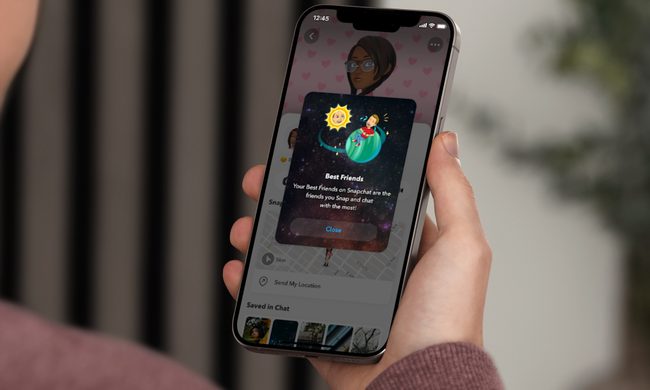
Snapchat Planets being shown on the Snapchat app on iPhone.

Snapchat is already packed with little symbols that can be weirdly hard to decode. You have streaks, emojis, badges, scores, Best Friends, and if you use Snapchat Plus, a tiny solar system that shows where you sit in someone’s closest-friends list.

The feature is called Friend Solar System, though most people just call it Snapchat Planets. It takes your position in a friend’s Snapchat orbit and turns it into a planet. From Mercury to Neptune, these celestial bodies signify how close a person is to you.

Read more
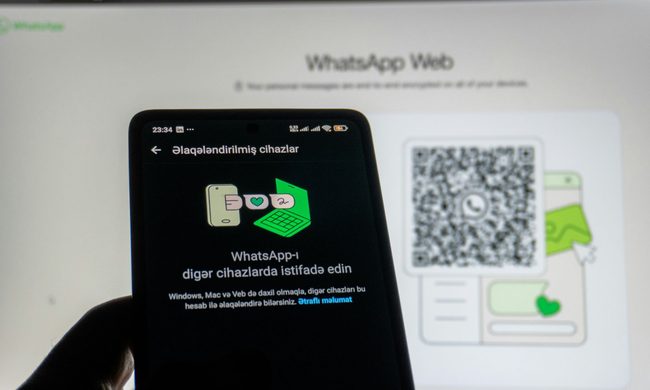
How to use WhatsApp Web
We'll show you how to use WhatsApp on your desktop or laptop
WhatsApp Web

As one of the most popular messaging services, you’ve already heard of WhatsApp. From its humble beginnings in 2009—two years before Apple introduced iMessage—to its acquisition by Facebook (now Meta) in 2014, WhatsApp has become the dominant messaging platform around the globe.

In recent years, it's grown even more potent with new features like video messages, self-destructing voice messages, the ability to edit sent messages, and more. We even finally got an WhatsApp iPad app in May 2025.

Read more
What is WhatsApp? How to use the app, tips, tricks, and more
From setting it up to mastering hidden features, here is your complete guide to WhatsApp.
WhatsApp app store listing open on iPhone

There's no shortage of messaging apps out there. The past decade has given us more options than we know what to do with, largely because smartphones demanded something better than plain old SMS.

Both the App Store and the Play Store are packed with apps that promise to revolutionize the way we communicate. Most of them didn't make it. The truth is, a messaging app is only as good as the number of people using it, and most apps never cross that threshold.

Read more