1. Home
  2. Mobile
  3. Android
  4. Legacy Archives

Sprint ‘Spark’ will turbocharge your 4G LTE speeds, if you have the right phone

Add as a preferred source on Google

Sprint has announced Sprint Spark, its new tri-band 4G wireless network, which it claims will see speeds of up to 60mbps, twice that of its existing 4G LTE network. Without going into too much unnecessary technical detail, Sprint Spark will actively hop between the 800MHz, 1.9GHz, and 2.5GHz spectrums, making the most of available capacity to provide constant, fast data speeds.

Sounds great, right? It certainly has the potential to be, but to take advantage of Sprint Spark, you’re going to need to own a particular smartphone. Of course, Sprint is more than happy to provide you with a tri-band compatible device, and has announced the forthcoming availability of four new devices.

Recommended Videos

The range starts out with the Samsung Galaxy S4 Mini, which will cost $100 with a brand new contract, but only after one of those annoying $50 mail-in rebates. Sprint has priced the Galaxy S4 Mini at $17 per month on Sprint One Up. If the little Galaxy phone is just a bit too basic, spending $200 up front will get you either the LG G2 or the Galaxy Mega 6.3, once you’ve signed a contract. If you choose Sprint One Up, LG’s G2 costs $23 per month, while the Galaxy Mega is $20.

All three of these phones will be on sale November 8, but if you hold out for a while longer, Sprint plans to add the HTC One Max to the Spark line-up. The massive HTC phone isn’t going to come cheap though, and you’ll need $250 in your pocket when you scribble at the bottom of a two-year contract, plus $25 each month on Sprint One Up.

As for Sprint Spark, it’s only available in New York, Los Angeles, Chicago, Tampa, and Miami at the moment, and will eventually reach 100 cities over the coming three years.

Andy Boxall
Andy has written about mobile technology for almost a decade. From 2G to 5G and smartphone to smartwatch, Andy knows tech.
Snapchat Planets: What’s the order, and what do they mean?
Snapchat Planets turns your best friends list into a solar system, and yes, your orbit says a lot
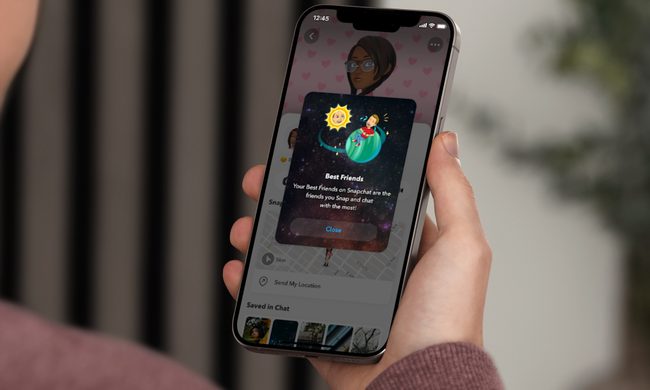
Snapchat Planets being shown on the Snapchat app on iPhone.

Snapchat is already packed with little symbols that can be weirdly hard to decode. You have streaks, emojis, badges, scores, Best Friends, and if you use Snapchat Plus, a tiny solar system that shows where you sit in someone’s closest-friends list.

The feature is called Friend Solar System, though most people just call it Snapchat Planets. It takes your position in a friend’s Snapchat orbit and turns it into a planet. From Mercury to Neptune, these celestial bodies signify how close a person is to you.

Read more
How to use WhatsApp Web
We'll show you how to use WhatsApp on your desktop or laptop
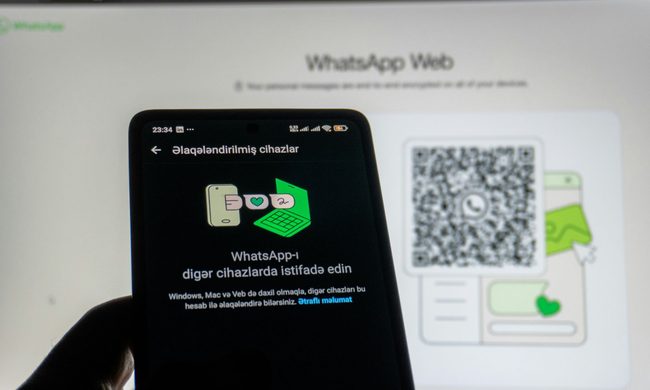
WhatsApp Web

As one of the most popular messaging services, you’ve already heard of WhatsApp. From its humble beginnings in 2009—two years before Apple introduced iMessage—to its acquisition by Facebook (now Meta) in 2014, WhatsApp has become the dominant messaging platform around the globe.

In recent years, it's grown even more potent with new features like video messages, self-destructing voice messages, the ability to edit sent messages, and more. We even finally got an WhatsApp iPad app in May 2025.

Read more
What is WhatsApp? How to use the app, tips, tricks, and more
From setting it up to mastering hidden features, here is your complete guide to WhatsApp.
Electronics, Phone, Mobile Phone

There's no shortage of messaging apps out there. The past decade has given us more options than we know what to do with, largely because smartphones demanded something better than plain old SMS.

Both the App Store and the Play Store are packed with apps that promise to revolutionize the way we communicate. Most of them didn't make it. The truth is, a messaging app is only as good as the number of people using it, and most apps never cross that threshold.

Read more