

Noah Hawley, the talented creator of the TV shows Fargo and Legion, has set himself a difficult task with his upcoming FX TV prequel to Alien. In taking on a franchise whose highs (the original 1979 film) are very high and lows (Alien vs. Predator: Requiem) are extremely low, his best shot of success is to abandon the gonzo action blockbuster strain of more recent Alien flicks and return to the horror and – vitally – the mystery that made the original film a classic.
Utilizing Earth as a setting

According to the scant details FX has thus far provided, Alien the TV series, which is set to debut in the second half of 2025, seems likely to take place earlier chronologically than any other entry in the franchise. It’s also rumored to be the first installment set primarily on Earth. (Both categories exclude the Alien vs. Predator films, which are generally not viewed as part of the canon).
That seems wise, given that such basic questions as the origin of the xenomorph, the central monster in the franchise, have become cloudy due to decades of self-contradictory lore within the universe. Director Ridley Scott hardly helped matters when he regained control of the franchise in 2012 after losing it in 1986 and made two prequels, Prometheus and Alien: Covenant, which effectively retconned the three previous films. Hawley has been open about his intention to largely disregard the 2010s prequels.
Science fiction worlds, ironically, tend to be narrower than realistic ones. In his exploration of the world of Fargo, Hawley has been able to venture as far afield as 1950s Kansas City and Trump-era militia culture. But the various Alien sequels have all been set on relatively similar exoplanets, the site of vast, impersonal government structures that are better to fight xenomorphs within. Earth, by contrast, has always been a cloudy presence in the Alien-verse – other than as the site of the distant Weyland-Yutani Corporation, the shadowy superstructure that is eternally seeking to secure a xenomorph for weapons research through a wildly complex series of schemes.
Creating authentic environments

On Earth, Hawley will be able to create an environment basically from scratch, a luxury also available to screenwriters Dan O’Bannon and Ronald Shusett and director Ridley Scott in the 1979 original film. When that classic begins, the crew of the cargo ship Nostromo are in hypersleep, and the camera drifts through their abandoned workspace – which is not an antiseptic, generalized movie spaceship but shows real signs of occupation, including two drinking bird toys left on a table to peck endlessly during the months-long trip back home.
In contrast to earlier sci-fi ships like the Millennium Falcon of 1977’s Star Wars, the Nostromo is a recognizably human space, occupied by blue-collar workers just doing a job. The reality of the setup increases the impact of the later turn toward horror. One hopes Hawley will be able to imbue some similar reality into the world of his Earth-based prequel.
Making use of the franchise’s vagueness about alien life
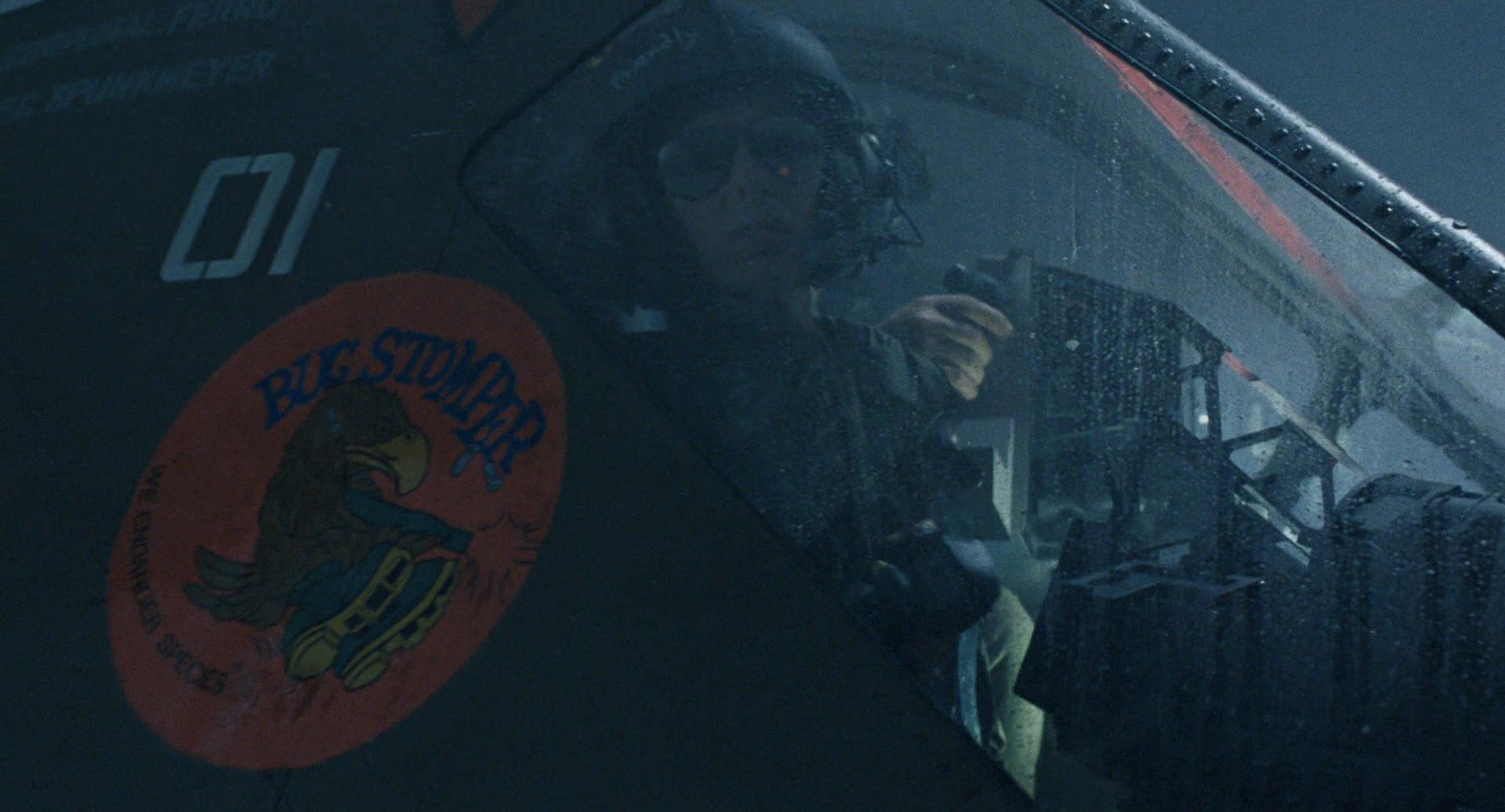
The role of alien life in general has also been a complicating factor in expanding the world of Alien. It’s heavily implied both in Alien and in Aliens, particularly with the latter’s team of dedicated “bug-stomping” colonial marines, that extraterrestrial beings are a fact of life in the 22nd century, but the question of whether they are a threat or regularly interact with humans is left mostly undefined. Since Hawley’s television series will be set roughly three decades before the original film, placing us in the early 2090s, we must assume that a xenomorph has not yet been seen on Earth and will not be at least until the late 24th century, after the events of Alien: Resurrection (1997). (Again, this omits the events of the two Alien vs. Predator films, both of which are set in the early 21st century.)
Assuming that it fits within the wider canon, as the Fargo series does with its original film, Hawley’s series will thus have to deal with xenomorphs without actually bringing them into his earthbound setting. The show is still called Alien, after all. But this could actually be an advantage. The xenomorph in the original Alien film spends most of its runtime off-screen (and doesn’t actually appear in its adult form until the 70-minute mark).
The monster movies of the 1970s – Jaws also comes to mind – established pretty definitively that the threat of the monster’s appearance is a lot scarier than the real thing. Whatever role the xenomorph ultimately takes on in Hawley’s Alien (if any at all), the human race’s unfamiliarity with the species could create an atmosphere of terror that would better match the 1979 Alien, as contrasted with the later films in which the xenomorph is an established enemy.
Emphasizing the limits of technology

The technology of the original Alien presents another opportunity for Hawley. The original film features characters utilizing supercharged AI that is, unavoidably, filtered through the technology of the 1970s – green-tinted screens, keyboards thicker than a loaf of bread, et cetera. Hawley has given hints that he is excited about using this “retrofuturistic” tech in his series.
Consider how computers function in Alien. The supercomputer that operates the Nostromo on behalf of the wicked Weyland-Yutani bosses back on Earth is called “Mother.” Mother has precious few relevant skills, and its ability to withhold company secrets appears to be sharply limited, as Ripley (Sigourney Weaver) outwits it easily. Ash (Ian Holm), the android or “synth” who serves as the movie’s secondary villain, is admittedly formidable — but only because his crewmates don’t realize he’s a robot until late in the movie.
There’s something interesting to be explored here, as Hawley’s series, which is reportedly to focus extensively on AI and robots, could look at AI through a different lens than most contemporary sci-fi, specifically, its weakness when confronted by a flesh-and-blood battering ram like the xenomorph in the 1979 Alien. The real horror of that film is that as much as we humans protect ourselves with mechanical shells, we remain permanently vulnerable.


