
Bridgerton, the Netflix sensation that broke records when it debuted in 2020, finally returned on March 25 for its much-anticipated second season. The eight-episode story focuses on the romance between the eldest Bridgerton, Anthony, and Kate Sharma, a newly arrived Indian woman looking to find her younger sister an advantageous marriage. Like its predecessor, Bridgerton‘s second season blends the traditional romance expected from a Regency piece with a decidedly modern and sex-filled twist that made the show’s first outing so successful. The result might seem less fresh than the first time around, but Bridgerton remains an addictive and shamelessly horny pleasure for romance fans.
The show made waves when it premiered thanks to the aforementioned sex scenes — uncommon for the Austen-influenced Regency genre — and its widely diverse cast, including several Black actors and a Black male lead. Bridgerton presented a London that acknowledged race but wasn’t limited by it, a sprawling and vibrant city where a Black woman could be queen and a Black man a duke.
Some critics and fans quickly pointed out how choosing a Black lead wouldn’t be historically accurate. Cries of “there were no Black dukes” filled the internet, along with accusations of the show pandering to the “woke” crowd. Some fans also expressed disappointment at the show’s changes to the source material, Julia Quinn’s wildly successful The Duke and I, where the Duke in question was decidedly not Black. Still, Bridgerton overcame its detractors, who were admittedly quieter than in other instances, to become the biggest show on Netflix, a title it held until Squid Game arrived late last year.
A brand new world
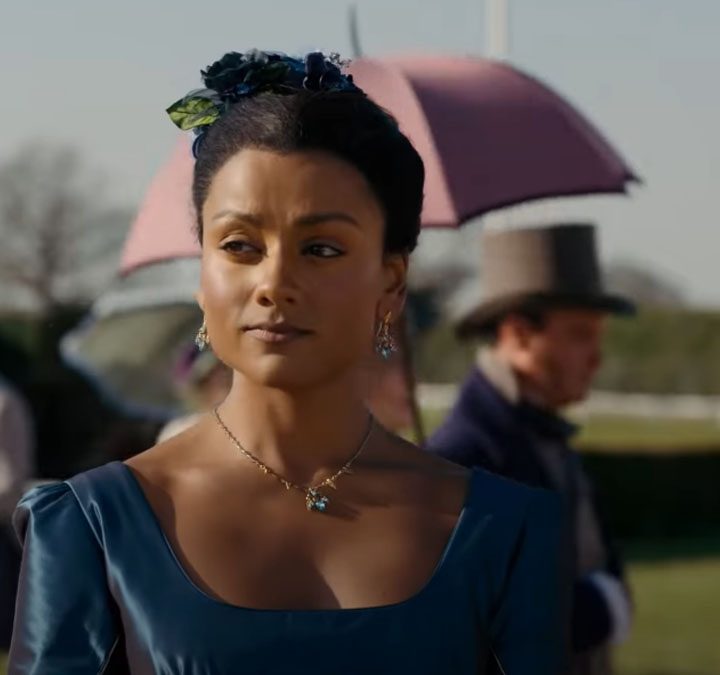
Showrunner Chris Van Dusen told Heart.co.uk, “we’re not a history lesson, it’s not a documentary.” There is an element of disbelief that accompanies every piece of fiction, even the most realistic. It can be something as basic as believing a certain actor is playing a certain character; when watching Frankie and Johnny, audiences must go along with watching Michelle Pfeiffer playing a waitress at an old café despite knowing few real-life waitresses, if any, look like Michelle Pfeiffer. Nearly every form of entertainment involves an unspoken arrangement with its viewers, a bargain that allows fiction to take over.
Historically inclined fans will know that Queen Charlotte was very real, albeit not Black, despite many claims that she might’ve had African ancestry. However, Bridgerton doesn’t concern itself with reality; on the contrary, the show goes out of its way to separate itself from other Regency-era dramas. Bridgerton is bright and lively, full of pastels and loud colors that starkly contrast with the more muted palettes of movies like Joe Wright’s Pride & Prejudice. The show features lavish production values that nonetheless introduce a modern twist to its characters’ clothing. Gone are the demure dresses of, say, Sense and Sensibility‘s Dashwood sisters, replaced by bolder attires that aren’t afraid to play with colors, fabrics, and layers.
Bridgerton unabashedly reinforces the “fiction” portion of the historical fiction genre, creating a version of 1810s London made specifically for a 2020s audience. And viewers are ready to consume what it offers.
Boy meets girl
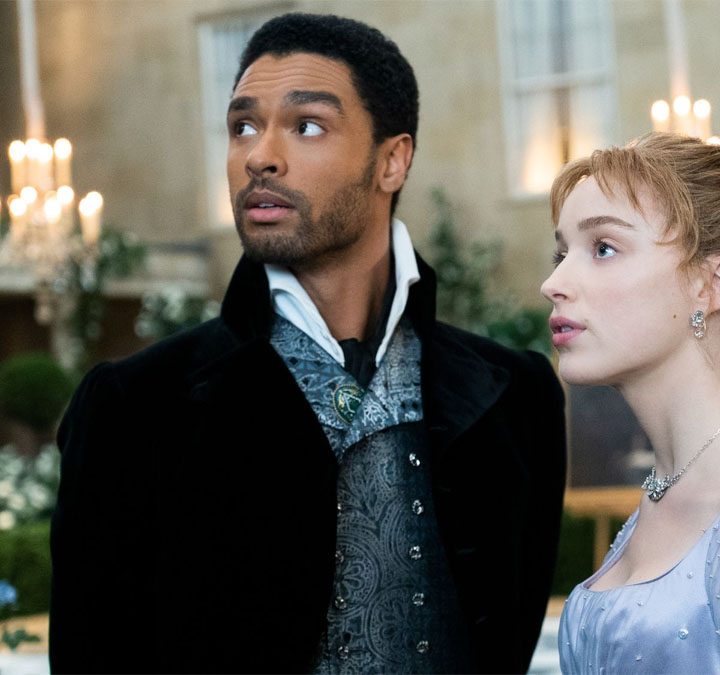
When thinking about it, the romantic genre has always asked a lot from its audience. Take Daphne’s brief season one romance with the very real Prince Frederick of Prussia, a classic love setup involving a charming and handsome prince and a young and beautiful ingenue. In any other time, that would’ve been the love story that dominated the series, and fans would’ve had no issue with a real-life figure romancing a fictional character because it would’ve been familiar, expected even. Never mind that the real Prince Frederick married a German princess, Luise of Anhalt-Bernburg, with whom he had two children. In romance stories, princes marry beautiful girls, reality be damned. Romance might be the most escapist genre, and audiences will be at their most forgiving when watching it.
Bridgerton is a natural progression of this arrangement. Modern audiences are ready to consume content that reflects the reality they live in, escaping into a world where not everything might fit or make sense, but it doesn’t matter because love conquers all.
In many ways, Bridgerton revolutionized the period drama by changing audiences’ perception of how they could experience and enjoy it. Bridgerton is still the classic love story of handsome man meets gorgeous woman, but with one of the parties having a darker skin color. The passion is still there — in abundance, in fact — and the romance still fills every scene and drips from every word. Bridgerton‘s audience embraced the change because the show retains the essential appeal of the Regency romance while also updating it with nontraditional casting choices that make it more accessible.
Season 2 continues its commitment to diversifying the genre by casting actress Simone Ashley, who has Indian Tamil parents, as the female lead, Kate Sharma. Originally Kate Sheffield in the book, the character is as headstrong and independent on the screen as she was on the page; her skin color might differ, but her essence remains the same. Furthermore, her chemistry with Jonathan Bailey’s Anthony is as intense as their book counterparts, to the relief of millions of fans worldwide, who wanted more than anything for the show to do their beloved “Kanthony” justice.
Old dog, new tricks
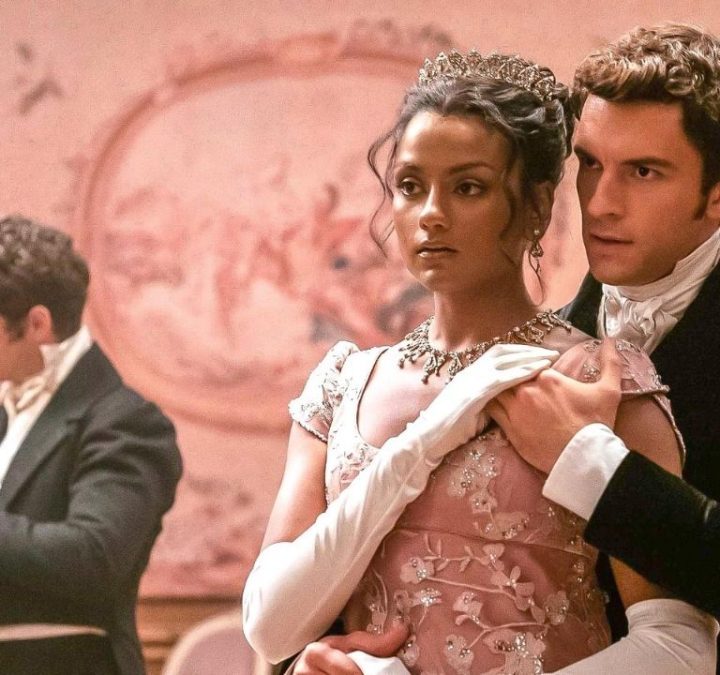
Already renewed for a third season, Bridgerton shows no sign of stopping, and it shouldn’t. Along with Broadway phenomenon Hamilton, Bridgerton is leading the charge for a new wave of period pieces to come out and challenge audiences’ perceptions and expectations. Still, their biggest challenge might lie ahead.
Season 3 should theoretically focus on Benedict’s romance with Sophie Beckett, a Cinderella-like figure who leaves behind a glove instead of a shoe. The show made subtle hints that Benedict might be sexually fluid during the first season, although they are all but gone in the second. But Bridgerton already proved it’s ahead of everyone else; could the show take the next step in diversity, then? Race is one thing, but sexuality remains taboo for many people. Audiences can accept a Black Simon and an Indian Kate, but could they deal with a male Sophie?
The exciting part is that, for Bridgerton, the sky is the limit. The show has already made it clear that it exists in its own version of 19th-century London, a world that viewers are more than happy to visit. The question now is, how far can they go with their commitment to diversity. How far should they go? Whatever the answer, Bridgerton shouldn’t bear the burden by itself. Two years after the show’s debut, there still isn’t a companion piece for fans to enjoy. Fantasy IPs like The Lord of the Rings are diversifying their casts, but their efforts are receiving far more criticism than Bridgerton ever did.
Studios shouldn’t be deterred, though, now that the door for diversification and experimentation is open. If Simon and Daphne and Kate and Anthony can live their dreams, then there’s room for more stories like theirs in television. Bridgerton already made the first step, and audiences excitedly followed. The time for innovation is now, especially for a genre constricted by its own misconceptions for far too long. Audiences are ready to assess their period stories with a different eye and renewed interest, retooling the historical fiction genre and making it more relevant than ever before. After all, the past is not even past, so why shouldn’t it evolve, at least in fiction?
Both seasons of Bridgerton are available to stream on Netflix.


