

“Fair Play is an imperfect, but relentlessly engaging thriller that is, above all else, an effective showcase for its two stars.”
- Alden Ehrenreich and Phoebe Dynevor's combative lead performances
- Chloe Domont's cool, controlled direction
- Franklin Peterson's slick, unobtrusive editing
- A third act that goes to louder and broader places than it should
- A disappointingly one-note finale
“Why you can trust Digital Trends – We have a 20-year history of testing, reviewing, and rating products, services and apps to help you make a sound buying decision. Find out more about how we test and score products.“
How does love die? Is it at the hands of one fatal blow, or dozens and dozens of tiny, nearly imperceptible cuts? In writer-director Chloe Domont’s feature film debut, Fair Play, the latter is the method of choice. The film, a corporate drama about a pair of secret workplace lovers whose romance is threatened when one is promoted over the other, is a thriller of a thousand knives. As a battle of wills between its two stars, the film is a gripping showcase for both Solo‘s Alden Ehrenreich and Bridgerton breakout Phoebe Dynevor, but it’s even more effective as a portrait of all the little slights, misinterpretations, and insecurities that can tear down even the strongest of romances.
In the months since its premiere at the Sundance Film Festival in January, Fair Play has been repeatedly labeled as an “erotic thriller” in the same vein as 1990s hits like Eyes Wide Shut and Fatal Attraction. To compare it to those films, though, feels like a mischaracterization. While sex is a prominent part of the new drama, its importance to Fair Play’s plot is slight compared to the role that gender-informed workplace politics plays in the disruption of its central romance. The film has more on its mind than just sex, and its most memorable moments involve Domont’s keen understanding of how the tiniest of pauses and most fleeting of looks can inspire doubt — both romantically and professionally.

Outside of one accidental, awkward smearing of blood, Fair Play’s opening minutes don’t hint at the numerous dark turns its story will take. On the contrary, the film’s prologue paints its two leads, Emily (Dynevor) and Luke (Ehrenreich), as a pair of young, inseparable lovers who have a hard time keeping their hands off each other even in the most public of places. There’s only one problem: They’re not supposed to be together. The high-profile hedge fund firm where they both work has a strict non-fraternization policy — one that Luke and Emily have been breaking for months unbeknownst to their cutthroat boss, Campbell (a powerfully taciturn Eddie Marsan).
Despite the challenges their unique situation presents, Emily and Luke’s first day back at the office in Fair Play could have, like the film’s prologue, been pulled right out of a lighthearted romantic comedy. The characters spend their hours at work sharing secretly flirtatious glances, covertly hashing out their nightly plans via text, and using business-related excuses to stand over each other’s desks. While not ideal, it’s clear that the two have found a way to make their clandestine relationship work that they both enjoy. That, of course, all changes when Campbell indirectly summons Emily to a bar at 2 a.m. and offers her the promotion that had previously been rumored to be Luke’s.
From there, the desynchronization of Emily and Luke’s relationship swiftly begins. When she returns home, he takes her initial silence and saddened expression as signs that she was sexually harassed by Campbell. Once she reveals the truth, Ehrenreich breaks out into a perfectly unconvincing smile and the lies, misinterpretations, and cracks in the foundation of their relationship only continue to gradually grow. It’s in these smaller moments, like Luke’s gritted teeth reaction to Emily’s promotion, when Domont’s writing and direction feel the most precise.
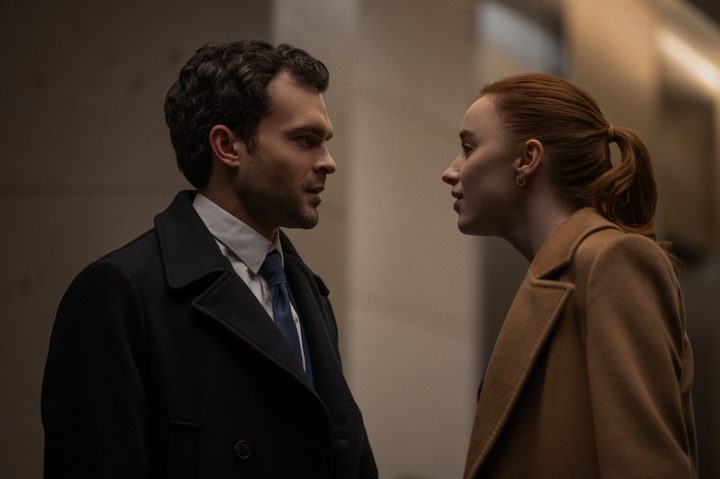
The director always seems aware of where to put the camera in order to highlight the growing rift between her two leads. Domont doesn’t need to do anything overly complicated to accomplish that, either. Instead, she’s able to use just a small drift away from Emily and a subtle focus shift to reveal Luke taking a few too many extra seconds to respond to one of Emily’s work messages. Later, she finds a way to block her actors so that both Dynevor and Ehrenreich are in the same frame at the exact moment when Emily unknowingly makes a sarcastic comment that Luke immediately takes too personally. Altogether, these moments only further emphasize the cool, controlled power of Domont’s direction.
At no point throughout Fair Play does it seem like the filmmaker is in danger of losing visual control of the film. The same cannot be said, however, for Domont’s script, which hints at several prickly, stomach-churning ideas about the intersection between power and love before settling on a conclusion that is too concrete and obvious. The progression of Luke and Emily’s romantic disintegration is delicately stretched across Fair Play’s plot, but once the dysfunctional nature of their relationship has grown to disastrous levels, the film begins reaching toward the kind of climactic moments and decisions that are too broad for a movie that spends so much of its runtime being anything but.
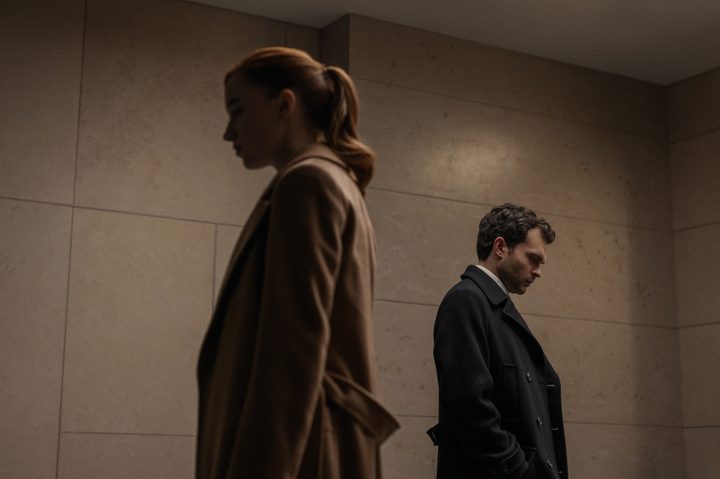
Fair Play’s narrative missteps only serve to magnify the power of its lead performances. Coming several years after her breakout turn in Bridgerton season 1, Dynevor gets the chance to give another potentially starmaking performance as Emily, a character whose moments of silent panic and frustration allow the actress to properly stretch her acting muscles onscreen. Ehrenreich, meanwhile, follows up his redeeming turn in Oppenheimer earlier this year with another performance that reminds us, once again, why he was viewed as one of the most promising stars of his generation before he was briefly swallowed by the Lucasfilm machine.
For a film that isn’t afraid to take its story to legitimately violent places, it speaks to the strength of Domont’s filmmaking and the performances given by her leads that nothing in Fair Play cuts quite as deeply as the moment just before Luke seizes on an opportunity to ridicule his partner. Ehrenreich, eyes ringed red and face covered in unshaven stubble, cocks his head to the side and clicks his tongue seconds before delivering an undeserved insult. The words he hurls are disturbing on their own, but it’s the obviously unscripted physical movement that comes just before he speaks that truly reveals the intense resentment bubbling beneath the surface of Fair Play.
Once the time comes for those feelings to truly and completely bubble over, the film doesn’t quite know how to handle the inevitable mess that follows. In that sense, Fair Play’s flaws reflect those of its characters, whose abilities to control the world and their lives don’t extend nearly as far as they think.
Fair Play is now available to stream on Netflix. For related content, we’ve rounded up all the best movies on Netflix, the best movies on Hulu, the best movies on Amazon Prime, and the best movies on Disney+. For Netflix fans, check out the 10 most popular movies on Netflix right now.


