
The late 1980s and pre-Jurassic Park early 1990s were not an entirely successful era for Steven Spielberg. Empire of the Sun (1987) was futile Oscar bait, while Always (1989) and Hook (1991) failed to charm audiences the way his earlier fantasies had. Indiana Jones and the Last Crusade, on the other hand, released 33 years ago on Memorial Day weekend, was a huge success, the second highest-grossing picture of the year after the phenomenon that was Tim Burton’s Batman. Critics and audiences loved it, and more than three decades on, it remains one of the director’s most popular movies.
Yes, some of the special effects are embarrassing, but that was true even at the time. And the action pales in comparison to the inspired breathlessness of Raiders of the Lost Ark (1981). But John Williams provides some of his most moving music, and the relationships and the comic timing are special. I saw the movie a few years ago in a packed theater and it still played like gangbusters. As we gear up for a hopefully redemptive fifth Indiana Jones movie (after the unholy mess of Kingdom of the Crystal Skull), I reflect on how the movie’s themes transformed me.
Spielberg’s broken families
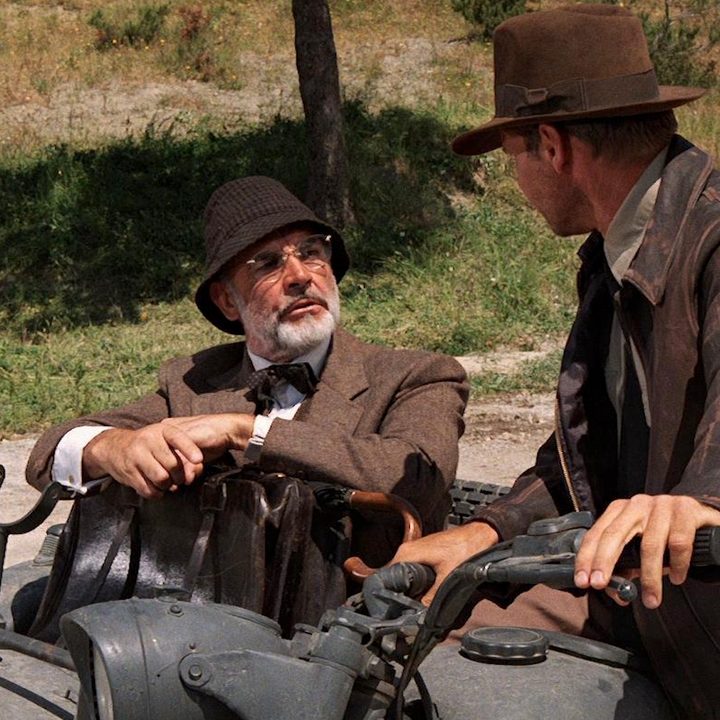
Beyond Spielberg’s sure instincts as an entertainer, Last Crusade holds up so well because its themes still resonate. The sentimental and heartfelt movie – Spielberg’s mea culpa for the violent and macabre Indiana Jones and the Temple of Doom (1984) – reflected the director’s changing ideas about family at the time. Like many of his films, Last Crusade is about the pain of children separated from their parents. In Close Encounters of the Third Kind (1977), a fatherless boy is kidnapped from his mother (Melinda Dillon), while a man (Richard Dreyfuss), forsakes his family to travel to the stars. E.T. (1982) likewise features an absent father and a family rent apart by a cosmic departure. In The Color Purple (1985), a woman (Whoopi Goldberg) suffers horribly from the abdication of parental responsibility, while Empire of the Sun features a boy (Christian Bale) torn from his family by war.
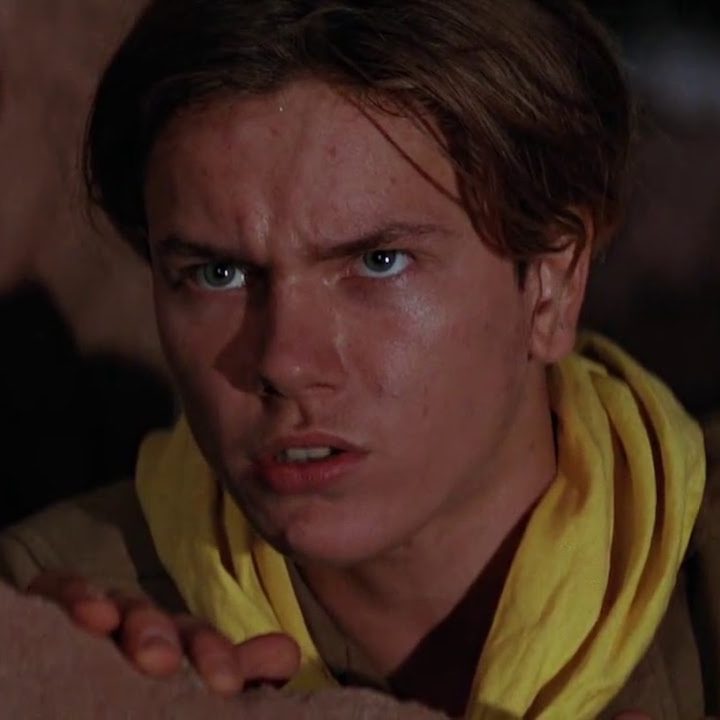
Last Crusade dramatizes both separation and abdication. The film opens with a young Indiana Jones (River Phoenix) whose mother is long gone, and whose father might as well be. Like the Dreyfuss character in Close Encounters, Henry Jones Sr. (Sean Connery) has abandoned family responsibilities to pursue his obsession: seeking the Holy Grail. Later in the film, when Indy rescues his father from Nazis and they pursue the Grail together, some of the most affecting scenes in the movie turn on the adult Indy’s (Harrison Ford) expressions of hurt and resentment. “What you taught me,” he tells his father at one point, “was that I was less important to you than people who’d been dead for five hundred years in another country, and I learned it so well, that we’ve hardly spoken for 20 years.”
Searching for faith
But the movie isn’t just about a family torn apart; it’s also about a family reunified and, ultimately, healed. Spielberg had become a parent by Last Crusade, and he would embark on an era of movies such as Hook (1991), Schindler’s List (1993) Jurassic Park (1993), and Saving Private Ryan (1998), in which men took responsibility rather than shirked it, and learned to put family above all else. Last Crusade bridges the divide between the two eras. It begins with a fractured family and an irresponsible parent and ends with a man who realizes what’s important before it’s too late. “Indiana,” Henry says as Indy puts himself in jeopardy to save the Grail at the movie’s climax, “Let it go.” I finally see it’s not as important as you are.
I shared Indy’s (and Spielberg’s) pain. My sister died from a long illness at the end of that summer and my parents (like Spielberg’s) divorced soon after. I dearly hoped for family reunification, for a parent who would look up from their obsession and recognize that I was important. The movie’s dream of family healing sustained me during a lonely time. I saw it in the theater six times that summer.
Although never religious, I also responded to the movie’s themes about faith. “The search for the cup of Christ is the search for the divine in all of us,” says Marcus Brody (Denholm Elliott) early in the film, as he and Indy prepare to rescue Henry and launch their Grail search. The line signals that although an action movie made in a secular era will manifestly not be religious – Hollywood had stopped making Biblical epics decades earlier – Last Crusade is a spiritual movie, one that uses the Grail quest as a metaphor for the struggle to find faith.
The leap from the lion’s head
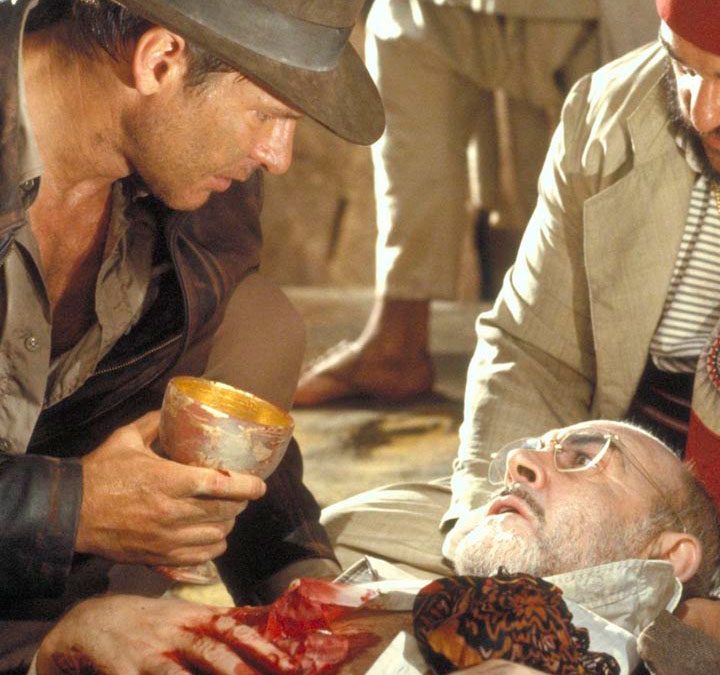
The most impactful sequence for me, then and now, is the climax, when Henry is shot, and Indy must pass three lethal tests to reach the Grail and use its healing power to save his father. At the final test, he comes to a ledge overlooking a bottomless crevasse and realizes, “Only in the leap from the lion’s head will he prove his worth.” With Henry bleeding to death behind him, Indy chooses to take a leap of faith into the chasm, at which point a previously invisible bridge reveals itself to lead him safely across. The scene is a moving evocation of faith as a terrifying chasm that one must step into if one hopes to achieve the ultimate reward.
Not surprisingly, given his impact on the entire experience of modern movie-going, much of the success of this sequence, and the film overall, is due to John Williams’ Oscar nominated score, which is far from a Raiders retread. Williams only sparingly evokes the fanfare he made famous in the first film, instead composing new music that includes a beautiful swelling Grail theme and thrilling action refrains, particularly for the inspired opening scenes in which bandits chase young Indy across the top of a hurtling circus train.

Finding illumination
Women rarely get to play with the boys in these stories, and true to form, the one woman (Alison Doody) in Last Crusade is a Nazi. Her role is temptress and betrayer, the treacherous woman of so many immature imaginations. When the passionate fraternity ride off together into the sunset, they leave her buried in the rubble.
Of course, such things didn’t phase me at the time. I was a boy myself that summer. Girls seemed as impossible to obtain as ancient Biblical artifacts and male friendships were the most important thing in my life. The idea that I could find spiritual “illumination,” as Henry puts it, through adventures with friends, was revelatory. My teen years were rough. Thankfully, Spielberg made a movie that suggested I might find a better future if I was just willing to take that metaphorical leap from the lion’s head. It’s an idea that still sustains me today.


