
Ghost in the Shell, released in 2017, has gone on to become one of Hollywood’s most infamous cinematic remakes. Plagued by controversy and lackluster reviews, this Scarlett Johansson-led film grossed $169.8 million against a budget of $110 million, making it one of the biggest box-office disappointments in recent history.
There are always going to be comparisons between a remake and the original film, and while there have already been many scathing reviews about the 2017 remake, let’s look at whether or not this 2017 movie really is as bad as people think.
The plot is more reflective than active
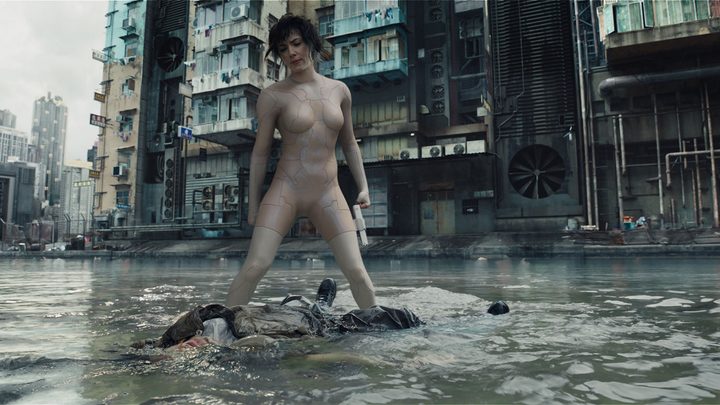
With every remake, there are bound to be some creative differences from the source material. With Ghost in the Shell, the remake removes many of the original’s philosophical musings for a greater emphasis on fast-paced action (which is done pretty well). However, this approach kills two birds with one stone, as the anime moves at a more steady pace, allowing the audience to take in the gorgeous and intricate world presented to them.
Also, instead of forging a new identity for herself as an android, the Major spends more time trying to figure out who she was before she became one. Though she is encouraged not to let her memories of her past define her, this is done more to keep her from learning the dark truth and to allow her evil superior to control her. All in all, the new Major is defined more by her past than her present in the film, which seems to reflect the film’s nature as a nostalgic remake.
I’ll admit it: the worldbuilding in the remake is impressive
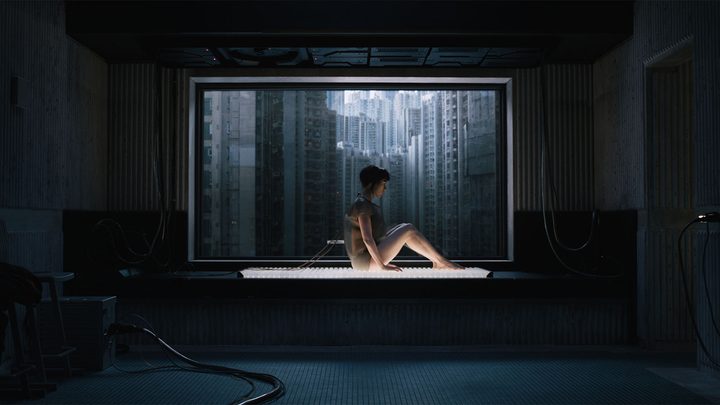
The remake does a terrific job recreating some of the anime’s iconic scenes, including the Major’s opening dive, her invisible fight on the water, the scub- diving scene, and her battle with the spider tank. It also adds some Blade Runner-esque holograms to liven up the city. Though the live-action visuals are stunning, they don’t stand out as much they could, as the more colorful parts of the Major’s world seem to get watered down by gray skyscrapers and the dark of night. Thus, it all comes across as another dystopian future film that looks bleak and colorless compared to the anime.
Nevertheless, this remake has an advantage over the original by having over two decades of new material to dip into to keep things fresh. The live-action film distinguishes itself by integrating new characters and plot elements into the story, including the villain Kuze taking the role of “Puppet Master,” Major’s “deep dive” into an infected Geisha-robot, and Batou losing his eyes in an explosion.
The whitewashing controversy still stings

Though Johansson does bear a striking resemblance to the Major in this remake (who is known as Mira Killian), the fact that a white actor played an East Asian character received quite a lot of backlash. It didn’t help that the film ends with the revelation that the Major was born a Japanese girl with the character’s original manga name, Motoko Kusanagi.
Though many people took issue with this, many fans in Japan didn’t seem so bothered by Johansson’s casting, with some arguing her character’s body is artificial and inconsequential due to the franchise’s theme of finding one’s identity. Even the anime film’s director, Mamoru Oshhii, felt the same, saying to IGN that casting an Asian actress was unnecessary and only motivated by politics, which should be separate from artistic expression.
This discourse is probably best summed up by Justin Charity of Ringer, who wrote: “Your average Japanese citizen’s outlook is much less influenced by pluralism than the outlooks of many Asian Americans, who live in a country where popular culture rarely represents them well, if at all.” So even if Johansson’s casting does work with the film’s concept and theme, it still feels like a missed opportunity to bring true representation to Japanese-American audiences in this Hollywood blockbuster. Also, the fact that a Japanese person’s mind is transferred into a white body in this film could not be more symbolic of Hollywood taking the original anime and repackaging it for a Western audience.
The verdict
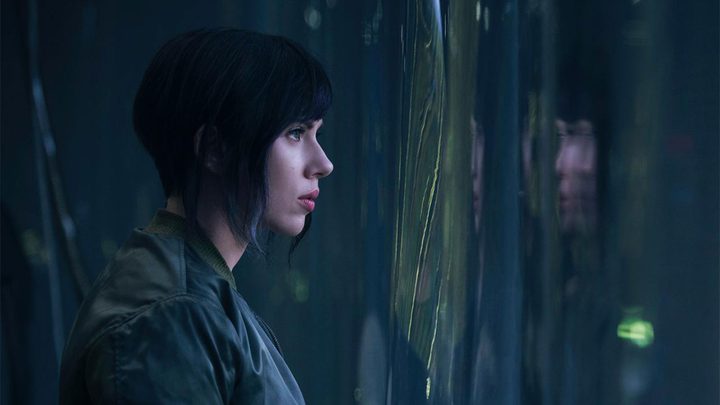
The live-action Ghost in the Shell may have been branded a remake, but it is very much its own story with a few elements taken from the anime film. The former has its flaws, and it could’ve done more to appeal to modern audiences in terms of casting and staying faithful to the source material. By itself, the remake is a decent blockbuster with its own merits, but it doesn’t reach the high bar set by the anime.


