

This month marks the 25th anniversary of Star Wars: Episode I — The Phantom Menace. The film, the opening installment in George Lucas’ Prequel Trilogy, was the first Star Wars movie in 16 years when it was released. Shortly after it hit theaters in May 1999, though, it became the target of a lot of vitriol and criticism. Star Wars fans went into it expecting a prequel that felt of a piece with the franchise’s Original Trilogy. Instead, what they got was a CGI-heavy, polished, and unexpectedly stiff epic about, among other things, child slavery, trade laws, and senatorial politics. In a lot of ways, the film couldn’t have been more different from 1977’s swashbuckling, fairy tale-like Star Wars: Episode IV — A New Hope.
Over the past few years, a lot of Star Wars fans have adopted a much kinder tone when discussing The Phantom Menace and its fellow prequels. That’s been due, in no small part, to the lackluster quality of Disney’s Sequel Trilogy. For many of the viewers who were introduced at a young age to Star Wars through the prequels, the films also hold a special, nostalgic place in their hearts. With that in mind and, in honor of its forthcoming anniversary, it’s worth asking: Is The Phantom Menace really as bad as so many fans remember? Or is it as good as some of its younger supporters believe?
Having recently rewatched it, this writer would argue that it’s neither. The Phantom Menace may, in all actuality, be one of the biggest mixed bags in blockbuster movie history.
The good, the bad, and the ugly (not necessarily in that order)

To be totally clear: The writing and acting in Star Wars: Episode I — The Phantom Menace is really bad. Lucas, for all of his many strengths, has never had a great ear for dialogue (as both Mark Hamill and Harrison Ford have publicly noted), and that’s on full display in The Phantom Menace. His inability to truly communicate with actors results in distractingly stiff turns from Natalie Portman, Jake Lloyd, Samuel L. Jackson, and plenty of others, too. Only Ewan McGregor and Ian McDiarmid manage to give memorable performances and emerge from The Phantom Menace unscathed.
While Ahmed Best also didn’t deserve any of the hate that he got from Star Wars fans after The Phantom Menace‘s release (nor did any of the film’s actors), Jar Jar Binks is distracting. The CGI that was used to bring the character to life hasn’t aged well, and The Phantom Menace never quite figures out how to have his goofy personality make sense within its relatively dark larger story. It’s clear that Lucas felt like he had to lighten up the film somehow, but many of his attempts to do so don’t ultimately land.
Fans have, of course, been pointing out these flaws in The Phantom Menace ever since it was released. Not all of the criticisms that have long been levied against the film seem as valid while you’re watching it, though.
The movie’s visuals are massively underrated

The Phantom Menace has often been criticized for its bright, polished aesthetic, which immediately separates it from the gloriously dingy look of the Original Trilogy. But, despite what those criticisms might suggest, The Phantom Menace is frequently astonishing to look at. David Tattersall’s cinematography remains appallingly underrated. Together, he and Lucas fill the film with graphic, painterly shots that not only mesmerize, but also reinforce the film’s themes of systemic corruption. Notice, for instance, how the shadows of the Jedi Council’s meeting room on Coruscant betray how far from the light the Jedi have fallen by the time the film begins.
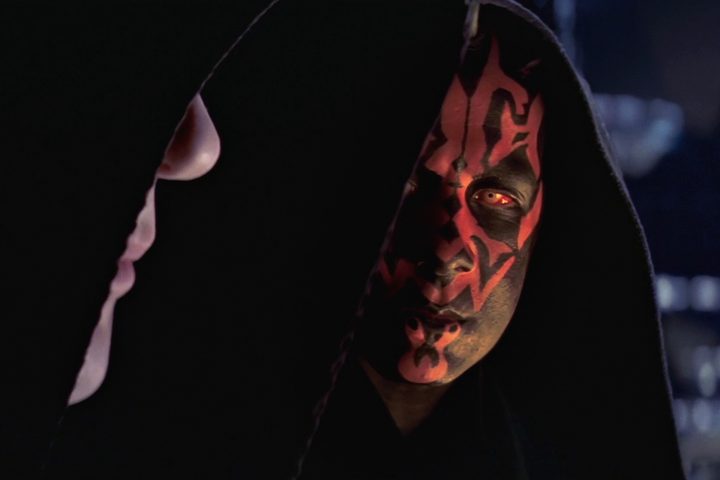
Other images carry multiple meanings, like the above shot of Padmé, which spotlights how small she is compared to the size of the institutions that surround her and simultaneously positions her in the warm glow of a window’s light — supporting the film’s view of her as an angelic figure. The below image, meanwhile, visually incorporates Darth Sidious’ (McDiarmid) existence as a double agent for the Sith and foreshadows how he keeps the full scope of himself and his plans from even his apprentice, Darth Maul (Ray Park).
Outside of its still shots, The Phantom Menace also delivers sequences of stunning, transportive beauty and elegance, like Obi-Wan (McGregor) and Qui-Gon’s (Liam Neeson, long before he was an elderly action star) underwater journey to the glowing metropolis of Gungan City. John Williams’ score, one of the Star Wars franchise’s best, only further elevates many of these moments, including The Phantom Menace‘s unforgettable, thrillingly well-choreographed and paced climactic lightsaber duel between Qui-Gon, Obi-Wan, and Maul.
Time has a habit of being either exceptionally kind or not to films like The Phantom Menace. twenty-five years after its release, it’s clear now which of the criticisms that were immediately levied against it held real weight, and which were just angry outbursts from fans who were disappointed that they didn’t get A New Hope 2.0.
George Lucas clearly went into the film wanting to make something different than the original three Star Wars movies, and that intent is evident — for better and for worse — in every moment of The Phantom Menace. It’s a greatly flawed blockbuster, but one that is still capable of creating unforgettable moments and images, which is more than can be said about some of the Star Wars titles that have followed it.
Star Wars: Episode I — The Phantom Menace is streaming on Disney+. It is also currently playing in theaters nationwide.


