
Hold the skepticism this year; the Consumer Electronics Show’s veil of death has lifted. Finally.
After years of pundits predicting the death of the world’s largest tech show, the show seems to be off of life support and back on its feet this year.
The sad, sour, hospital room air that hung over the show in years past wasn’t just the fabrication of morbid pundits. There were plenty of symptoms signaling this dire outcome for the world’s largest tech trade show. The biggest US players, from Google to Microsoft to Amazon to Apple, mostly avoided the frantic scene of CES, choosing instead to reveal their biggest products of the year on their own terms, at their own events. Worse, the tech that did headline CES for the past few years felt forced and convoluted. The best example of this is 3D televisions. “This is the future of television!” they told us. “Just wait, you’ll see. Everybody will have a 3D TV one day.” As it turns out, nope – that didn’t happen. And we knew, in our gut at least, that it wouldn’t happen. Even solid advances in technology we actually used – like Ultrabooks – were so incremental that they were barely worth getting excited about. Better, sure. Revolutionary. Not at all.
What makes CES 2014 different? This year, there’s potential. And where there’s potential, there’s hope.
So, what makes CES 2014 different? This year, the show is brimming over with potential. And where there’s potential, there’s hope.
Whereas recent years have been marred by cynicism among CES attendees who expected to be disappointed, the early vibe this year indicates that we’ve moved on thanks to a variety of promising factors.
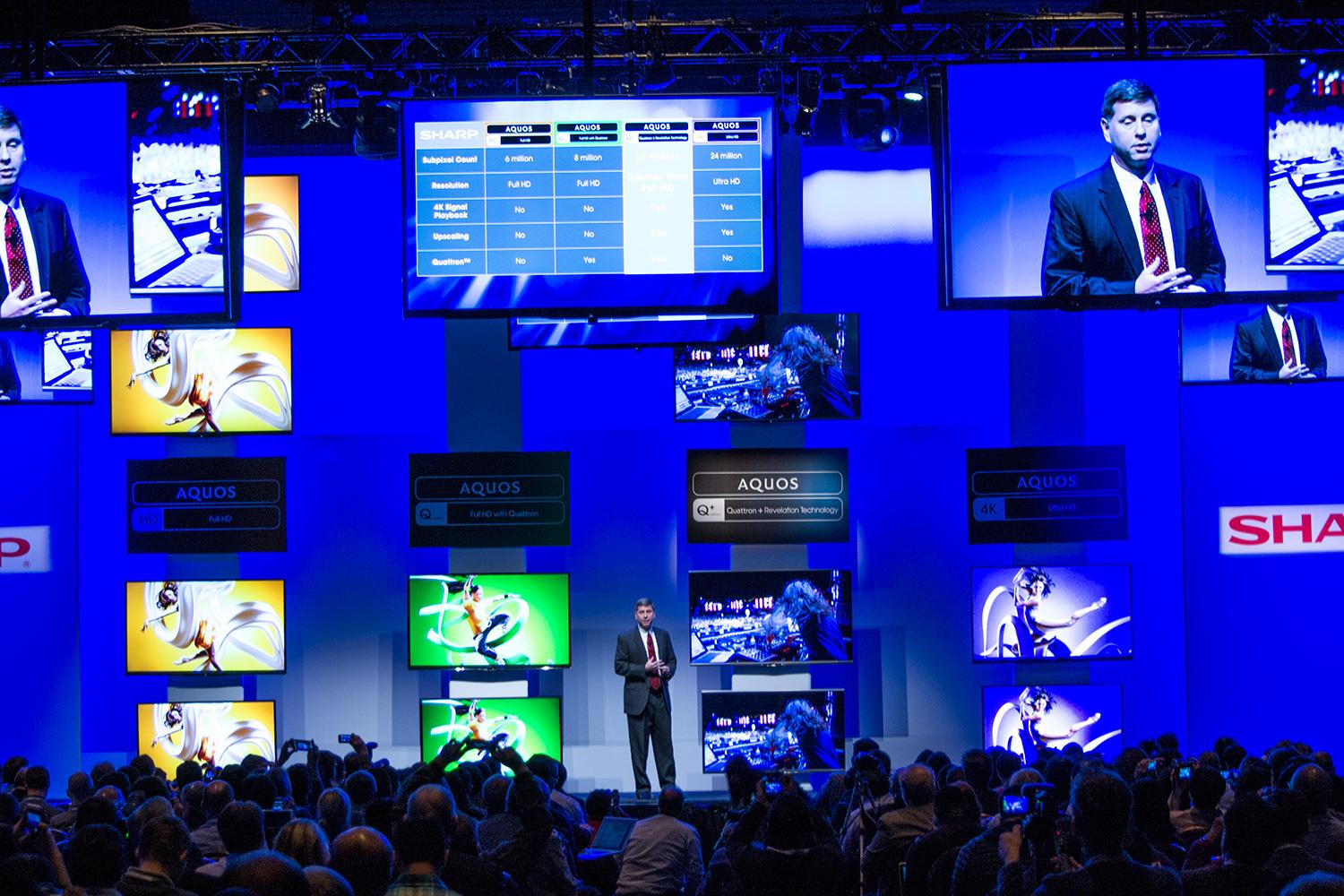
The most obvious wellspring is 4K Ultra HD, the new resolution standard that replaced 3D technology as “the next big thing in home theater.” But the difference between 4K Ultra HD and 3D TV is that people actually want higher resolution video content. When you see a 4K TV for the first (second, or fifteenth) time, I challenge anyone to not be blown away. It’s simply better than 1080p (four times better, literally). And there is no question that the entire content and display ecosystem is moving in that direction. While 3D was a gimmick, 4K is simply better.
While 4K Ultra HD officially arrived in 2013, this year it’s dominating. Take a look at our Home Theater news feed, and you’ll see 4K Ultra HD offerings from dang near every TV manufacturer out there, with a surprisingly robust and competitive showing from Vizio that stands to shakeup the market in a consumer-friendly way. Before you or I know it, it won’t even make economic sense to go with a 1080p set.
The biggest shadow looming over 4K in years past has been what we’ll actually watch in 4K, but this year even that difficult question has answers. We have Netflix promising to start streaming video content (starting with season two of its breakout hit “House of Cards”), as well as Samsung partnering with Amazon, M-GO, Comcast, and DirecTV to deliver a quickly increasing array of 4K Ultra HD content.
This, however, is only one factor in the rejuvenation of CES. The more riveting element is the smaller, more innovative companies that have begun to fill in the gaps left by larger brands.
Wearable tech, as you may have heard, is the hot new category of gadget at CES this year. But the leader in this space is not Samsung or Sony (though they’re trying their best, bless ‘em). Instead, the early favorite is Pebble – a company that began as a Kickstarter project, and this year launched the second generation of its smartwatch. Where the Samsung Galaxy Gear is bulky, ugly, and not remotely desirable, the new Pebble watches are classy, cool, and do exactly enough to make them a good buy (even at $250).
In addition to smartwatches, we have a whole slew of fitness bands popping up out of every nook and cranny of the consumer tech space. Just as 4K Ultra HD improves lives with a more enjoyable picture, fitness bands offer the promise of getting (and staying) in shape with the help of cold, hard data. In short, they improve people’s lives, and that inherent value – as opposed to marketing muscle – is exactly what consumer tech should be all about.
Smaller, more innovative companies have begun to fill in the gaps left by larger brands.
Beyond smartwatches and fitness bands lie an entirely new breed of gadgets that, frankly, are still so new that we really can’t say how they will be used. MakerBot, which just unveiled its consumer-focused Replicator Mini on Monday, and a whole gaggle of 3D printer companies at CES 2014 hold the promise of an entirely new era of technology. While 3D printers remain in the niche realm of hobbyists and industrial designers with thousands of dollars in disposable income, they also hold the promise of completely changing the way the world works. Yes, that is a cliché – but it doesn’t make it any less true.
Dig just slightly deeper, and we find drones and other robots. Like 3D printers, drones are still mostly toys – very sophisticated toys, but still just a plaything. But that, too, will quickly change, as the Federal Aviation Administration opens up US airspace over the next two years, more and more people develop greater uses for these intelligent robots. And in the mean time, companies like Parrot will continue to create nifty drones that, at the very least, introduce the world to the potential this unique technology holds.
In short, what makes CES 2014 different from recent years past is this: We actually care about what we’re seeing this year. The big names, like Samsung, Sony, and LG, are delivering on the promise of a better television and movies – something nearly anyone will benefit from and enjoy. Meanwhile, smaller players have begun to deliver truly innovative technologies that will fuel the consumer technology world and beyond for years – even decades – to come.
We might still not get the one “Wow!” product that some have naively come to expect from CES. But we are getting something better: A true glimpse into suddenly exciting future of consumer technology. And that, my friends, is what CES is all about.


