
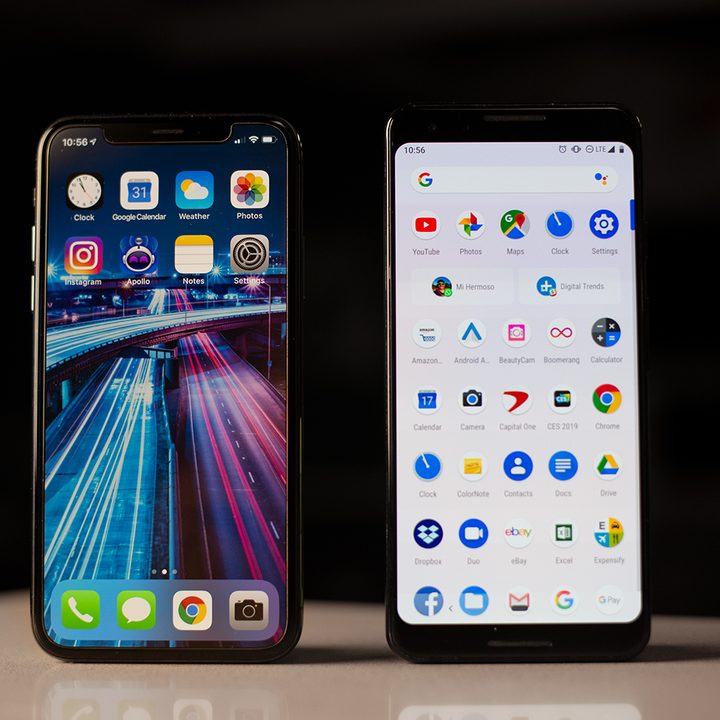
In a case of history repeating itself, 5G is set to arrive on Android devices before iPhones. Apple is well-known for waiting until innovations hit a certain level of maturity before including them in their products — it’s one of the ways it ensures consistent quality across its products. Those who remember the messy 2011 4G LTE rollout will recall that Apple waited until 2012 to launch its first 4G device. This time around, Apple is reportedly waiting until 2020, while companies like OnePlus, Samsung, and Huawei plan to release 5G offerings this year.
But even if Apple wanted to jump on the 5G bandwagon as quickly as possible, it probably wasn’t an option. The company generally sources its smartphone modems from two different chipmakers: Intel and Qualcomm. However, as Apple and Qualcomm’s relationship has soured over the past few years due to patent and royalty disputes, the iPhone-maker has moved toward sourcing only from Intel.
Intel, however, is not able to match Qualcomm’s 5G prowess, and won’t have 5G modems ready for 2019 devices. Apple is also at work on building its own modems, but it will likely be many years before it’s able to use its own in-house chips. As for using 5G modems from the likes of Samsung and Huawei — Apple isn’t likely to go into business with direct competitors. Its best (and only) option is waiting until 2020 to use Intel’s 5G modems.
That leaves consumers (particularly those who are already iPhone users) with a choice to make when the first 5G Android phones begin arriving this year — should they choose future-forward wireless devices, or get a new 4G LTE iPhone instead? We’re hear to break down the pros and cons of either choice. If you want an in-depth breakdown of what 5G actually is, check out our guide.
The argument for a 5G Android phone

- Cutting-edge technology
- High peak throughputs for things like AR/VR and streaming
- Higher floors, which means more consistent speeds
The main benefit 5G promises for mobile devices is higher, multi-gigabit speeds for things like 4K video streaming or AR/VR streaming. The 4G LTE era has largely been defined by mobile video — that trend is likely to continue and expand into even more immersive experiences. However, as we’ve noted before, initial 5G speeds aren’t going to be that different from gigabit LTE speeds, so the first 5G smartphone buyers will be a part of the gradual ramping up to higher speeds in urban areas over the next few years. That’s both exciting — you’ll be on the cutting edge of a major change — and potentially frustrating (every new technology has an awkward phase). We went into this subject in more depth here.
In-line with the higher speeds, 5G users will enjoy better consistency as networks develop. Even if a 5G user isn’t receiving top speeds, they should find the lows much less drastic than they were with 4G LTE (e.g. 20Mbps rather than 5Mbps). That might not sound too exciting, but it may be the most noticeable benefit in the long-run. After all, when are you more likely to notice your data speeds — when they’re super fast or when they’re painfully slow?
The argument for a 2019 iPhone without 5G

- Battery life
- Carrier inter-operability
- Slimmer
Most people only notice terrible speeds, not middling or mediocre speeds. Case in point: Apple’s iPhone devices are already much less impressive from a wireless speed perspective than Android phones. In fact, the company has been known to throttle speeds for the sake of consistency between Intel and Qualcomm variants of past iPhone models. But the average iPhone user doesn’t care, because they’re certainly fast enough for all the tasks we use phones for, like social media browsing and video calling. Considering those use cases will probably remain the same for at least the next year, most consumers likely won’t regret holding off on 5G mobile purchases.
In fact, there may be a few benefits to consider on the side of iPhones and other non-5G 2019 handsets. While iPhones without 5G will likely be just as expensive as 5G Android flagships (Apple products don’t come cheap), they will likely be slimmer and have better battery life. That’s because 5G modems and antennas (particularly for high-speed mmWave) take up significant space — including space that could have been allotted to the battery. What’s more, the strain of switching between 5G and 4G LTE might put a heavier draw on battery, though 5G proponents argue that won’t be the case. To top it all off, American carriers are building out their 5G networks on different frequencies, which means inter-operability of devices might suffer in the short-term.
So, what should I buy?
Ultimately, there is no one-size-fits-all answer. Even if you purchase one of the first 5G phones in 2019, you’ll have to wait a while to see the full, powerful effects of 5G technology. But if you go for a 4G LTE Apple handset instead, you’ll pay probably just as much and get very little new technology. If you’re an early adopter by nature and don’t mind the hiccups that come along with that, buying a 5G Android phone likely makes the most sense. But if you care less about new tech and want a phone that’s safe and reliable — a device that “just works,” you might say — the iPhone is your best bet, or a non-5G Android phone.


