
Your smartphone camera might soon be getting a big upgrade thanks to the power of artificial intelligence.
A startup is using new technology to pack the power of a DSLR into phones. Glass Imaging wants to boost smartphone camera quality using deep neural networks and a new kind of sensor.
“By rethinking the optical system from the ground up to be tailor-made for smartphones, we managed to fit huge CMOS sensors that collect around 9x more light than traditional designs,” Ziv Attar, the company’s CEO, said in a news release. “Our state-of-the-art A.I. algorithms seamlessly correct all the distortions and aberrations, and as a result, smartphone image quality is radically increased, up 10x.”
Smarter lenses

Attar explained in an interview with TechCrunch that up until recently, smartphone companies tried to improve image quality by using larger sensors and wider lenses. However, even with noise-reduction algorithms, the resulting imagery using this method ends up looking “weird and fake.”
To solve the image quality problem, Glass plans to put a larger lens inside a smartphone, but today’s ultraslim phones don’t have enough room to fit in the bigger optics. So, Glass instead intends to change the aspect ratio of the smartphone sensor. The company’s proposed method is to leverage the concepts behind anamorphic lenses. Anamorphic is a filmmaking technique of shooting for widescreen on 35mm film or sensors. The lenses fit the larger field of view to fit on a sensor, and then the footage is de-squeezed in postproduction to create a wider aspect ratio.
Mario Pérez, a professional photographer, said in an interview that anamorphic lenses had been used for years mainly for cinematic productions. But today. photography and videography enthusiasts have access to a wide array of anamorphic lenses.
“The main benefit these lenses bring is the ability to fit a wider angle of view than regular lenses, all within a small, average camera sensor, without any visible distortion (provided the video is duly processed later on),” he added.
Pérez said that it’s become relatively easy to get a phone with a regular lens and then attach a third-party anamorphic lens to it, which will get you many of the typical features a cinematic anamorphic lens offers: Wider angle of view, intense “bokeh” effect, and flares on light sources, among other benefits.
“Smartphone industry is evolving at an incredibly rapid pace,” Pérez said. “Videographers and photographers are shifting towards working with smartphone cameras as these grow in specs and performance. I wouldn’t be surprised to see smartphone brands equipping smartphone cameras with anamorphic lenses at some point soon, very much in accordance with how Apple added Cinematic Mode (Focus Shift) to iPhone 13 Pr, for instance.”
When it comes to smartphone camera innovations, Pérez said that variable focal length is another bold feature that will make a huge difference when it becomes a reality. Currently, the only way smartphone cameras can offer different focal lengths is by putting together two or more lenses with different focal lengths. The only exceptions to that are the Sony Xperia 1 III and and Xperia 5 III, both of which have moving lenses in the periscope telephoto module that provide different focal lengths. But it’s certainly a rarity.
“The day a smartphone brand will offer us, photographers and videographers, the ability to shoot with our smartphone camera at different focal lengths, all from one single lens, that day will mark the beginning of a new era in the industry of visual content creation,” Pérez said.
New takes on the camera lens
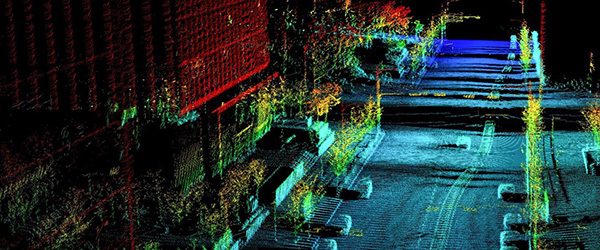
Glass isn’t the only company trying to use new techniques to make better smartphone cameras. Researchers at Stanford University have created a new approach that allows standard image sensors to see light in three dimensions. These common cameras could soon be used to measure the distance to objects.
Measuring distance between objects with light is now possible only with specialized and expensive lidar – short for “light detection and ranging” – systems. But the Stanford scientists wrote in a recent paper that they came up with a solution that relies on a phenomenon known as acoustic resonance. The team built a simple acoustic modulator using a thin wafer of lithium niobate – a transparent crystal that is highly desirable for its electrical, acoustic, and optical properties – coated with two transparent electrodes.
“Existing lidar systems are big and bulky, but someday, if you want lidar capabilities in millions of autonomous drones or in lightweight robotic vehicles, you’re going to want them to be very small, very energy efficient, and offering high performance,” Okan Atalar, the first author on the new paper. said in a news release.


