1. Home
  2. Phones
  3. Cars
  4. Mobile
  5. Features

This $3 USB adapter fixed all of my Apple CarPlay connection problems

Add as a preferred source on Google

I bought a new Jeep last year and was obviously adamant that it had CarPlay. It was also the first car I owned with a touch screen for CarPlay, which is a nice change of pace. But in the first couple of weeks of driving, I was increasingly frustrated: even though I was using a wired USB connection, my CarPlay kept disconnecting. Sporadically, and frequently.

I tried different phones. I tried using an official Apple Lightning cable — USB-A and USB-C, as my car has both — as well as various styles and lengths of third-party cables. Nothing worked. And then, I found an inexplicable fix: using a simple .

An iPhone with USB-C cable and USB-A adapter.
Andrew Martonik / Digital Trends

I had a few of these USB adapters already because I find a need for them occasionally as I mostly use USB-C cables nowadays. I even carry one in my backpack in case I need to plug in to an old charger or outlet on the road. And I’m so glad I got frustrated to the point of trying them because it fixed my CarPlay connection problem immediately. A simple Lightning to USB-C cable, attached to this adapter and into the USB-A port on the car, works flawlessly.

Recommended Videos

I can’t tell you why this works (I won’t pretend to be an electrical engineer), and I’m honestly quite confused because you’d normally expect an adapter like this to make the connection less stable. But there’s something about the translation between USB-A and USB-C using the adapter that helps the car understand it, without fail. And though I don’t know why it works, I’ve been driving my car carefree for several months without a single CarPlay dropout.

If you for some reason have a car that only has USB-C and still have issues, you could always Buy at Amazon — they’re about the same price.

If you’re having issues with your CarPlay or Android Auto connection, these adapters are worth a shot. It worked in my Jeep, so I would expect the best results with any Chrysler, Jeep, Dodge, or RAM model. And if you have a different brand of car, it’s an inexpensive solution worth trying anyway. And if it doesn’t work for your CarPlay issues, they’re still useful to have for other uses. It’s a win-win.

Andrew Martonik
Andrew Martonik is the Editor in Chief at Digital Trends, leading a diverse team of authoritative tech journalists.
Apple wants you to verify your identity before you get Education discount on products
Apple moving the US Education Store off the honor system also seems about making a globally consistent verification infrastructure that could eventually support more aggressive Education Store expansion.
Computer, Electronics, Laptop

Getting an Apple Education discount in the United States used to be as simple as claiming you’re a student or a teacher; it didn’t need a formal verification. That era is officially over. 

Starting May 8, 2026, Apple now requires formal identity verification for all Education Store purchases in the US, ending the informal honor system that was in place for years (via MacRumors). 

Read more
Whoop’s response to Fitbit Air and Google Health is real doctors, not just an AI chatbot.
In the race to own your health data, Google chose an AI, and Whoop chose a doctor. That single decision may define which fitness tracker serious health users reach for in 2026 and beyond.
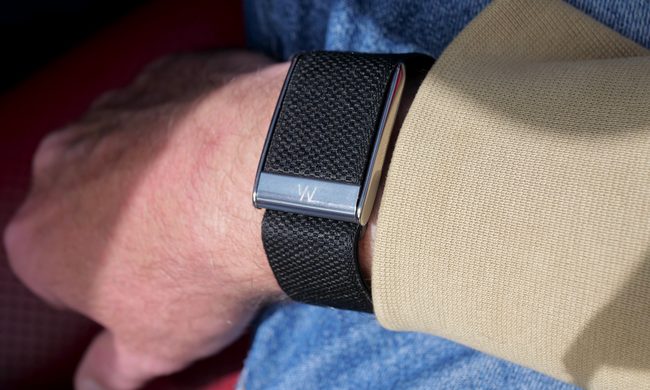
A person wearing the Whoop 5.0.

Recently, Google launched the Fitbit Air as a direct rival to the Whoop screenless fitness band, rebranded the Fitbit app to Google Health, and released a Gemini-powered AI coach. Exactly one day later, Whoop has responded with on-demand video consultations with licensed clinicians for US users. 

The contrast is hard to ignore. While Google is betting on AI as your general health advisor, Whoop is doubling down on real, licensed doctors, and making the case that they can serve its fitness-focused users considerably better (via CNBC).

Read more
Apple leak prophesizes a Spatial iPhone with a holographic 3D screen. It’s about time!
Samsung is reportedly building the holographic display, with a tentative 2030 target.
Apple-spatial-iphone-concept-image

Holograms on your iPhone sound like science fiction. But according to a fresh leak, Apple may actually be working on it. A leaker on X known as "Schrödinger" claims Apple is developing a "Spatial iPhone" with a holographic display, reportedly being built by Samsung.

The display is codenamed "MH1" (Mobile Holographic 1), and the details being floated are quite wild. You should take all of this with appropriate skepticism, though, as none of it is officially confirmed.

Read more