

Looking for a great iPhone? The iPhone 13 has to be on your list to check out. Top-tier processing power is combined with a gorgeous design, a long-lasting battery, and one of the best smartphone camera systems in the world. The iPhone 13 is one of the must-have smartphones of the year.
But those are all things we could, and did, say about the iPhone 12. The iPhone from 2020 is still a stunner, with boatloads of processing power, a daylong battery, and an exceptional camera. Indeed, at a first glance, you’d be forgiven for thinking these are the same phone. There are differences — but you probably want to know if they’re big enough differences to justify buying the new iPhone over the older one. Or, if you already have an iPhone 12, is it worth upgrading to the iPhone 13?
Specs
| iPhone 13 | iPhone 12 | |
| Size | 146.7 x 71.5 x 7.7 mm (5.78 x 2.81 x 0.30 inches) | 146.7 x 71.5 x 7.4 mm (5.78 x 2.81 x 0.29 inches) |
| Weight | 174 grams (6.14 ounces) | 164 grams (5.78 ounces) |
| Screen size | 6.1-inch Super Retina OLED | 6.1-inch Super Retina OLED |
| Screen resolution | 2532 x 1170 pixels (460 pixels per inch) | 2532 x 1170 pixels (460 pixels per inch) |
| Operating system | iOS 15 | iOS 14 |
| Storage | 128GB, 256GB, 512GB | 64GB, 128GB, 256GB |
| MicroSD card slot | No | No |
| Tap-to-pay services | Apple Pay | Apple Pay |
| Processor | Apple A15 Bionic | Apple A14 Bionic |
| RAM | 6GB | 4GB |
| Camera | Dual-lens 12-megapixel wide and 12MP ultrawide rear, 12MP TrueDepth front | Dual-lens 12MP wide and 12MP ultrawide rear, 12MP TrueDepth front |
| Video | 4K at up to 60 fps, 1080p at 240 fps | 4K at up to 60 fps, 1080p at 240 fps |
| Bluetooth version | Bluetooth 5.0 | Bluetooth 5.0 |
| Ports | Lightning connector | Lightning connector |
| Fingerprint sensor | No, FaceID instead | No, FaceID instead |
| Water resistance | IP68 | IP68 |
| Battery | 3,240mAh
Fast charging (20W charger sold separately) MagSafe wireless charging (15W) Qi wireless charging (7.5W) |
2,815mAh
Fast charging (20W charger sold separately) MagSafe wireless charging (15W) Qi wireless charging (7.5W) |
| App marketplace | Apple App Store | Apple App Store |
| Network support | All major carriers | All major carriers |
| Colors | Black, blue, green, white, and red | Black, blue, green, white, and red |
| Prices | $799+ | $799+ |
| Review score | 4.5 out of 5 stars | 4.5 out of 5 stars |
Design, display, and durability


- 1. Apple iPhone 13
- 2. Apple iPhone 12
In terms of design, your first glance is correct — there are very few differences in design between these two phones. The slightly narrower notch on the iPhone 13 and the new configuration of the camera lenses are the only real changes, and that’s the only one you can really notice when the two phones are side by side. Otherwise, they’re pretty much identical, with the same flat, iPhone 5-esque sides, great-looking 6.1-inch Super Retina OLED display, and aluminum body.
Durability is the same too. Both have Ceramic Shield glass, and an IP68-rating for dust and water resistance. Minor differences aside, these two models are absolutely neck-and-neck.
Winner: Tie
Performance, battery life, and charging

So the two phones are extremely similar in looks, but that’s not the case when we break the phones open and gaze at the shiny components inside. The iPhone 12’s A14 Bionic processor is no slouch, but the A15 Bionic processor is faster and more powerful. The iPhone 13 has also had a small bump in RAM to 6GB, and, perhaps most excitingly, Apple got rid of the base model with only 64GB of storage. That means the iPhone 13’s storage options start at 128GB and now also include a 512GB variant, which is good news for snap-happy media lovers and app downloaders of all stripes.
Charging capabilities on both phones are still the same, with 20W fast wired charging, and MagSafe wireless charging also included. But the iPhone 13 has another advantage here — a larger battery. The iPhone 12’s battery was definitely impressive, lasting a full day without needing any sneaky top-ups. But the iPhone 13 has surpassed that quite easily, hitting an estimated day-and-a-half of battery life during our review period. That’s a serious selling point, and a major win for the iPhone 13.
The iPhone 13 has a strong processor, more RAM, more storage options, and a potentially longer-lasting battery. It’s a slam dunk for the newer iPhone.
Winner: Apple iPhone 13
Cameras
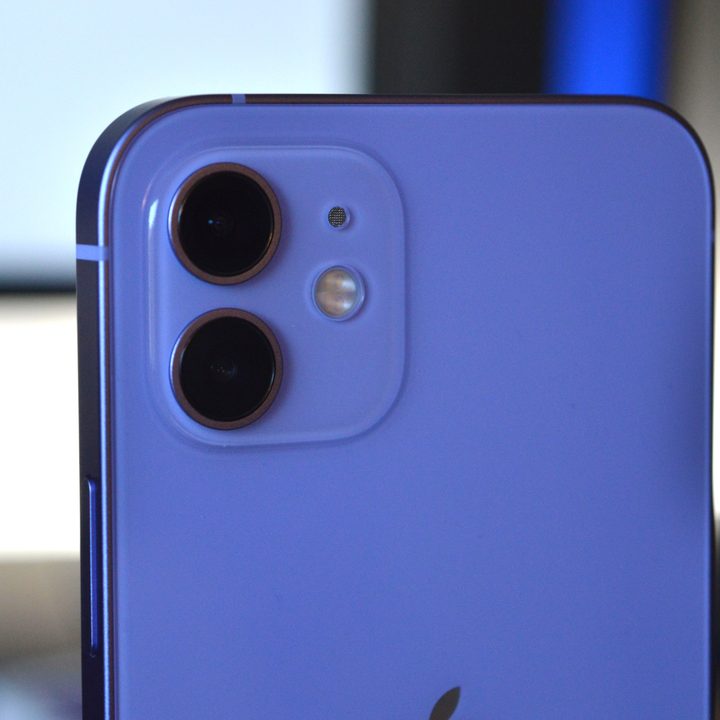
Specs-wise there haven’t been many changes between the two phones, and that’s for good reason. The iPhone 12’s dual-lens 12-megapixel setup is excellent, and provides great shots. So really, Apple didn’t really need to make very many hardware changes to keep the iPhone 13’s level of quality up. Sure, an additional lens might have been welcome, but we’ll probably have to wait until 2022’s iPhone before that change is made.
But there are larger changes within the software. The new A15 processor within the iPhone 13 powers a host of new and exciting features, including the new Cinematic Mode that gives you the ability to shoot Hollywood-like movies, and a range of new Photographic Styles too. However, these are fairly small changes, and broadly, the two cameras have extremely similar performance. The iPhone 13 is the technically superior of the two, with many more features though, so we’re going to give this to the newer iPhone. But it’s a very slim win.
Winner: Apple iPhone 13
Software and updates

The iPhone 12 runs iOS 14, while the iPhone 13 comes with iOS 15. Does that mean the iPhone 13 wins? Absolutely not. The iPhone 12 upgraded to iOS 15 the day the new operating system launched, and thanks to Apple’s stellar upgrade record, it’s likely to get operating system updates for an awfully long time. As an example, the iPhone 6S was launched in 2015, and got the iOS 15 update. That’s six years of support so far, and no end in sight. Rest assured that regardless of which iPhone you buy, you’ll be getting updates for a long time. That makes this round a strong tie.
Winner: Tie
Special features

Apple has never been one to shovel special features into its phones — it’s certainly no Samsung. But despite that, both of these phones have more than enough special features to get by on. Both have 5G compatibility, granting access to the new generation of super-fast cell data. You’ll also find Apple’s cool augmented reality features like Memoji and Animoji, and both obviously have Apple’s digital assistant, Siri, built in too. There’s not really much to separate the two, so this is another tie.
Winner: Tie
Price and availability
The Apple iPhone 13 is available at most smartphone retailers and on pretty much every carrier out there. The same is true for the iPhone, 12, though it is currently available for purchase. The iPhone 13 will start from $799, while the iPhone 12 will cost you $100 less at $699. However, with the iPhone 12 being the older phone, expect to find it for a strong price if you’re buying pre-owned.
Overall winner: Apple iPhone 13
It’s not hard to see why the iPhone 13 has won this matchup. A strong processor, larger battery, more capable camera software, and even more storage means it’s a pretty clear win for Apple’s newest iPhone. Sure, the differences aren’t huge, but if you’re eyeing up a new iPhone, then pick the iPhone 13 over the iPhone 12. It’s an extra $100, but that extra gets you twice the storage and a stronger processor, so it’s definitely worth it.
Already using the iPhone 12 and wondering if it’s worth upgrading to the iPhone 13? Hold fire this time. Apple hasn’t enormously changed the iPhone formula with the iPhone 13, and most of what Apple’s newest device can do, your current iPhone can do too. The faster processor isn’t a big enough deal to bother with an upgrade, and the iPhone 12’s camera is still excellent. Instead, hold off until the next release and see what the 2022 iPhone has to offer.


