  1. Home
  2. Phones
  3. Mobile
  4. News

The iPhone Mini is dead — long live the iPhone 14 Plus

Add as a preferred source on Google

The iPhone 14 series is here and with one major change. Just as the rumors suggested before Apple’s Far Out event, there is no Mini model this year. After launching the iPhone 12 Mini and iPhone 13 Mini, Apple has given up on the small size form factor to go the Plus route.

The iPhone 14 Plus is the new entrant in the lineup. For the unaware, the latest Apple iPhone models are iPhone 14, iPhone 14 Plus, iPhone 14 Pro, and iPhone 14 Pro Max. While the Plus is similar in screen size to the iPhone 14 Pro Max, it borrows everything else from the vanilla iPhone 14.
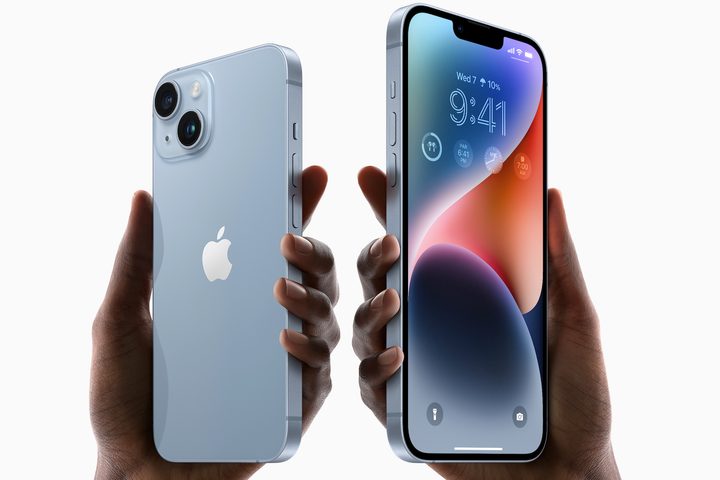
iPhone 14 and iPhone 14 Plus.
Apple

The iPhone 14 Plus features a 6.7-inch OLED XDR display with 1,200 nits of peak brightness. It is powered by the same A15 Bionic chipset that was seen on the iPhone 13 series and is now available on the iPhone 14. It comes equipped with the same set of cameras as the 14, and you get no design changes from the previous generation. This means you’ll still see the notch on the iPhone 14 Plus, which is different from the new cutout found on the iPhone 14 Pro series.

Recommended Videos

The larger display allows more content to appear on the screen and is covered by the Ceramic Shield. Apple touts the iPhone 14 Plus to last longer than any iPhone ever on a single charge. You still get a 12MP primary camera with a larger sensor, larger pixels at 1.9 microns, and an f/1.5 aperture. It also includes sensor-shift OIS, and the faster aperture allows for better motion freezing. Apple says that the camera system comes with a 49% improvement in low-light performance while also making night mode exposure twice as fast.

iPhone 14 & iPhone 14 Plus | Big and Bigger | Apple

On the front lies a new 12MP selfie shooter with a faster f/1.9 aperture and a 38% improvement in low light. It has a hybrid system that focuses faster, and group shots can be in focus from further away. The larger sensors and aperture, combined with A15 Apple silicon and deep fusion, bring multiple frames into a single image in mid to lower-light environments. It applies deep fusion earlier in the process for uncompressed images that allow the rendering of more and brighter colors.

An iPhone 14 Plus in hand.
Apple

No U.S. model has a SIM tray. Apple says that eSIM support has skyrocketed in the U.S., and that is the only way to activate your SIM going forward. Apple is also bringing satellite connectivity to the iPhone 14 series.

The iPhone 14 Plus, as well as the iPhone 14, comes with crash detection, which is the same as Apple Watch. This means it consists of a high dynamic range gyroscope and dual-core accelerometer that can detect up to 256g and can contact emergency automatically.

Prakhar Khanna
Prakhar Khanna is an independent consumer tech journalist. He contributes to Digital Trends' Mobile section with features and…
WhatsApp Plus is here, and you can safely ignore this subscription
WhatsApp wants a monthly fee for what other apps include by default, and that's a problem Meta can't dress up with custom icons.
WhatsApp Plus screenshots.

WhatsApp has fiercely defended its status as a free, no-nonsense online messaging app for over a decade, but a new subscription tier is muddying the waters. 

Meta is rolling out WhatsApp Plus, a paid subscription model, to a limited number of iPhone users using the latest version of the App Store. 

Read more
Apple and Google just put a lock on your green-bubble texts, and it’s about time
The green bubble finally has something to brag about. Apple and Google's unlikely alliance brings real encryption to everyday cross-platform texting.
E2EE arrives on RCS for iPhone and Android phones.

For years, texting between an iPhone and an Android device felt less like a private conversation and more like shouting across a crowded street. Well, that changes on May 11, 2026, as Apple and Google jointly launched end-to-end encryption (E2EE) for RCS messaging. 

The long-awaited feature is rolling out first in beta with iOS 26.5 (also announced today) and the latest version of Google Messages. 

Read more
The Razr Ultra 2026 is everything a flip phone should be, but I’m not paying $1,500 for it
A flip phone was never supposed to cost this much. At $1,500, the Razr Ultra finds itself in an uncomfortable fight against everything else your money can buy.
Motorola Razr Ultra

I'll be blunt: $1,500 is a lot of money to spend on the Razr Ultra, a clamshell phone that folds in half. In fact, it's a lot of money to spend on any smartphone, especially when a Galaxy S26 Ultra or iPhone 17 Pro Max costs less and still leaves a few hundred dollars in your pocket, or throwing in a couple of hundred bucks can get you a full-fledged book-style foldable. 

For me, the Razr Ultra doesn't quite make a strong case at $1,500. In isolation, it's a genuinely impressive flip phone that gets all the basics right and delivers the premium experience you'd expect at this price. The Alcantara back, the 5,000-nit display, the silicon-carbon battery, and the dual cameras on the back make it sound like a complete package.

Read more