  1. Home
  2. Phones
  3. News

Apple’s new AI photo tool can literally change where the camera was standing

Spatial Reframing uses Apple Intelligence to reposition shots after they’ve already been taken

Add as a preferred source on Google
Apple WWDC 2026 Spatial Reframing
Apple
Promotional logo for WWDC 2023.
This story is part of our complete Apple WWDC coverage

We’ve all taken a photo that would’ve been perfect if only the camera had been positioned a little differently, right? Well, Apple now wants to fix that with Spatial Reframing, a new Apple Intelligence feature that can virtually reposition the camera after the shot is taken while using AI to naturally fill in the missing parts of the scene.

Spatial Reframing uses AI to virtually move the camera after the shot

According to Apple, Spatial Reframing combines on-device spatial models, built using technology developed for Apple Vision Pro, with its image generation models running on Private Cloud Compute. Users can simply drag around a photo during editing, and the perspective shifts as though the camera itself had been moved while capturing the original scene.

Apple says only the newly exposed portions of the image are generated by AI, while the original content remains untouched. The company demonstrated the feature by repositioning a family photo, moving the framing lower to create a more balanced composition while naturally filling in the missing background around the edges.
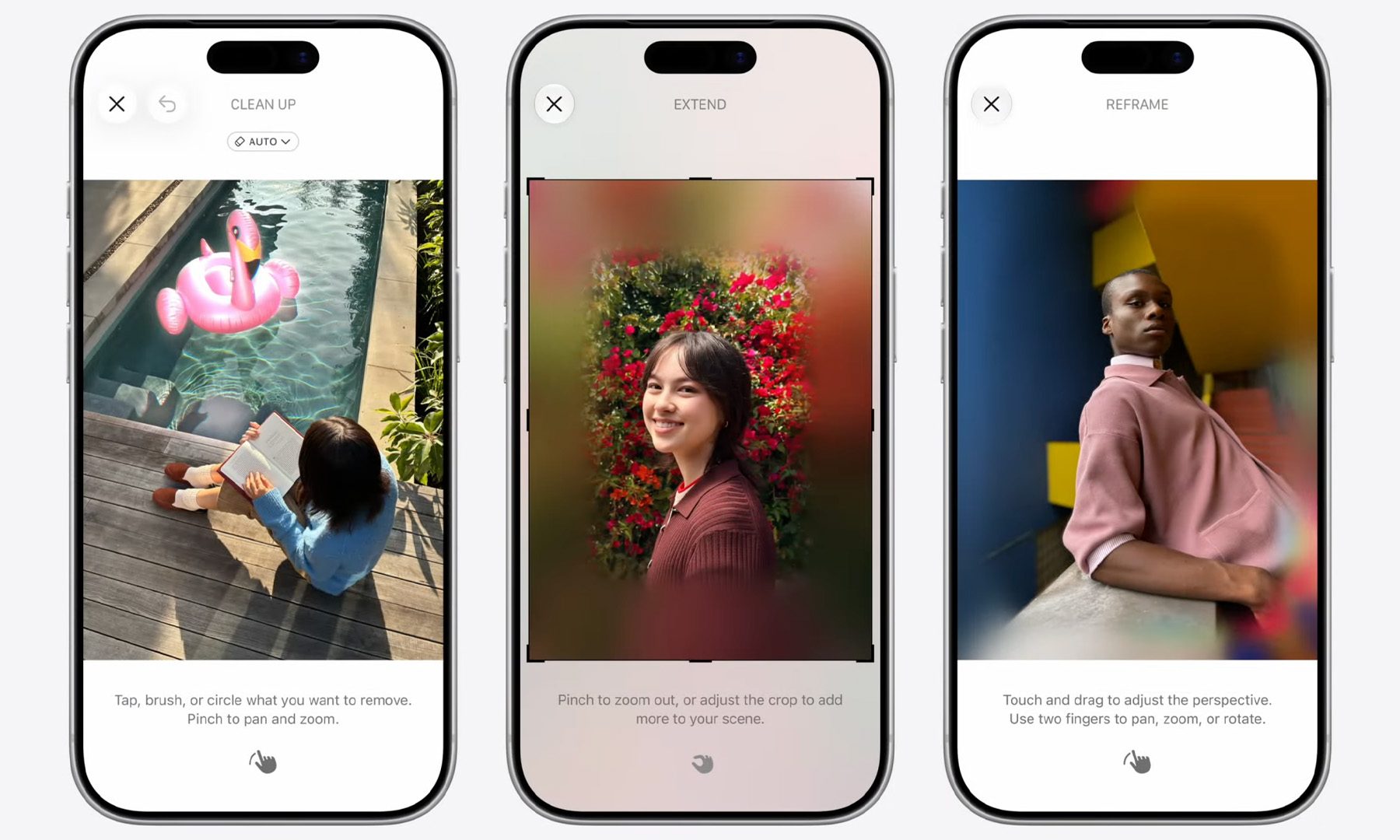
Alongside Spatial Reframing, Apple also announced an upgraded Extend tool that can expand images to create more breathing room or straighten horizons without aggressively cropping the original shot.

This might be the closest thing to a photographic time machine yet

Unlike traditional AI photo editing that simply adds or removes objects, Spatial Reframing tries to recreate a shot you never actually took. That’s a far more ambitious idea, because it asks AI to understand the three-dimensional layout of a scene before generating only the missing pieces needed to support a new perspective.

If it works as well in the real world as it did on stage, this could easily become one of the most useful Apple Intelligence features announced so far. After all, everyone has taken a badly framed photo at some point, and Apple is essentially promising a second chance without asking anyone to go back in time.

Varun Mirchandani
Varun is an experienced technology journalist and editor with over eight years in consumer tech media. His work spans…
Motorola’s next Edge phone could make Android’s MagSafe moment cheaper than Google did
Motorola Edge 70 Max is next in line with magnetic charging
Motorola Edge 70 Max with a magnetic charger

Motorola could be adopting Qi2 wireless charging technology, joining Google Pixels and Apple iPhones for magnetic charging support. While Android's Qi2 rollout has been oddly frustrating, the company's upcoming Edge phone could be the first to bring it to a non-flagship model.

A Wireless Power Consortium listing has revealed the Motorola Edge 70 Max, while another leak has revealed more details regarding its specs and features. We also get a look at some of the leaked promo material that shows magnetic Qi2 in action.

Read more
Google starts testing Gmail Live, its new voice search tool for your inbox
The feature lets you ask questions about your inbox with your voice and is set to roll out later this summer.
Gmail Live screenshot on gradient background

At I/O this year, Google showcased Gmail Live, a new Gemini-powered feature that lets users search their inbox using their voice instead of typing. The feature has now moved into testing, with 9to5Google reporting that it's rolling out to a small group of Android and iOS users this week.

How Gmail Live works

Read more
Apple and Google sat for discussions to unlock 50W wireless charging for smartphones
Wireless Charger

The next major leap in wireless charging may not come from a flashy smartphone launch, but from behind closed doors where some of the biggest names in the tech industry are working together, according to an ITHome report.

Apple, Google, Xiaomi, and several other leading technology companies recently gathered in Beijing for the Wireless Power Consortium's (WPC) Qi Off-cycle Meeting, where discussions centered around the upcoming Qi 50W wireless charging standard. The four-day event, hosted by Xiaomi, focused on refining technical specifications, testing prototype hardware, and ensuring devices from different brands can work seamlessly together.

Read more