1. Home
  2. Phones
  3. Mobile
  4. News

AT&T’s 5G+ promises better and faster connectivity at U.S. airports

Add as a preferred source on Google

Hunting for sketchy and unreliable airport Wi-Fi could soon become a thing of the past as AT&T has partnered with Boingo Wireless to deploy 5G+ — also known as mmWave 5G  —  at major airports nationwide. A total of 12 of the largest airports will be getting the service including John F. Kennedy and LaGuardia in New York City, and O’Hare and Midway in Chicago. Seven airports will get 5G+ in 2021, and AT&T aspires to connect a total of 25 by the end of 2022.

Boingo is one of the largest operators of airport Wi-Fi and DAS networks in the U.S., and undoubtedly a name you’ve seen if you’ve ever checked your Wi-Fi list at an airport. “As travel picks up, we’re excited to invest in combining the power of AT&T 5G+ with Boingo Wireless’ infrastructure expertise to provide faster connectivity for both travelers and the businesses and people that are critical to running airports across the U.S,” said Mo Katibeh, who leads AT&T’s Network Infrastructure and Build.

Pittsburgh International Airport
Image used with permission by copyright holder

Kellyn Smith Kenny, chief marketing and growth officer of AT&T Communications spoke to Digital Trends about the rollout of 5G+ to airports, pointing out that it’s particularly timely as the pandemic eases and travel increases. “There’s a massive resurgence of leisure travel,” she said, “and airports are a critical, untapped area [when it comes to connectivity].” She noted that 24 million people were recently screened by the TSA, surpassing pre-pandemic numbers and that mmWave 5G was designed to excel in heavily congested areas like stadiums, airports, concerts, and other crowded centers.

Recommended Videos

The 5G+ service will be available for AT&T customers, and it will cover major gates and concession spaces. Kenny envisions travelers being able to use 5G+ for lag-free teleconferencing, streaming, and downloading shows with “no latency, no disruption, and seamless connectivity.” AT&T anticipates 250 million people have access to C-band by the end of 2023. Boingo CEO Mike Finely also sees it being valuable for airport employees and businesses. “5G’s speed and capacity enable airports to transform business operations for greater cost savings and efficiencies,” he said.

After the initial rollout, AT&T plans to bring 5G+ to Dallas Love Field Airport, Los Angeles Airport, and Denver International Airport in the coming months. The company is also collaborating with Delta Airlines to provide 19,000 flight attendants with iPhone 12s, allowing them to use AT&T’s 5G network. These announcements come after AT&T making changes to its unlimited plan to remove throttling and improved the daily rates of its International Day Pass.

Ajay Kumar
Former Freelance Writer, Mobile
Ajay has worked in tech journalism for more than a decade as a reporter, analyst, and editor.
Apple wants you to verify your identity before you get Education discount on products
Apple moving the US Education Store off the honor system also seems about making a globally consistent verification infrastructure that could eventually support more aggressive Education Store expansion.
Computer, Electronics, Laptop

Getting an Apple Education discount in the United States used to be as simple as claiming you’re a student or a teacher; it didn’t need a formal verification. That era is officially over. 

Starting May 8, 2026, Apple now requires formal identity verification for all Education Store purchases in the US, ending the informal honor system that was in place for years (via MacRumors). 

Read more
Whoop’s response to Fitbit Air and Google Health is real doctors, not just an AI chatbot.
In the race to own your health data, Google chose an AI, and Whoop chose a doctor. That single decision may define which fitness tracker serious health users reach for in 2026 and beyond.
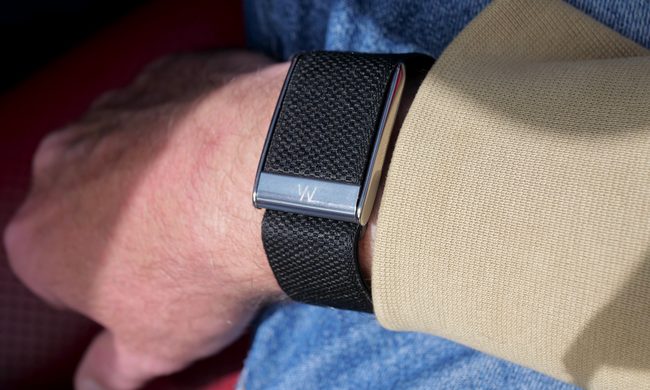
A person wearing the Whoop 5.0.

Recently, Google launched the Fitbit Air as a direct rival to the Whoop screenless fitness band, rebranded the Fitbit app to Google Health, and released a Gemini-powered AI coach. Exactly one day later, Whoop has responded with on-demand video consultations with licensed clinicians for US users. 

The contrast is hard to ignore. While Google is betting on AI as your general health advisor, Whoop is doubling down on real, licensed doctors, and making the case that they can serve its fitness-focused users considerably better (via CNBC).

Read more
Apple leak prophesizes a Spatial iPhone with a holographic 3D screen. It’s about time!
Samsung is reportedly building the holographic display, with a tentative 2030 target.
Apple-spatial-iphone-concept-image

Holograms on your iPhone sound like science fiction. But according to a fresh leak, Apple may actually be working on it. A leaker on X known as "Schrödinger" claims Apple is developing a "Spatial iPhone" with a holographic display, reportedly being built by Samsung.

The display is codenamed "MH1" (Mobile Holographic 1), and the details being floated are quite wild. You should take all of this with appropriate skepticism, though, as none of it is officially confirmed.

Read more