  1. Home
  2. Phones
  3. Mobile
  4. Evergreens

Does the Pixel 7a have a 90Hz display? We answer the burning question

Add as a preferred source on Google

Though we have the Google Pixel 7 and Pixel 7 Pro already, Google likes to release a more affordable, budget option for its Pixel lineup. This trend began with the Pixel 3a in 2019 and continued with the Pixel 4a, Pixel 5a, and Pixel 6a. But now we have the Pixel 7a, which looks like the best budget Pixel device yet.

With the Google Pixel 7a, for $499, you’re getting Google’s Tensor G2 chip, a gorgeous 6.1-inch display, a 64MP main camera, wireless charging, and the most durable Pixel body yet. Plus, it comes in some gorgeous colors, including an exclusive Coral shade that you can only find direct from retail Google Stores or online.

Recommended Videos

But let’s talk about that display for a moment — does it have a 90Hz refresh rate?

Yes, the Pixel 7a has a 90Hz refresh rate
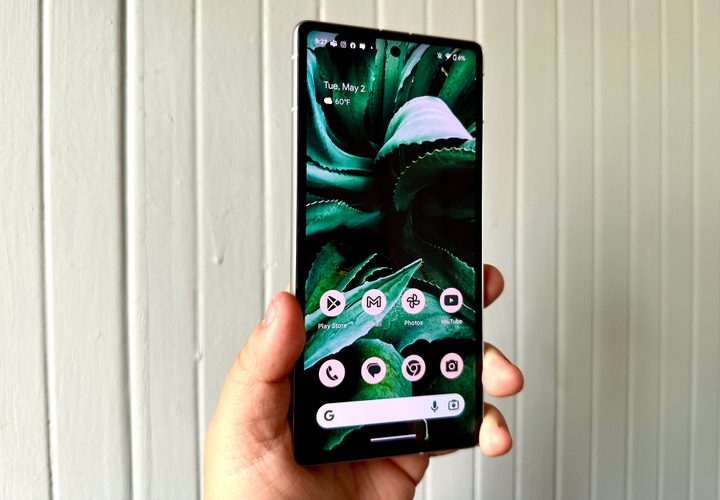
Google Pixel 7a home screen
Christine Romero-Chan / Digital Trends

The Google Pixel 7a comes equipped with a 6.1-inch OLED display that has a 90Hz refresh rate. While this is pretty standard for most Android phones nowadays, it’s something that’s been missing from all previous Pixel A-series smartphones. As such, its inclusion on the Pixel 7a is a big deal.

Since the Google Pixel 7a comes with a 90Hz refresh rate, that puts it in the same bracket as the regular Google Pixel 7 ($599), which also caps out at 90Hz. However, the Google Pixel 7 Pro has a mighty 120Hz refresh rate, but it’s much more expensive at $899.

Why does the refresh rate matter?

OK, so the Pixel 7a does indeed have a 90Hz refresh rate — but why does this matter? Basically, the higher the refresh rate on smartphones, the better the screen looks.

The refresh rate for smartphones refers to the number of times a display can update its image in a single second. When the number is higher, that means the display is faster at responding and refreshing. Scrolling through the system, menus, apps, webpages, and pretty much anything will be more smooth and fluid. Refresh rate is also very important in gaming, especially those where every second matters, and you don’t want any lag or latency.

For smartphones, 90Hz is pretty common these days, though some companies — like Apple — are still stuck using 60Hz for some reason. Refresh rates on smartphones can go all the way up to 144Hz and 240Hz, but the most often used one, especially for flagships, is 120Hz.

How the Pixel 7a’s 90Hz refresh rate works
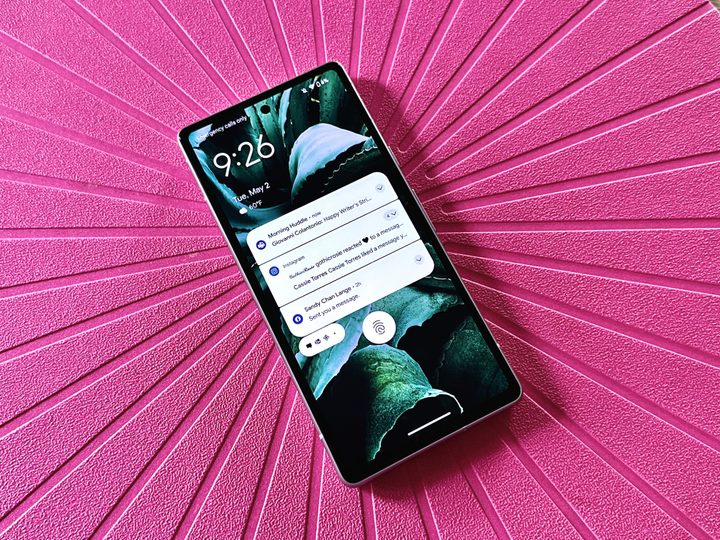
Google Pixel 7a lock screen with notifications
Christine Romero-Chan / Digital Trends

The refresh rate on most smartphones is adaptive, so they essentially adjust the refresh rate based on the content on the screen, going to the max (in this case, 90Hz) rate when needed.

However, when adaptive refresh rates are on, this impacts battery life, so if you prefer to maximize battery, you can turn it off. On the Google Pixel 7a, if you turn it off, then the display will remain on a static 60Hz refresh rate. Turning the adaptive “Smooth Display” option on will have the display automatically adjust between 60Hz and 90Hz when needed.

Christine Romero-Chan
Christine Romero-Chan has been writing about technology, specifically Apple, for over a decade. She graduated from California…
Fitbit is becoming Google Health, and it’s getting a bunch of wellness upgrades
Google is finally treating health tracking as a platform play, pulling in medical records, third-party fitness data, and AI coaching in a way that Fitbit's standalone app was never built to handle.
New Google Health app.

Google is officially pulling the plug on the Fitbit app, replacing it with the new Google Health app on May 19, 2026. It is quite ironic, as the company just announced a new Fitbit Air screenless fitness tracker, but the change will take place via an OTA update. 

This is happening after Fitbit’s fifteen-year run, wherein it gathered millions of fitness-focused users and provided them with various health trackers and meaningful insights via its software. 

Read more
Google’s Fitbit Air is a screenless $99 Whoop rival, and its core features don’t need a subscription
The real competitive edge Fitbit Air has is that Google separated the hardware cost from the subscription entirely, giving users something Whoop never has: a choice about whether to pay monthly at all.
Fitbit Air in all the colors.

Google just made its most serious moves yet into the fitness tracker market. The maker of the Pixel Watch has officially unveiled the Fitbit Air, a screenless health band priced at $99.99. Unlike Whoop, which locks all the fitness data behind a paywall, Fitbit Air’s core health-tracking features will remain free. 

Currently available for pre-orders, the device will start shipping across 21 countries starting May 26, 2026. You can get the tracker in four Pixel-like colors, including Obsidian, Lavender, Fog, and Berry, and choose from three different strap styles: Performance Loop, Active Band, and Elevated Modern Band. 

Read more
Android boss shoots down a Liquid Glass copyjob on Pixels, and that’s a relief
While many Android OEMs have already copied iOS 26's aesthetic, Google says Pixels are staying the course.
Image showing the UI design similarity between iPhone 16 Pro and Honor 600 Pro.

Google's president of the Android Ecosystem has shut down speculation that Android will adopt Apple's Liquid Glass design language, at least on Pixel devices. In response to a mockup of Liquid Glass on a Pixel 11 posted on X, Sameer Samat said, "Not happening. Y'all are wild." The response is welcome news for Android fans who have watched a wave of manufacturers copy Apple's aesthetic over the past year.

Several Android OEMs have already taken the bait

Read more