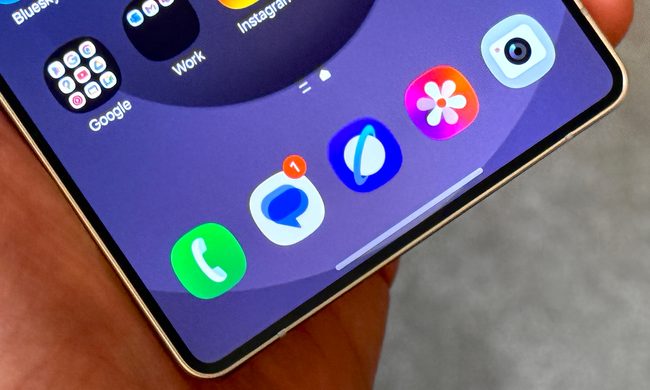
OnePlus has just launched its latest flagship, the OnePlus 13, alongside its budget sibling, the OnePlus 13R. As well as packing a Qualcomm Snapdragon 8 Elite processor and both an IP68 and IP69 rating that allows you to use the phone in the shower, it looks like we can expect great things from the OnePlus 13’s 6.82-inch screen, particularly when it comes to the refresh rate.
Does the OnePlus 13 have a 120Hz refresh rate?
The OnePlus 13’s screen looks set to impress, with a 2K resolution and peak brightness of 4,500 nits. It’s the refresh rate we’re most excited about, however. The flagship phone’s display will boast a variable refresh rate of between 1Hz to 120Hz. That means the phone adjusts its refresh rate to suit the content displayed on the screen, ensuring a smoother display and saving battery life.
Does the OnePlus 13R have a 120Hz refresh rate?
The OnePlus 13R may retail for only $600, but we can confirm that the successor to the OnePlus 12R will also pack a variable 1 to 120Hz refresh rate, just like its flagship sibling and predecessor. This time around, expect a 6.78-inch AMOLED screen with 2,780 x 1,264 resolution and a peak brightness of 4,500 nits.
How higher refresh rates evolved and their benefits

Whether you’re planning to pick up the OnePlus 13 or OnePlus 13R, or you have your eye on another 120Hz device, how much do you really know about the benefits of higher refresh rates and why you should shop for a device that offers them?
Refresh rate measures how many times the static image on a screen changes each second (how many frames it shows) in Hertz (Hz).
Here are a few of the key benefits you can expect from higher refresh rates:
- Smoother visuals: Scrolling, transitions, and animations are all smoother on screens with a higher refresh rate.
- Improved video viewing: When watching video content, you’ll notice less tearing and stuttering.
- Enhanced gaming experience: If you game on your smartphone, you’ll notice less motion blur, more precise controls, and more responsive gameplay, particularly when playing the latest graphically demanding games.
- Enhanced responsiveness: Whether you’re swiping or tapping, everything you do on your screen will feel more immediate and accurate with a higher refresh rate.
The history of refresh rates

We’re not going to dive deep into a comprehensive history of refresh rates here, but when you’re in the market for a new phone, it pays to know how the features you’re shopping for evolved over time.
At the dawn of the smartphone era, nobody cared much about refresh rates. We were simply happy calling, texting, and browsing the web on our shiny new devices, with most phones packing a standard 60Hz display. As smartphones evolved into powerhouses for media and gaming, refresh rates took off. In 2017, the Razer Phone landed with its 120Hz LCD display. It was followed by the OnePlus 7 Pro in 2019, with a 90Hz OLED screen, while the Pixel 4 series arrived a few months later, also boasting a 90Hz panel.
By 2020, 120Hz OLED screens became the norm across flagship Android devices, with the Samsung Galaxy S20 lineup leading the pack.
Today, you’ll find some flagship or gaming phones offering refresh rates of 144Hz or even higher, like the Asus ROG Phone 9 Pro with its 165Hz refresh rate or the Sharp Aquos R9 Pro with its 240Hz display.
Unlike Android, Apple has been slow to embrace higher refresh rates across its iPhone lineup. The iPhone 13, 14, 15, and 16 all sport a 60Hz refresh rate, though its iPhone Pro models boast adaptive 120Hz screens. Apple is rumored to be adopting a 120Hz refresh rate across the entire iPhone 17 lineup, however.