  1. Home
  2. Phones
  3. Apple
  4. Mobile
  5. News

Apple’s foldable iPhone: Here’s everything we know

Apple applies for a patent on a wrap-around iPhone display

Add as a preferred source on Google
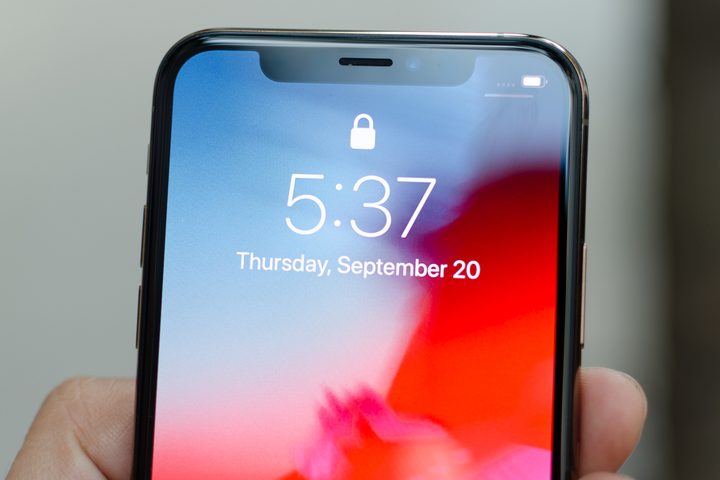
iphone xs
Julian Chokkattu/Digital Trends

Mobile manufacturers working on flexible displays for their smartphones is nothing new at the moment — Samsung’s foldable phone seems almost ready to appear, while Microsoft, Huawei, and even Motorola have expressed interest in making foldable Android handsets in the foreseeable future.

And Apple isn’t being left behind. According to a Bank of America analyst quoted in a report from CNBC, the next major redesign of the iPhone will come in the form of a foldable form factor. The report notes that Apple may already be working with suppliers to create the new phone, which wouldn’t be released until 2020.

Recommended Videos

Design

OLED displays are largely to thank for the rise of the foldable concept phone, because they’re made up of individual pixels and are able to be bent and manipulated in ways that LCD displays are not. Despite going back to LCD “Liquid Retina” displays for the iPhone XR and the new iPad Pro, Apple has been pushing forward with OLED displays on the new iPhone XS range, and it’s a given that we’d expect to see an OLED display on a foldable Apple device.

But the design of such a device is nowhere near finalized, if we look at the slew of patents Apple has been putting out. Most recently, Apple applied for a patent on a device with a “wrap-around” display. So rather than folding out to make a larger screen, Apple may look at increasing screen estate by extending a folding display all-around a device.
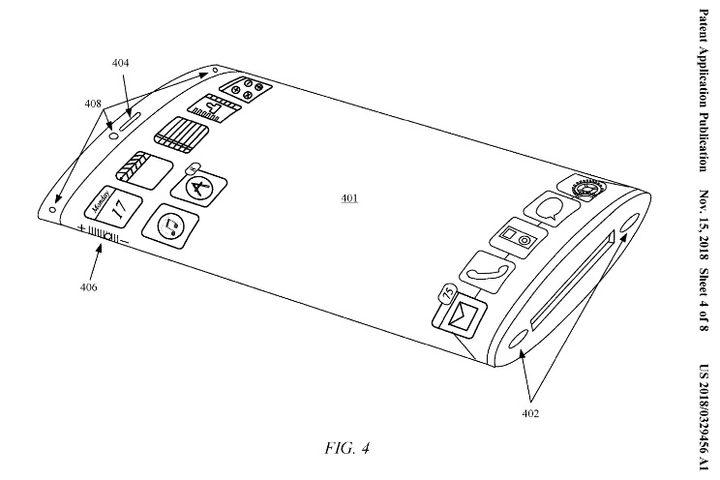
Image used with permission by copyright holder

Interestingly, the patent also notes that such a design could be sold as a glass enclosure for a separate folding screen — so you could create a phone-like device out of a flexible screen by inserting it into a transparent enclosure. This fits with earlier patents for a super-bendy display.

This is far from the first weird vision of a foldable device we’ve seen from Apple. A previous patent application involved an iPhone that wound up like a scroll, unwinding from two cylinders on either end. One of the earliest patents to be filed, way back in 2016, showcases a more “traditional” foldable phone, with a central hinge that turns a smaller display into a much larger, tablet-sized affair — something more akin to the ZTE Axon M.

Mark Jansen
Former Mobile Evergreen Editor
Mark Jansen is an avid follower of everything that beeps, bloops, or makes pretty lights. He has a degree in Ancient &…
Audible just launched a rewards program that pays you back for listening every day
Audible Rewards is now live in the US as a free loyalty program for Standard and Premium members
audible-rewards-program

If you already spend a good chunk of your day listening to audiobooks, Audible wants to start rewarding you for it. The company has launched Audible Rewards, a new program that turns your everyday listening habits into perks, discounts, and exclusive goodies.

It is free to join through the Audible app, website, or Amazon.com, and it is available to both Standard and Premium plan members in the US starting today across iOS, Android, and web.

Read more
Android will now warn you if someone is using AI to fake your contact’s voice on a call
Google's fake call detection is the first time a phone platform has built a real-time cryptographic defense against AI voice cloning scams.
Android fake call detection featured.

Yes, advancements in AI help people from different walks of life, but they have some cons. One of the most exploited con has been AI voice cloning. Over the years, it has reached the point where most people can no longer tell a deepfake voice from a real one. 

Scammers already know this, and they’ve been spoofing users’ contacts, cloning their voice, and committing financial frauds for quite some time. Android's new fake call detection is designed to stop that exact scenario before it costs you.

Read more
The Vivo X300 Ultra is making all camera phones look bad, and here’s why
Vivo X300 Ultra isn't the camera you need, but deserve
Vivo X300 Ultra

For years, smartphone brands have promised “DSLR-like” photography. Most improved image processing, added bigger sensors, or stacked more cameras onto the back. But the Vivo X300 Ultra takes a very different approach - it does not just want to mimic a camera, it wants to behave like one.

From external telephoto lenses and physical camera controls to filter support and tripod mounting, Vivo’s latest Ultra flagship feels closer to a modular photography system than a traditional smartphone. The company is no longer simply chasing better smartphone photos; it is targeting creators who would normally carry a mirrorless camera in their bag.

Read more