In the iconic words of Tim Cook, Good morning! It’s officially iPhone 14 pre-order day, and in typical Apple fashion, the pre-order experience seems to be all over the place. Some people, like myself, have had a pretty smooth time getting in and out with their purchases. Other folks have taken to Twitter to complain about incorrect shipping addresses, failed card chargers, a non-functioning trade-in system, and more.
But assuming the technical aspects of the Apple website/app work and you’re able to select the iPhone 14 configuration you want, you’re soon faced with a big decision to make: How much storage do you need on your new iPhone 14?
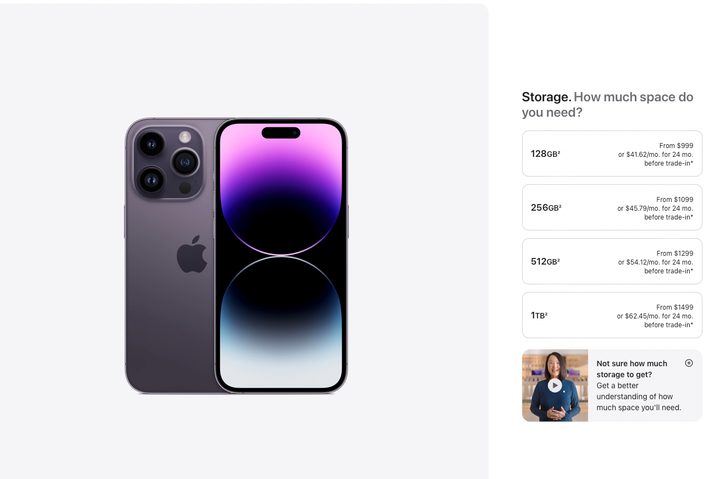
Selecting your preferred storage is as simple as clicking or tapping the amount you want, but therein lies the problem. How much storage do you really need? It’s tempting to pick 128GB as it’s the cheapest option, but will it be enough? Are you going to regret not splurging for 256GB, 512GB, or even 1TB after a year or two of regular use?
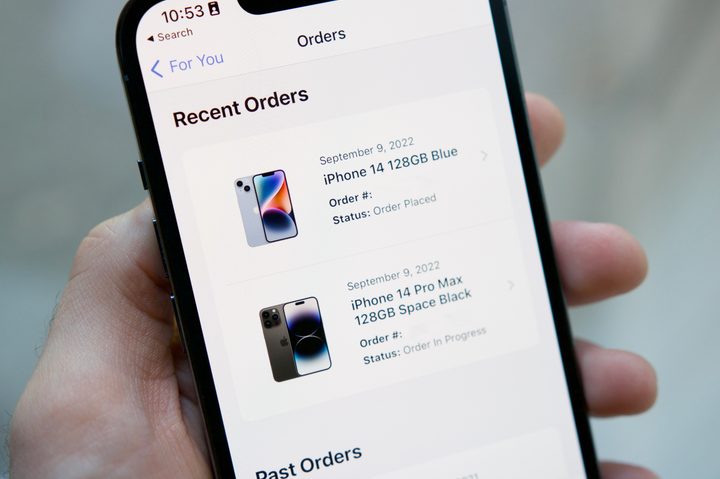
That’s a question without a one-size-fits-all answer. Everyone uses their phone differently and has different storage needs. If you’ve read multiple guides explaining storage differences and still can’t make up your mind, let me give you a simple piece of advice: Just buy the 128GB iPhone 14 and call it a day. That’s what I did with my 128GB iPhone 14 Pro Max, and I’m happy to have saved the extra $100 it would have cost me to splurge for 256GB.
“But Joe, is 128GB really enough storage in 2022?” For folks downloading numerous albums for offline use, dozens of podcasts, and various mobile games, probably not. But let’s say you aren’t downloading heaps of large files and saving them on your phone. In that case, you can absolutely still get by with 128GB.
I’ve been using a 128GB iPhone 13 Pro for just about a year now. Looking at my storage today, I’m using just 70.3GB of the 128GB allotment. That’s with 4.8GB of downloaded music, 2.67GB of data in Apple Photos, 3.14GB of data from iMessage, and 190+ apps currently installed. I don’t have any downloaded podcasts or graphically intense games. Beyond a few downloaded albums for traveling, all of my music, podcasts, movies, and TV shows are streamed via a data connection.
That type of usage may not reflect how you use your phone, but I’m also willing to bet there are people reading this who can relate to using their phone in this manner. If you have a lot of apps like Twitter and Microsoft Teams, save all of your photos in a cloud storage service, stream your audio/video, and don’t have multiple titles like Diablo: Immortal and Call of Duty: Mobile installed, 128GB is more than doable in 2022.
The only potential downside to a 128GB storage capacity is seen with the Pro models. With the iPhone 14 Pro and iPhone 14 Pro Max, only the 256GB, 512GB, and 1TB models can record 4K ProRes video at 30fps. If you want to record 4K video that you can edit and manipulate in a video editor after the fact, it’s a legitimate limitation to consider. But for nearly everyone else, it’s something that should have zero impact on you in daily use.
That’s ultimately what it comes down to. For content creators, vloggers, hardcore gamers, etc., I get the appeal and need for bigger storage options if you’re a “power user.” But for people like me who aren’t quite as demanding of their smartphone, don’t feel bad about choosing 128GB when selecting your iPhone 14.
It’ll almost certainly be enough room, you’re getting (mostly) all of the same features, and you’ll have more money left in your pocket than all of your friends who were convinced they needed 256GB or more. Plus, you can use that extra cash for some iPhone 14 cases, which you should absolutely get.