
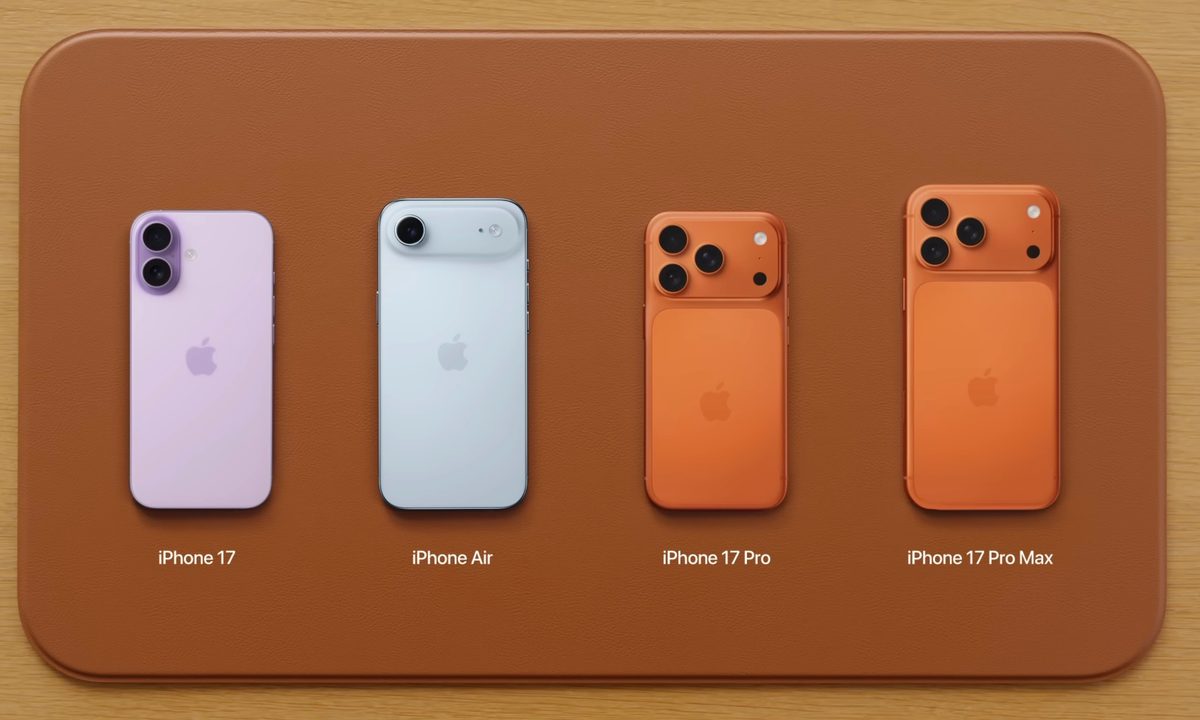
Apple pulled off a surprise this year by redefining its smartphone line-up. The base model is better equipped than ever, the Pro trim gets a fresh look, and there’s a new Air model to shake things up. The changes, however, go beyond the surface and make each iPhone 17 model truly stand out from a value and functional lens.
The iPhone Air is a sign of things to come (read: foldable iPhone) from Apple’s engineering team, and it managed to surprise in more ways than expected. Over the past half a decade, the conundrum of picking “the one” has never been as thick as the Fall 2025 slate. We are breaking down how all these models compare, and which one best suits your needs.
iPhone 17 vs iPhone Air vs iPhone 17 Pro
| Device | iPhone 17 | iPhone Air | iPhone 17 Pro |
|---|---|---|---|
| Dimensions | 149.6 x 71.5 x 7.95 mm | 156.2 x 74.7 x 5.64 mm | 150.0 x 71.9 x 8.75 mm |
| Weight | 177 g | 165 g | 204 g |
| Display | 6.3” Super Retina XDR, ProMotion 2622×1206-pixel resolution at 460 ppi 1,000 nits max brightness (typical) 1,600 nits peak brightness (HDR) 3,000 nits peak brightness (outdoor) | 6.5” Super Retina XDR, ProMotion 2622×1206-pixel resolution at 460 ppi 1,000 nits max brightness (typical) 1,600 nits peak brightness (HDR) 3,000 nits peak brightness (outdoor) | 6.3” Super Retina XDR, ProMotion 2622×1206-pixel resolution at 460 ppi 1,000 nits max brightness (typical) 1,600 nits peak brightness (HDR) 3,000 nits peak brightness (outdoor) |
| Durability | Ceramic Shield 2 front, Ceramic Shield back, IP68 (6m/30min) | Ceramic Shield 2 front, Ceramic Shield back, IP68 (6m/30min) | Ceramic Shield 2 front, Ceramic Shield back, IP68 (6m/30min) |
| Color | Lavender, Sage, Mist Blue, White, Black | Sky Blue, Light Gold, Cloud White, Space Black | Cosmic Orange, Deep Blue, Silver |
| Processor | A19, 6-core CPU, 5-core GPU, 16-core Neural Engine | A19 Pro, 6-core CPU, 5-core GPU, 16-core Neural Engine | A19 Pro, 6-core CPU, 6-core GPU, 16-core Neural Engine |
| Storage | 256GB, 512GB | 256GB, 512GB, 1TB | 256GB, 512GB, 1TB |
| Software | iOS 26, Apple Intelligence | iOS 26, Apple Intelligence | iOS 26, Apple Intelligence |
| Front Camera | 18MP Center Stage, Night mode, Dual Capture, Ultra-stabilised video | 18MP Center Stage, Night mode, Dual Capture, Ultra-stabilised video | 18MP Center Stage, Night mode, Dual Capture, Ultra-stabilised video |
| Rear Camera | 48MP Dual Fusion (Main, Ultra Wide), Macro, 4K Dolby Vision @ 60fps, up to 2x zoom Features 4K Dolby Vision video recording up to 60 fps Cinematic mode for recording videos with shallow depth of field (up to 4K Dolby Vision at 30 fps) Dual Capture (up to 4K Dolby Vision at 30 fps) – – – – – – Action mode (up to 2.8K Dolby Vision at 60 fps) Spatial video recording at 1080p at 30 fps Slo‑mo video support up to 1080p at 240 fps Sensor-shift optical image stabilization (Fusion Main) Spatial Audio and stereo recording | 48MP Fusion Main, 4K Dolby Vision @ 60fps, up to 2x zoom Features 4K Dolby Vision vide recording up to 60 fps – Dual Capture (up to 4K Dolby Vision at 30 fps) – Action mode (up to 2.8K Dolby Vision at 60 fps)- – Slo‑mo video support up to 1080p at 240 fps – – – – – – – – Sensor-shift optical image stabilization Spatial Audio and stereo recording | 48MP Pro Fusion (Main, Ultra Wide, Telephoto), Macro, 4K Dolby Vision @ 120fps, up to 8x zoom Features 4K Dolby Vision video recording up to 120 fps (Fusion Main), up to 60 fps (Fusion Ultra Wide, Fusion Telephoto) Cinematic mode for recording videos with shallow depth of field (up to 4K Dolby Vision at 30 fps) Dual Capture (up to 4K Dolby Vision at 30 fps) Spatial video recording at 1080p at 30 fps ProRes video recording up to 4K at 120 fps with external recording Action mode (up to 2.8K Dolby Vision at 60 fps) ProRes RAW Academy Color Encoding System Apple Log 2 video recording Genlock support Slo‑mo video support for 1080p up to 240 fps and 4K Dolby Vision up to 120 fps (Fusion Main) Second-generation sensor-shift optical image stabilization (Fusion Main) 3D sensor-shift optical image stabilization (Fusion Telephoto) Spatial Audio and stereo recording |
| Battery | Up to 30 hrs video, MagSafe/Qi2/Qi wireless, Fast charge (50% in 20 min) | Up to 27 hrs video, MagSafe/Qi2/Qi wireless, Fast charge (50% in 30 min) | Up to 31 hrs video, MagSafe/Qi2/Qi wireless, Fast charge (50% in 20 min) |
| Connectivity | 5G, Wi-Fi 7, Bluetooth 6, USB-C (USB 2), Dual SIM (nano/eSIM) | 5G, Wi-Fi 7, Bluetooth 6, USB-C (USB 2), Dual eSIM only | 5G, Wi-Fi 7, Bluetooth 6, USB-C (USB 3), Dual SIM (nano/eSIM) |
| Price | From $799 | From $999 | From $1,099 |
iPhone 17 vs iPhone Air vs iPhone 17 Pro: Price
The biggest surprise this year, from a value perspective was the iPhone 17. Despite a holistic upgrade across the table, it keeps the starting price locked to $699. The iPhone Air comes in at $999, while the iPhone 17 Pro climbs to $1,099. And yeah, in case you’re wondering, Apple now sells a $2,000 iPhone, if 2TB storage (and bragging rights) are your thing.
iPhone 17 vs iPhone Air vs iPhone 17 Pro: Design

This is going to be the biggest deciding factor for any buyer out there. All three iPhones look entirely different. The iPhone 17 retains the fundamental looks as its predecessor, but gets a fresh splash of colors. On the five color options on the table, the lavender and sage stand out.
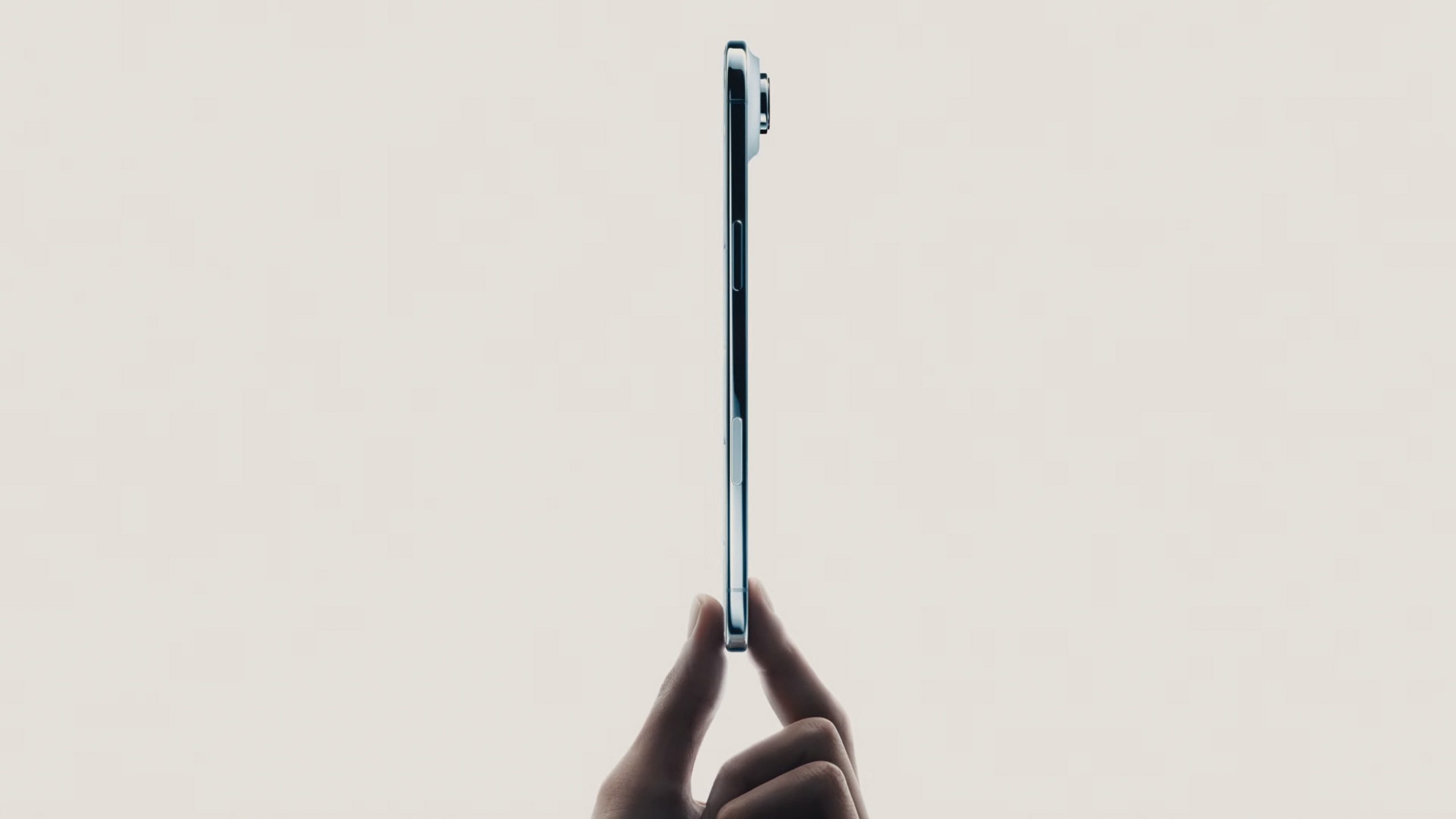
The big “look at me now” warrior this year is the iPhone Air. It’s the slimmest phone made by Apple so far, which is quite a bold statement in itself. Made out of grade 5 titanium for the frame, this one gets Ceramic Shield 2 front cover that is thrice as scratch-resistant and comes with anti-reflective coat, as well.
You get Ceramic Shield on the back panel, as well, which Apple claims to be four times stronger than its predecessors. In fact, the company sounds extremely confident about its toughness, despite the svelte waistline. “This design makes iPhone Air more durable than any previous iPhone,” says the company.

Coming to the iPhone 17 Pro, it also gets a design makeover. The camera bump is huge, but it does offer a distinct look. The other core difference is the contrasting color-tone underneath, which really stands out on the new orange shade.
Apple has also ditched Titanium and returned to an alauminum chassis on this one for improved heat dissipation. Additionally, the Pro model gets a Ceramic Shield layer on the back for the first time, while the Ceramic Shield 2 guard protects the screen.
All three phones comes within an IP68-tirt build, which means they can survive water immersion at a maximum depth of 6 metres for up to 30 minutes. It’s good enough for the occasional splashes and drops, but don’t expose it to fast-moving fluid such as jets, or take it swimming in the ocean.
iPhone 17 vs iPhone Air vs iPhone 17 Pro: Display

This year, each core iPhone model features the same fundamental display tech, and the difference is only in the size you pick. The iPhone 17 and its Pro sibling offer a 6.3-inch display. The iPhone Air goes up to 6.5 inches, while the iPhone17 Pro Max embraces a 6.9-inch canvas.
Each phone features a Super Retina XDR display with ProMotion tech, which is essentially Apple’s way of saying you get an OLED panel with 120Hz refresh rate. And here’s the best part. All the other display quality aspects are identical across all three models, save for a slight difference in the resolution.
The panel on each phone offers a 20,00,000:1 contrast ratio, 1,000 nits of brightness in HDR mode, and 3,000 nits of peak output when outdoors, but only for short bursts. The only discernible difference between the three is that the Dynamic Island sits slightly lower below the top edge on the iPhone Air than the rest of its siblings.
iPhone 17 vs iPhone Air vs iPhone 17 Pro: Performance

For the iPhone 17 series, Apple developed a new silicon in two flavors viz. A19 and A19 Pro. The iPhone 17, fittingly, gets the A19, while the iPhone Air and iPhone 17 Pro get the A19 Pro. Both the procrssors feature a 6-core CPU and 5-core GPU architecture.
The generation over generation performance leap is not huge, but when you compare it against older devices, the gulf is sizeable. Apple notes that the A19’s six-core CPU architecture offers a 1.5x jump in processing output compared to the A15 Bionic, and a 100% leap in the graphics output courtesy of the new GPU with the fused AI accelerator architecture.
On the surface, the A19 Pro doesn’t appear to play the core-count game, but it makes a few under-the-shell changes to boost the raw output. The biggest difference is going to be how these processors maintain sustained perfomrnance on each phone.

The iPhone Air is super slim, so it’s going to run hotter and resort to some throttling in order to keep things cool. On the iPhone 17 Pro, we finally get a vapor chamber cooling system. Essentially, this system relies on exchange of heat using an ionized liquid, which then transfers it to the rest of the metallic chassis for dissipation.
In my tests with devices such as the Red Magic Astra, it allows the device to maintain its peak performance for a longer spell, especially during taxing scenarios such as high-resolution video capture and intensive gaming sessions.
For the iPhone 17 Pro, Apple is touting 40 percent better sustained performance, which should come in handy for demanding situations, especially those that involve running local AI processes. Apple also notes that the A19 Pro’s CPU is the fastest ever, and that it also gets more memory and a larger cache.
iPhone 17 vs iPhone Air vs iPhone 17 Pro: Cameras

The camera hardware is going to be the litmus test for anyone planning to splurg on one of Apple’s latest smartphones. So here’s the deal. Broadly, the choice is easier than ever. One camera, the versatility of an added telephoto camera, or a phone that also takes care of ukltrawide capture.
If you aren’t knee deep into the virtues of multiple lenses and the versatility they offer in terms of long-range capture, the iPhone Air will serve you just fine. The 48-megapixel camera on this one also promises optical-quality 2x Telephoto zoom output, so there’s that added perk.
The sensor, which is supported by sensor-shift OlS for capturing stable videos, reaching all the way up to 4K Dolby Vision clips at 60fps. The more promising sensor is actually the 18-megapixel Center Stage camera on the front, which is claimed to be the first square front camera sensor seen on a iPhone.

Aside from the obvious bump in resolution, the new front camera introduces a new pipeline that automatically adjusts the frame and even lets users capture landscape selfies while holding the phone in portrait mode. It also opens the doors for dual-video from both cameras simultaneously and isn’t a slouch either at video capture, thanks to 4K HDR video capture.
If you’re seeking an extra dash of versatility in terms of imaging prowess, the iPhone 17 should serves most users just fine. This year, the main 48-megapixel main camera is now accompanied by a 48-megapixel ultrawide camera, both of which support the Fusion tech and enable 2x optical zoom and macro capture.
Broadly, you get the benefits of four distinct type of camera sensors with just two lenses. It can also capture spatial photos and enables macro video capture, even at close range with the subject. The front camera hardware has been borrowed from the iPhone Air, but on the iPhone 17, you also get support for capturing cinematic videos in 4K Dolby Vision format.
Finally, we land on the iPhone 17 Pro, an altogether different beast. Aside from inheriting the new 18MP Center Stage front camera, this is the first time that all three rear cameras on an iPhone go for a big 48-megapixel sensor. This is a phone that is geared at creatives and creators, more so than ever.
Both the main and telephoto camera on this one support sensor-shift stabilization tech. As far as exclusive features, they include ProRes 4K 120fps video capture, ProRes RAW support, the new Apple Log 2 video recordinp perk, and Genlock support to enable multi-device setups where footage needs to be synced across multiple camera streams.
Even the front camera on this one is capable of ProRes video capture up to 4K at 60 fps with external recording facility. In a nutshell, if you want to the get the best in terms of camera facilities, and hope to push the new avatar of Final Cut Camera 2.0 app, this is the one to get.
iPhone 17 vs iPhone Air vs iPhone 17 Pro: Battery

Apple has also made significant strides this year in terms of battery efficiency. The iPhone 17 promises up to 30 hours of video playback on a single charge, and it also doubles the charging pace to 40W. Now, you can juice up an empty tank to the 50% level in just 20 minutes.
The iPhone Air is not too far behind. Apple is promising 27 hours of video playback mileage for this one. The charging speed is slightly slower on this one, with a promise of 0-50% top-uo in 30 minutes. With the MagSafe battery pack, the total battery life climbs to 40 hours, so there’s that consolation.
On the iPhone 17 Pro pair, Apple is promising a battery life that goes all the way up to 37 hours. It also supports 40W wired charging. All three phones support MagSafe charging, and the Qi2 standard, as well.
Overall, each phone is claimed to last a full day, but how much extra per-charge convenience you want will ultimately decide the right pick your usage (and charging) pattern.


