  1. Home
  2. Phones
  3. Computing
  4. Mobile
  5. News

The Monk Skin Tone Scale makes the internet more inclusive

Add as a preferred source on Google

Google has adopted the Monk Skin Tone (MST) Scale for use across its software and products to ensure all kinds of skin tones are accurately portrayed and represented on the internet. The MST Scale is the work of Harvard professor and sociologist Dr. Ellis Monk, and is a 10-point scale that help machines better understand and therefore better represent more varied skin tones. It’s a considerable step up from the six-point scale commonly used online today.

Monk Skin Tone Scale | Google's Research Center for Responsible AI and Human-Centered Technology

The 10-point scale has been validated through a U.S. study launched by Google Research, which asked people from a range of different communities if they felt their skin tone was represented on it. Why only 10 points and not 100, or 1,000? Dr. Ellis explains:

Recommended Videos

“You only pick so many tones to use in the scale because of cognitive latency issues. If you have a scale with too many points, that’s impractical for humans and from an A.I. point of view, furthermore, it becomes a problem when a scale is too large.”

The MST Scale with its 10 points has enough variation that it reflects more people than the current model, yet doesn’t increase complexity, enabling computers and software to adapt to it quickly. However, this is not its absolutely final state. Google says the scale and the A.I. that supports it are a work in progress, and it’s seen as an initial step in the right direction. The MST Scale is open source and through partnerships in the industry, it will be used to improve images and content online as part of an effort to make the internet more inclusive.
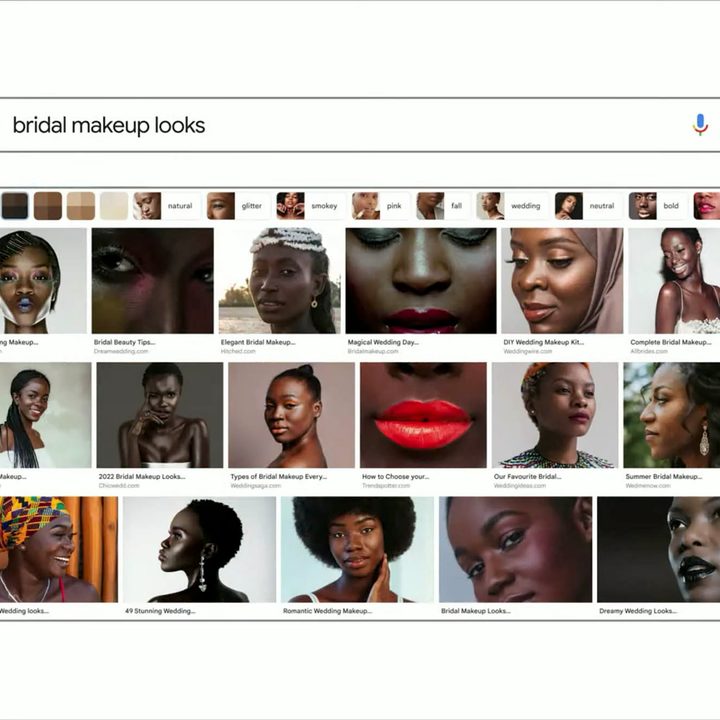
Search results using the Monk Skin Tone Scale
Image used with permission by copyright holder

Where will we see the MST Scale in action? Google specifically mentions Google Images, where an option to refine results by including skin tone will be added. The MST Scale will then help provide results that better suit you. The MST Scale will also come to Google Photos through a series of new Real Tone filters added to it, which are designed using the scale to better accommodate more skin tones. These will be coming to the iOS and Android Google Photos app in the coming weeks.

The MST Scale continues the work Google started in 2021 under the name Real Tone, where the Pixel 6 and Pixel 6 Pro’s cameras used A.I. and other tools to better render different skin tones. The Real Tone tool was also built into the Auto Enhance feature in Google Photos.

Take a look at the 10-point MST Scale here, where Google has even made the scale available with HEX codes, and the shades are easily copied and pasted for your own use. The use of the MST Scale is part of the company’s Google I/O 2022 announcements.

Andy Boxall
Andy has written about mobile technology for almost a decade. From 2G to 5G and smartphone to smartwatch, Andy knows tech.
One UI 9 will finally give Samsung phones a feature most Androids have had for years
The long-missing network speed indicator is finally showing up in One UI 9
Samsung Galaxy S26 Ultra smartphone in blue color.

Samsung is already a few weeks into testing One UI 9 with Galaxy S26 beta users, and a new feature spotted in the latest build feels long overdue. It is the network speed indicator, a simple status bar tool so common on other Android phones that it is surprising Galaxy phones have gone this long without it.

You can find this feature even on budget Android phones from brands like OnePlus, Oppo, and Xiaomi. It shows real-time upload and download activity in the status bar while the phone is connected to Wi-Fi or mobile data, giving users a quick way to check whether their connection is actually moving data.

Read more
Waiting for smartphone prices to drop? Nothing’s CEO has bad news for you
Carl Pei has skin in this game, but the RAM shortage he is describing is real, and the price increases he is pointing to are already showing up in phones you can buy today.
Nothing Phone 4a Pro featured.

If you have been holding off on a new phone hoping for a better deal, perhaps a discount on a model launched in the first quarter of the year, Nothing’s co-founder Carl Pei has a blunt message for you: stop waiting. 

In a post on X, Pei explained how 2026 is reshaping smartphone pricing like never before. The culprit, to no one's surprise, is a component that now makes up more than 50% of the total hardware bill.

Read more
Scammers used Gemini AI to power a massive phishing operation and Google just sued them
Google just sued the AI scam network sending millions of fake texts and building thousands of fraudulent websites.
fake-google-security-check-phishing-attack

That suspicious text about an unpaid toll, a delayed delivery package, or expiring rewards points may no longer be the work of a lone scammer. These scam texts have been flooding American phones for years, but something has changed.

Google says artificial intelligence is helping fraudsters run larger and more convincing operations than ever before. The company has now filed a lawsuit against a cybercrime network that used Gemini AI to create phishing websites and power a massive scam campaign targeting millions of users.

Read more