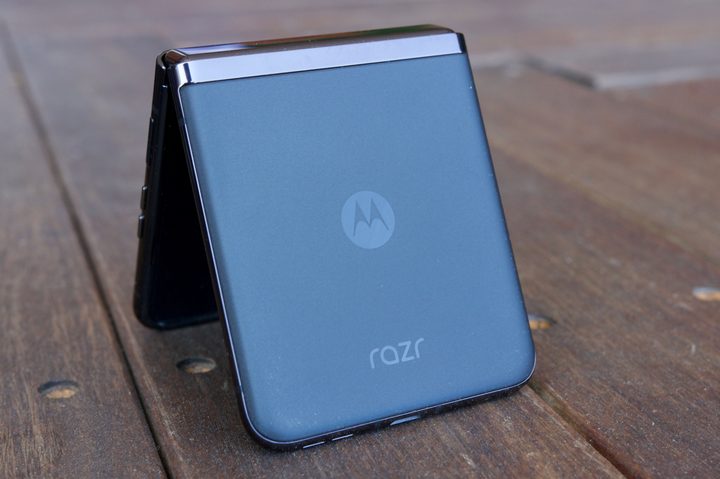
Motorola has finally admitted to itself that trading on the past for its Razr designs hasn’t been working. After Motorola took the sensible step of minimizing the once-iconic chin on the Razr (2022), it has completely disappeared from the new Razr (2023) and the Razr Plus.
What we’re left with is an incredibly clean design that — especially in the case of the Razr Plus — gives the new compact folding phone a much-needed identity all of its own.
Stop living in the past

It can’t be overstated how important this change is. The Razr name and the choice of font for the branding are enough of a reminder of the past, and Motorola (or, more accurately, owner Lenovo) doesn’t need to constantly reuse the design to remind everyone about the new compact folding phone’s (somewhat spurious) link to the popular heritage model. It’s absolutely time for the Razr to become its own phone.
Using nostalgia to influence the first Razr’s design was a sensible decision. Folding smartphones, especially compact ones, were still a rarity at the time, and using a familiar shape and concept to introduce people to the next generation was inspired. It wasn’t something many other manufacturers could copy, and while most made flip phones like the Razr, none had the cultural significance.
It’s then very unfortunate Motorola carried the design on for subsequent models and only made a vague attempt to distance the Razr (2022) from the classic design last year. The chin was far less prominent, but it hadn’t been removed, just minimized. The echoes of the original Razr were still there as Motorola continued to remind everyone, “Don’t forget, we made that phone you liked all those years ago!”
Building an identity

After reusing an old design multiple times, creativity should rightly be called into question. After all, Motorola isn’t a one-trick pony, and even back when the original Razr V3 was a thing, it successfully built on the design language from its earlier StarTac series with phones like the Razr2 and the V50. Each was individual and unique, rather than just lazy facsimiles, and hugely assisted with building the brand’s image.
It’s overdue for the new Razr to be treated in the same way, particularly because the reimagined phones themselves have not been absolute winners, and all it has been doing until now is diluting the Razr brand name. Keeping the name is the right decision, but letting the design be influenced by a phone from decades ago isn’t. The chin, no matter how subtle its existence may have become, is an iconic shape that needed to be left in the past.
It has been frustrating watching Motorola fail to meaningfully evolve the Razr’s design until now. There’s so much opportunity to make an impact in compact folding smartphone design, as an established style or look hasn’t really been settled on yet, but Motorola preferred to live in the past rather than let its designers loose. Now it appears we’re finally seeing what it can do, and while I would have preferred to see it earlier, it has been worth the wait.
The Razr Plus shows the way forward


Although the design of the Razr (2023) is new, it’s the Razr Plus that represents the biggest shift — and the one that will be lusted after. Not only does it look nothing like an old Razr, it doesn’t look like any other folding smartphone — and that’s a huge deal. It means it’ll be instantly recognizable and won’t be mistaken for any other current model. If it’s going to be a true challenger to the Samsung Galaxy Z Flip 4 or the Galaxy Z Flip 5, it needs to stand out on its own.
The massive 3.6-inch pOLED cover screen takes up almost the entirety of the folded front panel, and the way the cameras are integrated into it looks modern and interesting. Instead of making you reminisce about a phone you owned in the past, it looks and feels like the future. That’s before you get into the specs, as the 144Hz refresh rate, HDR10+ certification, and the ability to run any app you want means it’s going to operate like a cutting-edge phone too.


Motorola hasn’t got everything right, though. The names it has used are as generic as they get, and the decision to offer a purple color fills me with rage. Just because Samsung sells a purple Galaxy Z Flip 4 doesn’t mean every other compact folding phone should come in purple too. Oppo even did the same with the Find N2 Flip. The new, unique Viva Magenta color looks glorious and should be the single standout option for both models, as the purple just makes Motorola look like it lacks confidence.
Our early impressions of the Razr Plus and the slightly less visually interesting Razr (2023) are very positive, and the great news is they follow the Motorola Edge Plus (2023), a phone we gave 9 out of 10 to in our review, so it challenges the best from Samsung, Google, and Apple. Motorola has spent some years in the wilderness, making passable phones while not really exciting anyone, but the Edge Plus’ brilliance and the Razr’s superior, all-new design show it may finally have turned a very important corner.