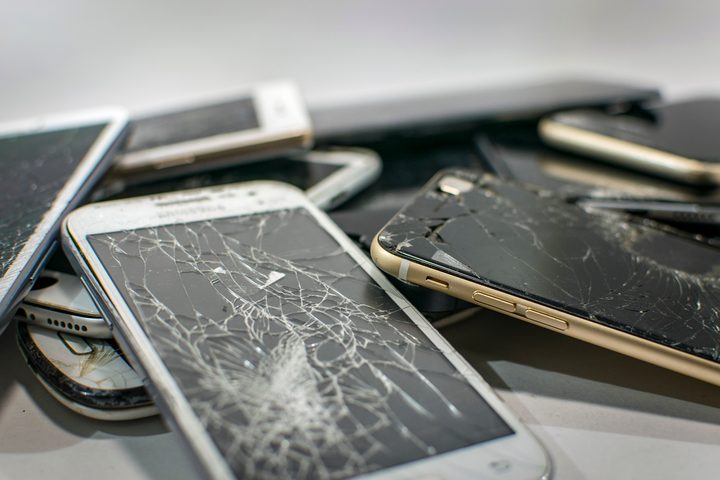
Most of us have dropped a smartphone at some point and felt that lurch of panic as we bent to pick it up and inspect the damage. Chipped frames, rattling buttons, and cracked or shattered screens are all too common. More than 87 million Americans have damaged their phone in the past 12 months, with screen damage accounting for 45% of all damage, according to a survey by AllState Protection Plans. And phones are so expensive and inconvenient to get fixed that 43% of people don’t bother — they use the phone as is or they get rid of it.
Little wonder, then, that smartphone case sales are booming. The mobile accessories market worldwide was worth $254.5 billion in 2020, according to Statista. This is set to grow to an estimated $413.2 billion by 2030.
“Companies can conduct their own tests and therefore make their own claims.”
We test a lot of smartphone cases here at Digital Trends, and we know that drop protection is one of the key concerns for buyers. That’s why we often recommend cases that boast military drop test standards on the box. You’d expect to be able to drop your phone on the sidewalk and find it undamaged if it’s wearing a case that’s tough enough for the military, wouldn’t you?
Sadly, these standards may not be as stringent as you think. It turns out that not all military drop tests are created equal. We spoke to the experts behind some of the best smartphone cases on the market to find out what those certifications really mean.
Note: This article was originally published in 2016. All quotes date from this time and were accurate at the original time of writing.
Military drop tests vary greatly
At Pelican, the same case is dropped 20 times from 1.2 meters (4 feet) and then from 1.8 meters (6 feet) onto hardwood over concrete.
“We don’t want to see any damage to the device; if there’s any damage to the device, we go back to the drawing board and redesign the case,” Andy Comerford, consumer sales manager EMEA for Peli Products told Digital Trends. “Some people only drop it a few times and call that a military drop test.”
This lack of consistent standards that can be verified is a real problem, and it undermines the reliability of the military drop test standard claim.
“The actual benefits are hard for consumers to fully understand, with some brands stating ‘meets,’ others quoting ‘exceeds,’ and some attributing different heights to the claims,” Colin Woodward, global marketing director at Tech21 told Digital Trends.
For the record, MIL-STD-810G is the standard you’ll often see — more specifically, Method 516.6 Procedure IV (Transit Drop Test). It’s buried in a document that’s more than 800 pages long. You can download it at EverySpec if you’re interested, but to save you the time, it states the drop surface should be 2-inch thick plywood over concrete. The device in the case will sequentially be dropped onto each face, edge, and corner for a total of 26 drops. After each drop, the device is visually inspected for functional and structural integrity.
However, manufacturers are allowed to use up to five different samples while testing. That means each case is potentially only being dropped five or six times, and the orientation can be changed for each drop, which doesn’t test for cumulative damage. It’s also being dropped onto plywood, not a sidewalk.
And you have to take their word for it.
“Companies can conduct their own tests and therefore make their own claims,” explains Woodward. “The logos give the impression of independent testing, but this is not necessarily the case and can, therefore, be misleading.”
What tests do leading case makers use?
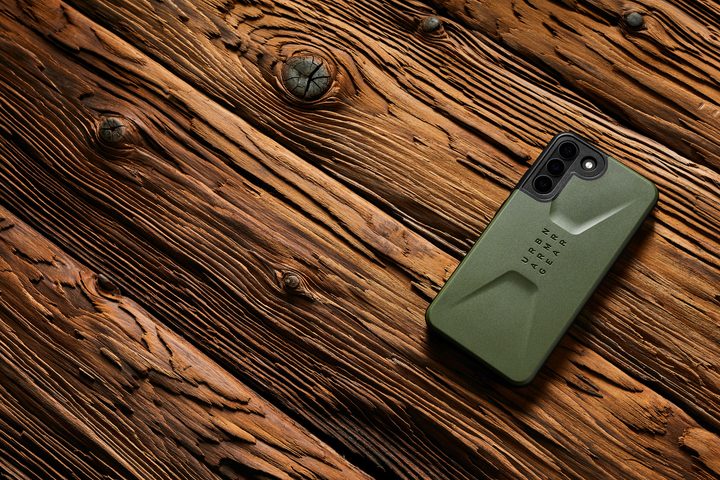
You’d be forgiven for thinking that the MIL-STD-810G 516.6 badge on a case box means that it has actually been tested by the military. All it really means is that the case manufacturer is claiming to have subjected their cases to one or more of the tests listed in the publicly available MIL-STD-810G document.
“Just because MIL-STD-810G gets printed on the carton or listed on a website doesn’t guarantee that the testing was performed or that it was performed properly,” Paul Staggers, engineering manager at OtterBox, told Digital Trends.
It’s worth pointing out that these tests were not designed for smartphone cases specifically, so they’re open to some interpretation. Drop tests are conducted in different ways by different case manufacturers.
“Every case manufacturer has to make their own interpretations about what constitutes a passing or failing test,” explains Staggers. “For some, a broken screen or obvious malfunction is the only thing they are looking at. We pride ourselves on looking beyond the obvious.”
With OtterBox cases, they test for subtle damage as well as the obvious, with a holistic view that includes the functional, physical, acoustic, tactile, dimensional, and aesthetic. OtterBox isn’t the only manufacturer to take a deeper dive.
“Although not visible on the outside, internal damage can result in microphone, speaker, button, haptic engine, or antenna damage,” Incipio’s director of products, Carlos Del Toro, told Digital Trends. “It can also affect other functionality on your phone that may not be immediately apparent. If your device starts behaving in a way that it did not before and you can’t figure out why, it may be due to internal damage.”
Because case makers can conduct their own testing, it becomes very difficult to accurately compare the relative performance of different cases.
“Drop testing is not the only testing consumers should look out for,” explains Del Toro. “The amount of shock absorption a case provides to shield your device internals from impact shock is also something to consider. We test some of our cases specifically for corner impact force, which is the force that gets transferred to the device after a drop. Think of it as a concussion for your device.”
The MIL-STD-810G is still widely used, although many case manufacturers conduct their own tests and make a point of exceeding those basic standards. It pays to do a little research into what their testing actually entails to make sure it aligns with your expectations.
“Consumers can trust MIL-STD-810G as a primary indicator that the case was designed to, at minimum, survive a 4-foot drop and still be functional,” says Del Toro. “However, they should read the fine print to get all the information on how the test was performed and to which height.”
“Just because MIL-STD-810G gets printed on the carton or listed on a website doesn’t guarantee that the testing was performed.”
For Tech21, the answer is independent testing, and so they’ve been working with the National Physical Laboratory, an independent, government-funded organization based in London, to develop a unique testing methodology for cases.
“We would encourage all brands to allow their products to be subjected to independent testing,” suggests Woodward. “After all, it’s easy to pass your own tests no matter how many you conduct, right?”
There’s clearly still some argument about whether consumers can really trust the MIL-STD-810G on a case box. You need to research the testing methods that case manufacturers employ and decide for yourself, but ultimately, in the absence of an independent body that tests every case the same way, it all boils down to trust.