A lot can happen in a week when it comes to tech. The constant onslaught of news makes it nigh impossible for mere mortals with real lives to keep track of everything. That’s why we’ve compiled a quick and dirty list of this week’s top tech stories, from our 2017 Digital Trends Car Awards to the best Game of Thrones theories — it’s all here.
2017 Digital Trends Car Awards

Each year, our editorial crew keeps busy by getting wheel time in as many vehicles as possible and sharing that experience with you. As the year wears on, clear favorites emerge, and our annual awards are a chance to celebrate those cars and see which are truly the best of the best.
We can’t gather every single car we’ve tested over the months, so we narrow the selection down to the best in specific categories. To us, these cars are already winners, which is why our selections are so diverse. From there, we spend some extra time reacquainting ourselves with just what we loved about each, and deliberate about which vehicles dominate their respective categories.
Read: 2017 Digital Trends Car Awards
Scientists figured out how to grow capillaries — 3D-printed tissues are next

For physicians, the dream of 3D printing is to one day be able to print functional tissues and organs for patients, made from their own cells. Doing this will allow a level of bespoke geometric customization and biochemical matching that will dramatically improve the quality of life of tens of thousands of people in need.
We have yet to reach that lofty goal, but a new project carried out by researchers at Rice University and Baylor College of Medicine takes the dream one step closer to reality.
In a paper published in the journal Biomaterials Science, the researchers demonstrate a method of generating implantable tissues with functioning capillaries, the tiny blood vessels responsible for supplying the body with oxygen and other nutrients.
Read: Scientists figured out how to grow capillaries — 3D-printed tissues are next
‘Game of Thrones’ Season 7 is upon us! Study up with the most intriguing theories

Season 7 of Game of Thrones lands Sunday, July 16, and while season 6 finally confirmed some popular fan theories — and laid others to rest — there are plenty of story left and many theories that could still prove true. One could fill a book with fan theories about this epic tale, but we’ve narrowed it down to five of the most popular Game of Thrones theories in existence.
Read: ‘Game of Thrones’ Season 7 is upon us! Study up with the most intriguing theories
Revo is a wooden bench-seat bike that assembles like something from IKEA

Tandem bicycles are a joy to ride. However, there are reasons they are not more prevalent in the biking community. While they fit two people, they still work just as fine for one. Yet, nothing looks as lonely than a single person on a tandem. Revo is a prototype, bench-seat bicycle that looks good with or without a partner.
Moholy-Nagy University of Art and Design student Tamás Túri created the working prototype as an easy-to-build urban bicycle. “Imagine it as IKEA furniture,” Túri told Gear Junkie. “The assembly shouldn’t take longer than half an hour.”
Read: Revo is a wooden bench-seat bike that assembles like something from IKEA
Microsoft app uses AI to help visually impaired people interact with the world
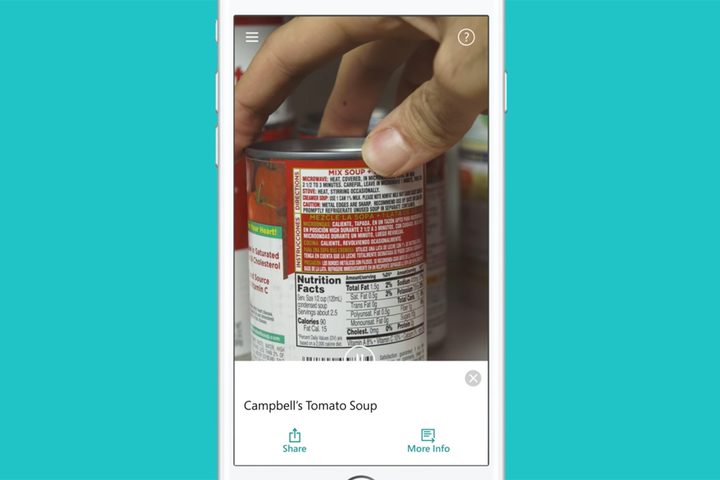
Microsoft is using artificial intelligence to tackle a huge problem: helping visually impaired users interact with the world around them. To that end, it has developed Seeing AI, an iPhone app that recognizes people, places, documents, currency, and more to narrate your surroundings.
Open the app and point your phone’s camera at a friend, and Seeing AI will tell you who you’re looking at as well as report the expression on their face. Point it at a can of soup in the grocery store, and it will read off the brand as well as the directions. The app can also translate printed text to speech, whether it’s on a paper or a label on a door. It can even tell denomination bills apart from one and another.
Read: Microsoft app uses AI to help visually impaired people interact with the world
Experience the bizarre reality of ‘Legion’ at Comic-Con’s Hololens demo
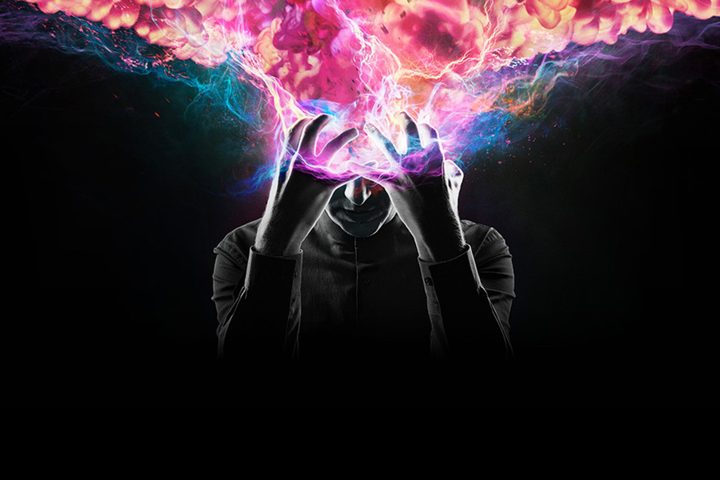
Over the past few years, as virtual and augmented reality platforms and software have blossomed into the growing industries that they are today, media properties have leveraged various technologies to augment shows and movies at various public events. Game of Thrones famously took fans atop the Wall in early versions of the Oculus Rift, and now the Hololens is going to give Legion fans a better look at the mind of its main character.
Fans of FX’s Legion TV series will get a feel of what it is like to not be able to trust reality itself at this year’s San Diego Comic-Con, where a mixed reality experience will be available to demo using Microsoft’s Hololens headset. The idea is to put fans in the shoes of protagonist David Haller, where they can play out various scenes from the first season of the show, as well as give them a sneak peek at season 2, RoadtoVR reports.
Read: Experience the bizarre reality of ‘Legion’ at Comic-Con’s Hololens demo
Hyperloop One speeds forward with its first full-scale test

There may be those who continue to raise an eyebrow or two at the idea of the Hyperloop One becoming a reality, but at least one of the companies behind the super-fast transportation system is intent on seeing the project through to completion.
Hyperloop One announced this week that it has taken a major step forward after successfully testing a full-scale version of its technology in a vacuum environment for the very first time.
Conducted recently at the company’s DevLoop test track in Nevada, the trial run saw an “actual size” passenger pod coast above the track for just over five seconds using magnetic levitation technology — better known as maglev — while reaching nearly 2Gs of acceleration.
Read: Hyperloop One speeds forward with its first full-scale test
Google Backup & Sync app now available to help maintain your computer files
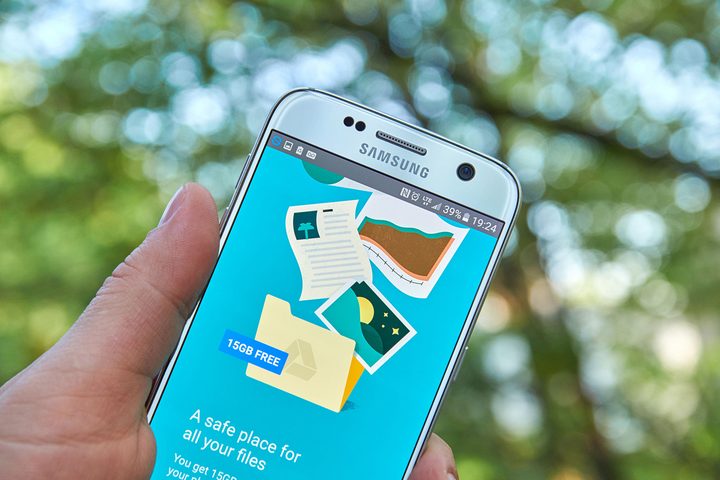
Google wants to be better at backing up your computer’s files. While the company already offers a Drive folder that can be installed on your computer, Google has now officially launched a new way to back up and sync any folder that you point it toward on your computer. If you want, Google Backup & Sync can back up your desktop, entire documents folder, and more.
The new feature is now rolling out to users in the form of an app called Backup & Sync, and it replaces both the Google Photos desktop uploader and Google Drive for MacOS and Windows. The app is aimed at regular consumers rather than business users — Google recommends business users stick with the already available Drive functionality that’s part of its G Suite.
Read: Google Backup & Sync app now available to help maintain your computer files
Facebook Live now lets you broadcast in VR using the Oculus Rift ‘Spaces’ app
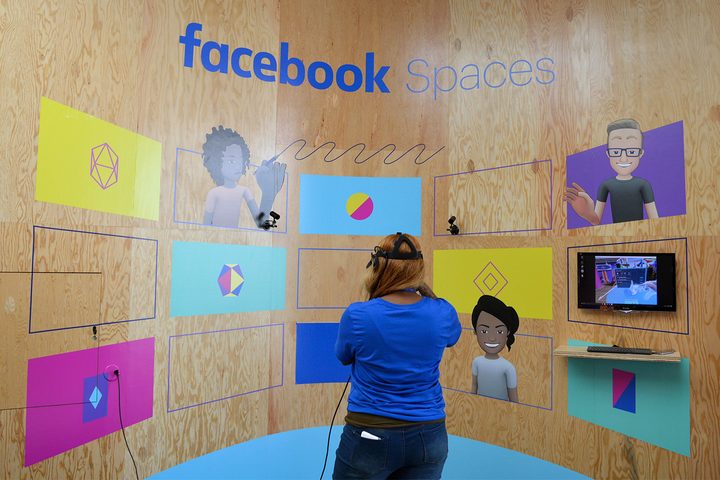
When Facebook acquired virtual reality headset maker Oculus and gained access to its main product, the Oculus Rift, the assumption was that VR experiences would increasingly make their way to the social media giant. So far, the VR headset has been successful in its own right, and the Oculus Spaces app has served as the main point of entry for using Facebook in a somewhat limited VR environment.
Now, Oculus Spaces is getting a brand-new feature that should significantly enhance the social sharing aspect of the experience. Spaces will now allow users to share Facebook Live video sessions that are generated from within the app, as Road to VR reports.
The new Live support means that users can now set up a virtual camera in Oculus Spaces that can be positioned anywhere in the VR environment and broadcast to other Facebook users — just as with a 2D Live session. This builds on Spaces‘ current ability to share selfies and add them to the Facebook Timeline, as well as the Facebook Messenger call feature that lets users engage in “VR-to-reality” video conferences.
Read: Facebook Live now lets you broadcast in VR using the Oculus Rift ‘Spaces’ app