1. Home
  2. Phones
  3. Android
  4. Apple
  5. Mobile
  6. News

The Army is reportedly swapping its buggy Android devices for iPhones

Add as a preferred source on Google

Changes are afoot in U.S government … in choice of handset, that is. Just this month, U.S. congressional staffers received the disheartening news that they’d no longer have their pick of BlackBerrys, and now the U.S. Army is reevaluating its options, too. According to DOD Buzz, the Army’s Special Operations Command (SOC) will soon eschew the Android phones it uses operationally for a platoon of iPhones.

The reason is a tactical one, apparently. The Android handsets comprise part of the Army’s Assault Kit, a “battlefield situational awareness tool” that’s intended to provide a big-picture overview of troop maneuvers by plotting troop movements on an electronic, communal map. They also serve as miniature mobile command stations, allowing troop leaders to stay abreast of “intelligence, surveillance, [and] reconnaissance sensor feeds” using a networked radio, according to DOD Buzz.

Recommended Videos

The only problem? The Samsung-supplied Android units fail frequently. DOD Buzz reports that the handsets “freeze up” and require frequent reboots, and apparently become particularly uncooperative when attempting to view video feeds from unmanned aerial systems — drones. “‘When [pulling up] a split screen showing the route and UAS feed, the Android smart phone [sic] will freeze up and fail to refresh properly and often have to be restarted,'” according to DOD Buzz’s source. “‘[It’s] a process that wastes valuable minutes.'”

The iPhones, by contrast, suffer from no such maladies. “‘It’s seamless on the iPhone,'” said DOD Buzz’s route. “‘The graphics are clear, unbelievable.'” In light of that finding, the Army is reportedly moving swiftly to swap Android kits for iPhone 6S variants, although DOD Buzz wasn’t able to discern a timeline.

Assuming the field reports are accurate, it’s tough to fault the Army for this move. Smartphones within the United State’s armed forces have become essentially indispensable, thanks to programs like the Defense Advanced Research Project Agency’s Transformative Apps. Troops download software distributed via a secure server to perform tasks like identifying high-risk combat zones; tracking drones in real time; calculating the ballistics of a sniper shot; avoiding friendly fire casualties; reviewing weapons and ammunition specs; measuring nearby radiation levels; and much, much more. There’s always pen and paper when those apps don’t work properly, but wasted seconds are dangerous seconds on an active battlefield.

We’ve reached out to the Army for comment, and we’ll update this article once we hear back.

Kyle Wiggers
Kyle Wiggers is a writer, Web designer, and podcaster with an acute interest in all things tech. When not reviewing gadgets…
Your old iPhone may have a security flaw Apple can’t fix
Security researchers find a new BootROM exploit affecting iPhones with A12 and A13 chips
iPhone 11 Pro in hand

iPhones are widely seen as some of the most secure smartphones for everyday users. Still, Apple devices are not immune to serious security flaws, as recent threats like Coruna and DarkSword have shown. Now, security researchers at Paradigm Shift have detailed a different kind of exploit called usbliter8, which affects some older iPhones and targets a deep part of Apple’s startup process known as the BootROM.

The BootROM is the basic startup code that runs before iOS loads. It helps the iPhone begin the boot process and verify what should run next. Because it is built into the chip itself, it is much harder to fix than a normal iOS bug. Apple can usually patch software flaws through an update, but it cannot rewrite BootROM code on devices that have already shipped.

Read more
Caviar’s iPhone case is 3x pricier than the phone and adorned with a real T-Rex tooth fragment
Caviar gave an iPhone case a dinosaur tooth and a $4,490 price tag
Caviar's new iPhone 17 Pro Max case has a dinosaur tooth

Caviar has made plenty of absurdly expensive custom phones before, but its latest iPhone accessory might be a crossover for the ages (literally). The company’s new Magnetic Custom Relict is a magnetic case for the iPhone 17 Pro Max, and it costs $4,490. Yes, the price tag sounds absurd till you realize what the case includes. Embedded into the iPhone protective cover is a fragment of a Tyrannosaurus fossil set into the tip of its signature checkmark design.

It's more expensive than the phone it protects

Read more
Nothing just scrapped its next affordable phone, and the problem is bigger than you think
RAM is now the most expensive part of your next phone, and budget smartphones are paying the steepest price.
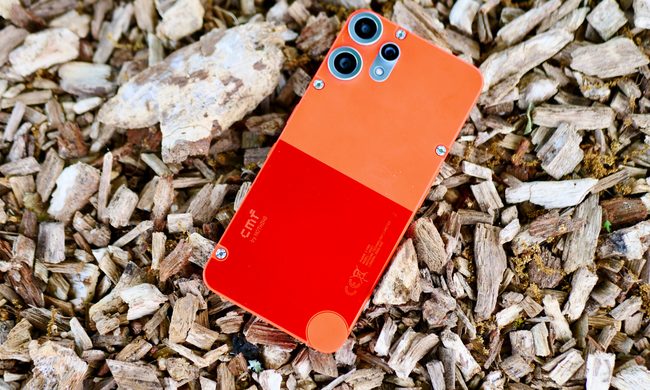
The back of the CMF Phone 2 Pro.

Nothing just canceled its next CMF Phone, and the reason has nothing to do with the phone itself. 

The company's co-founder, Akis Evangelidis, confirmed on X that CMF won’t launch a new phone this year, citing the memory crisis, which appears to be worsening with each passing day. 

Read more