Virtual Reality was once considered a niche for video games, but over the years, it has found application in many areas. From finding a place in medical education and paving the way for immersive concerts to helping teens and adults deal with psychological distress, the applications of VR are now an ever-expanding domain.
The latest VR innovation comes from the University of Cambridge, and it aims to help people overcome speech anxiety and the fear of public speaking. The institution’s Immersive Technology Lab has launched a free VR training platform that focuses on accessibility and provides expert-curated course material.
To that end, the team has created a system that doesn’t necessarily rely on an expensive VR headset. Instead, all it needs is the smartphone in your pocket to provide an immersive experience, fitted atop a mounting kit that can cost as little as $20 a pop.
The training material, on the other hand, is freely available via a website to anyone across the world. Moreover, it is also one of the first products of its kind with a dual-compatible VR player architecture, which means it works just fine with iPhones and Android devices.
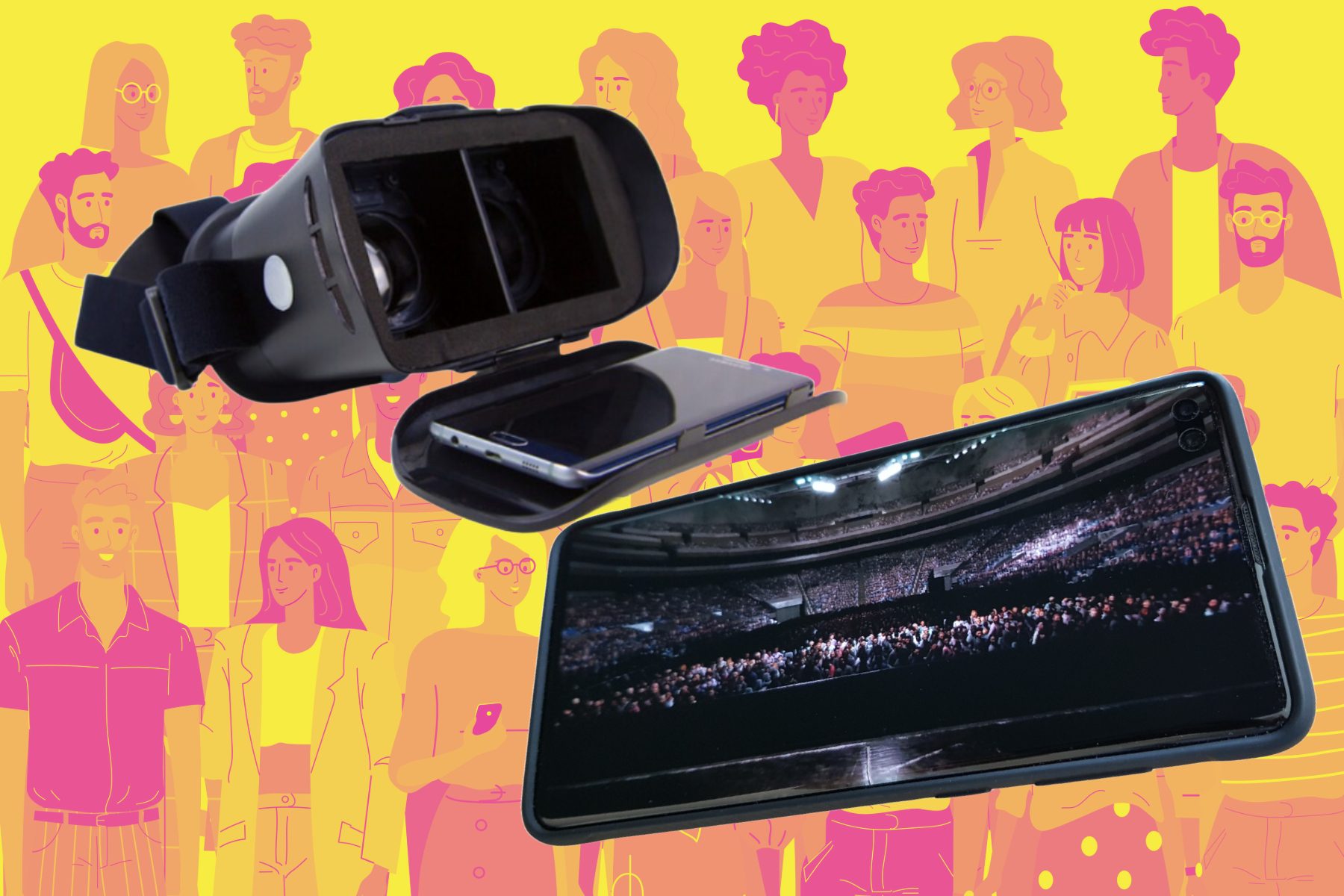
“The platform has been built in such a way that whether a participant is using the latest standalone VR headset or an old smartphone inserted into a device mount, they will get the same content and the same experience,” says the team.
The idea is not too different from the Google Cardboard, which cost $15 roughly a decade ago and offered a low-cost route to experiencing VR content by using one’s smartphone. But unlike Google’s approach, we have now entered a market phase where “converter kits” are a lot more polished and use higher quality materials.
How does the VR training program work?

The training material created by Dr. Chris MacDonald, a behavioral scientist and founder of the Immersive Technology Lab, has passed clinical validation. It has been tested by students at Cambridge and UCL, delivering a 100% success rate in helping adopters with speech and public speaking anxiety.
The training material follows roughly the same pattern as psychological exposure therapy. In a nutshell, to help a person overcome fear and anxiety, they are gradually exposed to mild forms of their fear. Over time, the exposure intensity increases, eventually helping people get rid of their fright and trepidation.

In this case, when participants log into the VR training platform, they see various kinds of audience setups. It can be an empty room, anchoring a TV studio, a cabin with a few people in front of them, a radio interview, or an entire stage-like setting with people across their field of view.
The training scenarios can be filled with all kinds of noise, light, and camera effects to provide a realistic feel. The objective is to help participants face their fear and then grow mental resilience.
Increasing confidence, adaptability, and resilience
For the VR training platform, however, Dr. MacDonald upped the ante with Overexposure Therapy, which is essentially putting people in hyperbolic scenarios they will likely never face in their real lives, like performing in a packed stadium. Think of it as the “psychological equivalent of running with weights or at high altitudes.”
The end goal
The VR training material has been created to help people with speech anxiety and fear of speaking in public. Dr. MacDonald notes that these challenges are not only a mental health concern, but also pose a hurdle to academic progress as well as professional opportunities. At the end of the day, it’s simply obstructing sheer human potential.

So far, the VR-based training platform has proven its efficacy. After one week of independent use, participants reported positive outcomes in improving their well-being, a feeling of increased preparedness, more adaptability, resilience, a boost in confidence, and improved management of anxiety and nervousness.
He is now at work to expand the scope of his novel VR training platform, add more features into the mix, and reach more platforms. So far, the VR training platform has clocked over 50,000 remote sessions, and hundreds have tried it in lab settings as well as in-person events.
“I am also collaborating with organisations that seek to support specific groups such as children who stammer. The goal is to create more targeted treatment options for those who need it the most,” says Dr. MacDonald. The VR training platform is now accessible to all enthusiasts globally via an official website.