
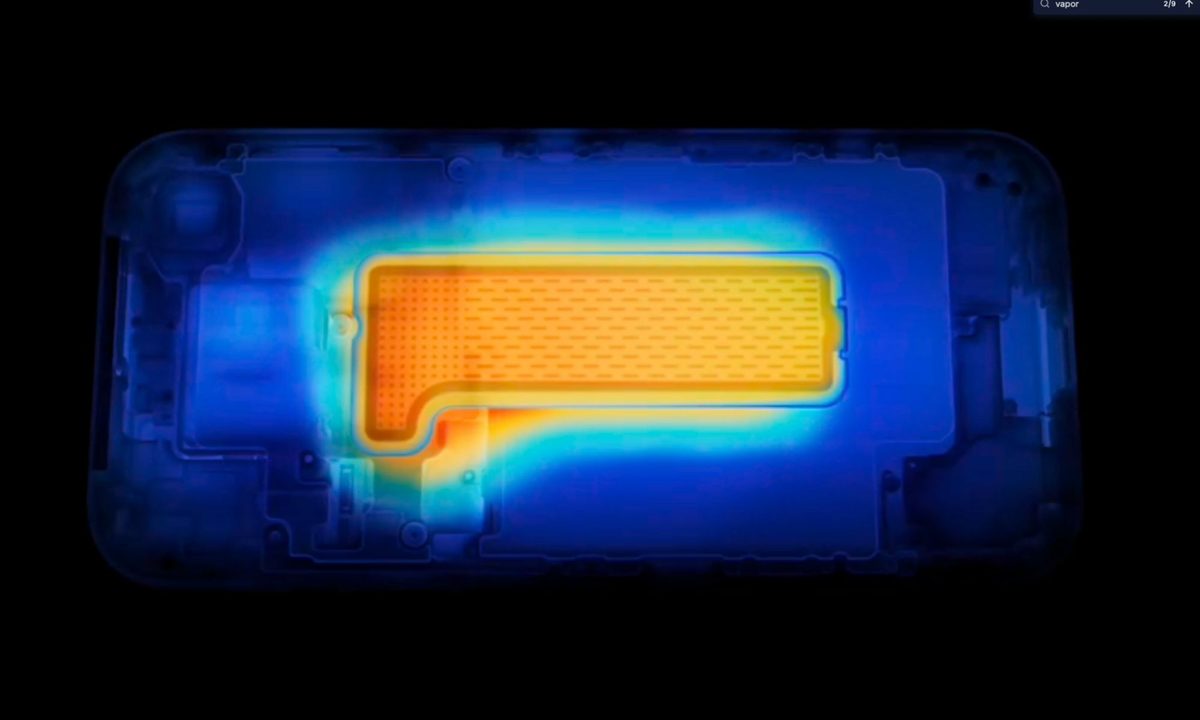
Soon after Apple introduced the iPhone 17 Pro with a next-gen thermal system to keep it cool, a buzzy term called “vapor chamber” started trending in the community. Apple isn’t the first to implement this tech, as Android flagships have offered it for years. But what’s undeniable is the impact of this unique cooling hardware that makes a device maintain its peak performance for a longer spell while running hot.
Vapor cooling, synonymous with “vapor chamber” and “vapor chamber cooling,” has been a common buzzword in the laptop industry for almost a decade. Barring iPhones launched so far, vapor cooling is among the most widely used smartphone technologies, and it helps with the dissipation of excessive heat generated during stressful workloads.
When we run a resource-hungry app or game on our smartphones — or record a video for a long duration — the phone’s processor must do a lot of work to compensate for those things. Vapor cooling is one way to address it, and it’s quickly becoming much more prominent in devices. But how exactly does vapor cooling work, and does it even matter? That’s what I wanted to find out.
How vapor chamber cooling works

As the name reflects, vapor chamber cooling utilizes a vapor-filled chamber for cooling. The vapor chamber is a flat pipe or a conduit that contains a liquid. It can evaporate and then condense easily without a mechanical condenser. The fluid absorbs heat from a source and changes into its vapor state.
That’s thermodynamic 101 for you, and the same fundamental principle of heat exchange has been used to cool down everything from electronics to the internals of fighter jets. The hot vapors travel to the cooler parts of the chamber, where they condense and give off the absorbed heat.

After switching to its liquid form, the chemical returns to its original position and repeats the cycle. This is repeated until the heat is evenly distributed throughout the vapor chamber. In a smartphone, this vapor chamber is a thin pipe that is flattened to about a millimeter to ensure it doesn’t increase the thickness of the device.
The process is more or less the same in smartphones as described in the previous paragraph, but companies can choose different materials to ensure better heat radiation away from the chipset. The following graphic from Xiaomi will help you visualize this process better.
Furthermore, the extensive heat generation from smartphone chipsets — of which the Snapdragon 8 Gen 1 is a prime example — has compelled smartphone companies to use more elaborate cooling solutions. The vapor chamber is usually stacked with as many as six or seven layers of different materials, all of which work together to dissipate heat away from the processor.
To improve cooling further, smartphone companies have been innovating in new directions. For example, Xiaomi recently showcased its concept “Loop LiquidCool Technology,” which uses microvalves inside the cooling chamber to increase the surface area through which the hot vapors travel. The larger surface area allows the vapor to condense faster and the liquid to cool down further.
So, how does it work inside the iPhone 17 Pro? Well, Apple designed its own custom that relies on deionized water sealed inside the chamber. The chamber itself is welded using a laser with the rest of the metallic chassis to spread the heat across the surface and bring down the temperature. The surrounding material, which is made out of aerospace-grade aluminum alloy, allows better thermal conductivity.
Examples of phones with big cooling promises
Smartphone brands, especially when selling phones targeted at mobile gamers, advertise vapor chambers and their configurations in detail. The recently-launched ASUS ROG Phone 6 uses sheets of graphite (the same material used to make pencil leads) in addition to a vapor chamber because graphite is a good heat conductor. The vapor chamber is larger by 30% on the ROG Phone 6 than on the ROG Phone 5 to meet the demands of the better-performing chipset.

We often witness brands marketing “X-layer cooling apparatus” (where X is a number). The OnePlus 10 Pro, for instance, has a five-layer cooling system; the Realme GT 2 Pro uses one with nine layers, one of which is made of stainless steel. Certain brands also boast in terms of the total area of the cooling apparatus.
For example, the Realme GT 2 Pro is claimed to have a total cooling surface area of over 36,000 square millimeters (mm2) — roughly three times the surface area of the phone’s back. The caveat is that companies such as Realme also take the liberty of summing up the surface area of all the layers, giving them a number significant enough to boast about. But at the same time, Realme also claims the surface area of the vapor chamber alone is more than 4,000 square millimeters (mm2).
It is to be noted that in the case of multi-layer cooling systems, heat dissipation occurs in a three-dimensional space. The vapor chamber absorbs the heat from the chipset and transfers it to the cooler parts. At the same time, some of the heat is also radiated to other layers, and each layer further dissipates heat across its entire surface.

But it doesn’t stop at multi-layer setups. Certain phones (such as ZTE’s Nubia RedMagic 7 Pro) use fans inside to eject the heat even more efficiently. Likewise, some other phones, such as the ROG Phone lineup, come with external fans that aid in cooling down the rear surface of the phone. You can also buy these fans as separate accessories and use them with any phone.
Of course, these claims make no sense if they do not translate to real-world performance.
Putting phones’ vapor cooling to the test
To see if vapor chamber cooling actually makes any difference, I decided to test things out for myself. To do this, I used three phones: the Samsung Galaxy S22 Ultra, the OnePlus 10 Pro, and the Realme GT 2 Pro. These phones are powered by the Qualcomm Snapdragon 8 Gen 1 chipset, among the best-performing mobile chipsets available today.
The same chipset is also infamous for heating a lot, and we will note the extent to which vapor chamber-backed cooling setups help diminish that. These devices also have metal frames, allowing for better heat dissipation outside the device. For this, I ran three tests to strain the processor, resulting in extensive heat generated.
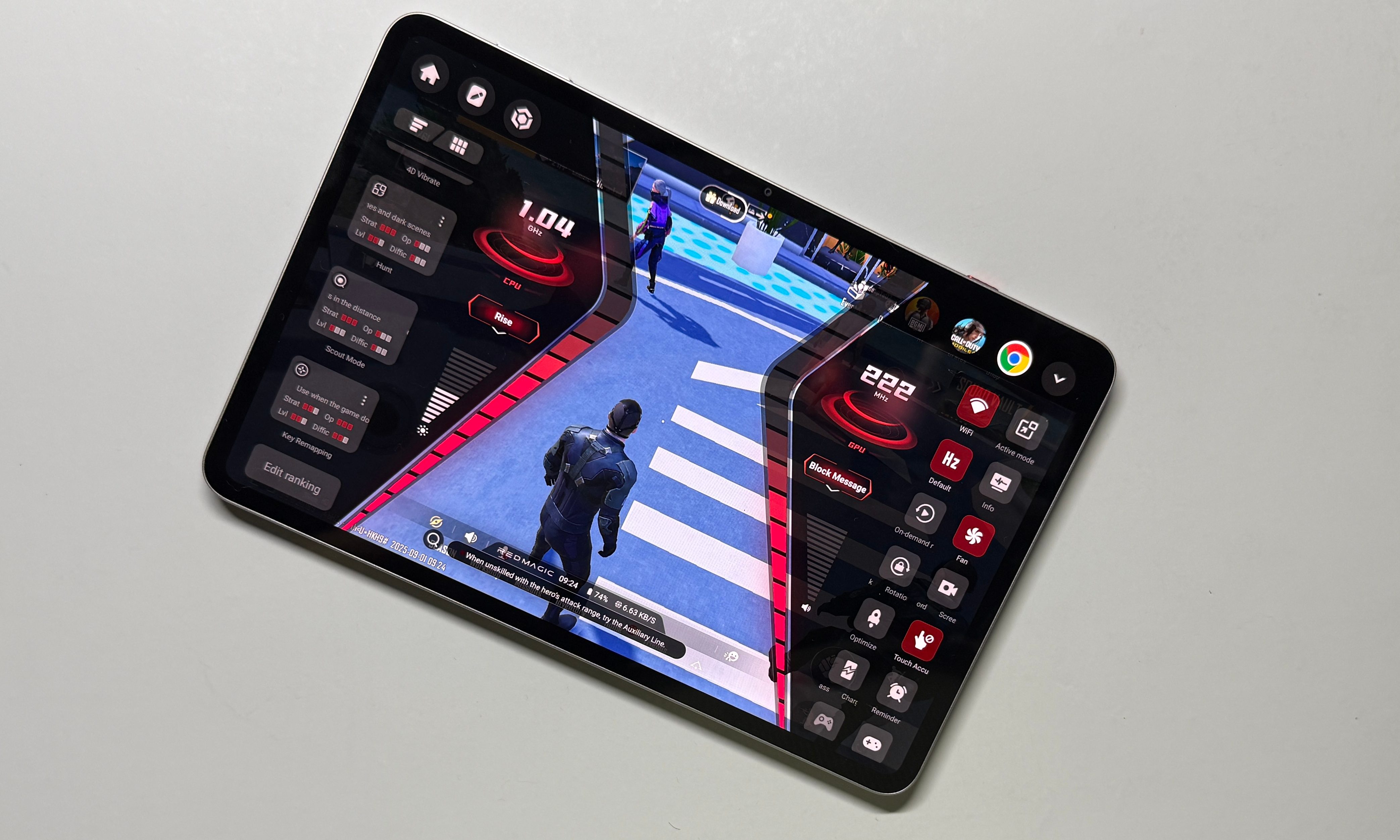
These tests include running PUBG: New State Mobile — one of the most demanding mobile games — and two benchmarks that are heavy on the CPU and the GPU. Notably, these tests are done without any protective case, as that can prevent heat from radiating into the atmosphere. The brightness of the phones was set to automatic with the screen resolution set to QHD+ and the refresh rate set to 120Hz in each case. Lastly, all these tests were done at an approximate ambient temperature of 25 degrees Celsius (77 degrees Fahrenheit).
The results for these tests are as follows.
PUBG: New State Mobile
For this test, I played a battle royale match on PUBG: New State Mobile on each phone. Each game lasted roughly 30 minutes, and I noted the temperatures of the CPU using the CPU Monitor app along with the temperature on the highest external surface at several intervals from the start of each match.
These tests were run at the highest graphics settings in the game, and the results based on the trial run are as follows:
- Samsung Galaxy S22 Ultra
| 10 minutes | 15 minutes | 20 minutes | 25 minutes | |
| CPU temperature (°C) | 37 | 38 | 40 | 42 |
| Surface temperature (°C) | 40 | 41 | 42 | 43 |
| Difference (°C) | 3 | 3 | 2 | 1 |
- OnePlus 10 Pro
| 10 minutes | 15 minutes | 20 minutes | 25 minutes | |
| CPU temperature (°C) | 42 | 45 | 45 | 45 |
| Surface temperature (°C) | 38 | 39 | 39 | 40 |
| Difference (°C) | 4 | 6 | 6 | 5 |
- Realme GT 2 Pro
| 10 minutes | 15 minutes | 20 minutes | 25 minutes | |
| CPU temperature (°C) | 41 | 40 | 39 | 40 |
| Surface temperature (°C) | 39 | 38 | 38 | 38 |
| Difference (°C) | 2 | 2 | 1 | 2 |
The approximate average differences in the inner and outer temperatures of the Galaxy S22 Ultra, OnePlus 10 Pro, and the Realme GT 2 Pro are 2 degrees Celsius, 5 degrees Celsius, and 2 degrees Celsius. The OnePlus 10 Pro had the maximum temperature difference, which suggests it offers the most effective insulation between the chipset and the outer surface. Meanwhile, the internal temperature on the Realme GT 2 Pro remains much lower, suggesting it has better heat dissipation inside the body.
Interestingly, the Galaxy S22 Ultra shows a unique pattern wherein the internal temperature is lower than the outer temperature. The internal temperatures are also the lowest in the case of the Galaxy S22 Ultra, suggesting it is the best in the lot to effectively dissipate the heat produced during intensive scenarios such as playing the game.
The average internal and external temperatures are plotted in the figure below:

While the Galaxy S22 Ultra ensures the lowest average internal temperature, the Realme GT 2 Pro comes ahead with the lowest average temperature on the outer surface.
GFX Benchmark
In our second test, I ran GFXBench, a synthetic benchmark that is used to measure the performance of the CPU and the GPU by simulating graphics-intensive tasks. I recorded the internal and external temperatures for each of the three phones, and the values are as follows:
| Samsung Galaxy S22 Ulta | OnePlus 10 Pro | Realme GT 2 Pro | |
| Starting internal temperature (°C) | 32 | 26.2 | 28 |
| Ending internal temperature (°C) | 46 | 50.5 | 44.4 |
| Starting external temperature (°C) | 30.9 | 39 | 29 |
| Ending external temperature (°C) | 42.7 | 56 | 56 |
The temperature values are also plotted in the graphs below:

The dotted line represents the internal temperatures of the chipset, while the flat line represents the external temperatures on the three devices. As can be seen, the Galaxy S22 Ultra shows the most negligible surge in temperature while running GFXBench. Despite a higher internal temperature at the beginning, the OnePlus 10 Pro manages to suppress the heat produced better than the Realme GT 2 Pro but nowhere as good as the Galaxy S22 Ultra.
CPU Throttling Test
For our third and final test, we ran the CPU Throttling Test app that repeats the same process for a particular time to measure how much a phone heats and, in turn, suppresses the performance. We ran the test on the three smartphones and plotted the internal and external temperatures at the end of the test.

Once again, the Galaxy S22 Ultra has the lowest internal temperature, while the OnePlus 10 Pro has the lowest external temperature despite being the hottest inside. The benefits of a vapor chamber cooling system are pretty evident. On the Red Magic Astra tablet, which features a dual-layer vapor chamber system, the sustained peak performance is astonishing. Here’s what I found out in my tests:
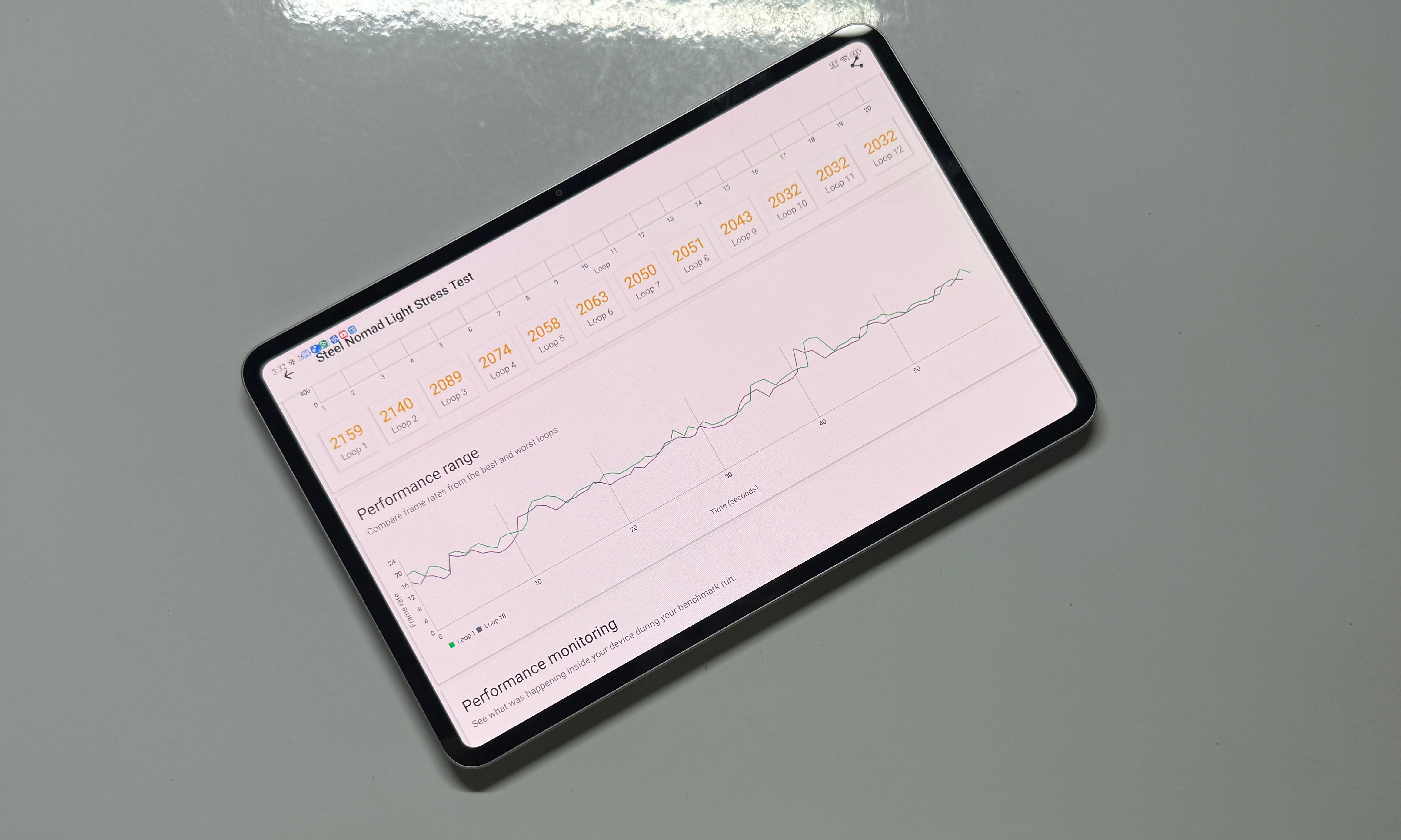
“What surprised me was the tablet’s stability, which even surpassed that of the M4 iPad Pro. After running the 20-loop 3DMark Wild Life Extreme test, the Red Magic Astra delivered an impressive performance stability of 88.4% on the synthetic run. The iPad mini, on the other hand, could only muster around 74% stability. Next, I switched to the more demanding ray-traced simulated environment of the 3DMark Steel Nomad Light stress test. The Astra wowed me once again with an impressive stability of 93.1%, while the iPad mini with Apple’s A17 Pro silicon couldn’t go past the 80% mark.“
Apple is touting similar gains for the iPhone 17 Pro pair, especially when users are engaged in high-resolution games and videos capture, two scenarios that stress out the processor and generate heat. Just look at the performance chart of the Red Magic Astra below, and you will get an idea of what to expect from the iPhone.
Vapor chambers on phones aren’t going anywhere
Cooling mechanisms — of which the vapor chamber is the most crucial part — play a vital role in keeping the internal temperature of the smartphones under check. It also ensures the external temperatures of the smartphones are not too high, so holding them does not become a challenge. Both of these aspects have equal importance. High internal temperature can reduce the performance and have dire effects on the battery, while rising external temperatures can make a phone uncomfortable to hold. In some instances, if the internal temperature exceeds a certain point, the phone shuts down automatically to cool down, which is also undesirable.
Our tests show that all three phones are mighty capable in front of challenging environments, and each has its benefits. The Galaxy S22 Ultra emerges as the coolest based on our testing, while the OnePlus 10 Pro holds its ground despite running hotter internally. The Realme GT 2 Pro’s nine-layer cooling setup helps it offer great performance while gaming. Nonetheless, we can appreciate how each of these devices ensures they stay within bearable limits of temperature, with the OnePlus 10 Pro seemingly working the hardest to keep internal temperatures from rising across the external body.

In the future, we should see more devices adopting vapor chambers. Meanwhile, Microsoft has also been speculated to test vapor cooling embedded in foldable displays and its Holo Lens augmented reality glasses. Naturally, as our smartphones get more powerful and are replaced by more ergonomic and personal gadgets, we can expect to see vapor cooling being applied more extensively. In fact, a cyberpunk future is incomplete without fluorescent liquids cooling all forms of electronics and electrical systems. And now that the iPhone 17 Pro has embraced the merits of this tech, we are going to see vapor chambers appearing on more devices in the near future.


