

Hell has frozen over. On November 16, 2023, Apple made the very unexpected announcement that it was bringing support for RCS on the iPhone in 2024.
In 2022, Tim Cook himself said that he’d rather sell you an iPhone instead of ever bringing RCS support to the iPhone because he thought customer demand for RCS wasn’t there. Google has made numerous attempts to shame Apple over its pushback of RCS over the years.
Knowing how stubborn Apple can be with such decisions, no one expected Apple to finally cave in, especially after what Cook said. But it’s happening, and this could be one of the biggest announcements that Apple has made this entire year.
The RCS crash course

Since this surprise announcement, there has been some confusion. A lot of people, especially those who likely haven’t used an Android phone and only an iPhone, aren’t familiar with Rich Communication Services (aka RCS).
We’ve covered the history of RCS a few times here at Digital Trends, but in short, it’s basically a replacement protocol for SMS/MMS that was first founded in 2007. In 2018, Google said it was working with the major carriers to adopt RCS, and this resulted in Chat — a protocol based on the RCS Universal Profile. Basically, it’s a global RCS standard that allows subscribers from various carriers and countries to communicate with each other.
Currently, Android phones have RCS support, and it works similarly to iMessage. With RCS, you can see typing indicators, read receipts, ability to send and receive messages over cellular and Wi-Fi, share your location, and send and receive high-resolution photos and video.
While the feature set of RCS is similar to iMessage, it doesn’t have everything that iMessage has, like stickers and Memojis, as well as the ability to edit or unsend a message.
An Apple spokesperson sent this statement to 9to5Mac:
“Later next year, we will be adding support for RCS Universal Profile, the standard as currently published by the GSM Association. We believe RCS Universal Profile will offer a better interoperability experience when compared to SMS or MMS. This will work alongside iMessage, which will continue to be the best and most secure messaging experience for Apple users.”
So, why is this important?
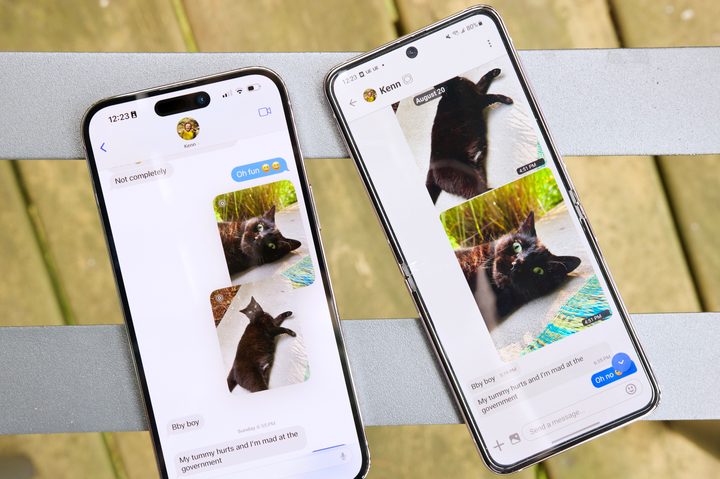
While you may or may not care about RCS because all of your friends and family use iPhones anyway, this is still huge news. In the end, this is a move that benefits everyone regardless, and it’s a step in the right direction.
It may have been pressure from the European Union to make Apple open up iMessage (and the App Store), kind of like how Apple switched over to USB-C for the iPhone 15. Still, it seems that legislation is what actually makes progress and advancements in the tech products that we use instead of just competition.
It’s also important to note that SMS/MMS has never, and never will, be end-to-end encrypted. That makes SMS incredibly weak when it comes to secure messaging, and anyone who is capable of intercepting them is able to read them. RCS, at least currently on Android phones, has end-to-end encryption. It might not be as strong as Apple’s encryption with iMessage, but it’s definitely more secure than plain SMS.
However, it appears that Apple’s upcoming support for RCS will not include Google’s end-to-end encryption extension. Instead, it appears Apple will be working with the standards body to sanction a universal encryption method instead. This is a logical approach since Google’s E2EE extension is proprietary and would exclude other RCS Universal Profile users.
For most people, they may never notice a difference once RCS is added to iOS, especially if they don’t already text with someone who uses Android. But just because one group of users doesn’t care doesn’t mean it won’t please others. Apple bringing RCS to the iPhone is definitely a big deal, and it benefits everyone, whether they need it or not.
The blue and green bubble war isn’t going away
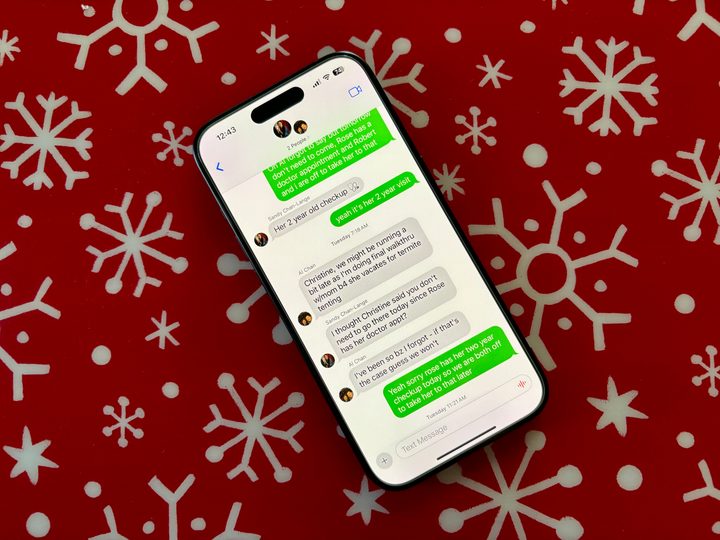
When this was first announced, there was a lot of speculation on whether or not RCS messages would be a different color from SMS, which is green. As it turns out, no, RCS messages will stick with the green bubbles just like SMS.
Unfortunately, this means that the social divide between the blue and green bubbles will remain in place. For most adults, this probably doesn’t matter much, if at all (unless you’re in the dating scene I guess), but it appears to be a bigger deal for teenagers.
Honestly, the color of the bubbles has never bothered me — I’m not going to not talk to someone just because they use an Android phone. It just means I won’t be able to do all of the features in iMessage with that person. But I can still communicate with them, and that’s the entire point of the Messages app in the first place. Yes, I typically joke about the blue/green bubble thing, but I never take it seriously.
Since RCS messages will stay green, most people probably won’t notice a difference when they text, at least right away. But when they start seeing typing indicators and read receipts, as well as media that doesn’t look like it came from a flip phone in the 2000s, people might wonder what’s going on.
It’s about damn time

I have been pining for a better solution for messaging between iPhones and Androids for a few years now. The reason for this is that I’m constantly communicating with my family through group chats, and while my mom and brother both use an iPhone, my sister is the outlier among us with an Android phone.
A big complaint I’ve had has been the inability to send and receive high-resolution photos and video, especially when it comes to sharing what my daughter’s been up to or our pets. Whenever my sister sends a video or vice versa, it looks like it is potato quality and feels like it came from the early 2000s. Basically, I can’t tell what the hell is going on in the video because it’s so damn tiny and pixelated — what’s the point?
I’ve also had multiple instances where I felt I didn’t need to partake in the group conversation because it wasn’t relevant to me. However, group chats with an Android user on an iPhone have been so irritating since you can’t just leave the group like an iMessage group chat. So, I’ve just left those on mute.
From the looks of it, RCS may not solve all the problems I have — it’s unclear if you’ll be able to leave group chats with an Android user, for example. But as long as the image and video quality don’t look like it was taken with a potato anymore, I think I can live with it.
As I said before, it seems that legislation is more effective in opening up the gates to Apple’s walled garden than competition. The EU was a major factor in getting Apple to switch from Lighting to USB-C on the iPhone 15, and the antitrust legislation continues with the App Store and now iMessage services.
Much like the switch to USB-C for the iPhone, Apple adding RCS support is huge. It’s one of the biggest announcements the company has made this year, largely because no one was expecting it, and it’s another step towards a more universally acceptable platform. And you know what? That’s pretty damn cool.


