
Like other Facebook services, WhatsApp has been under a lot of scrutiny this year. The service botched the rollout of a new privacy policy, and competitors pounced, offering new ways for WhatsApp users to switch their messages over. It worked! These apps, mostly Signal and Telegram, recorded user growth during that tumultuous period. This week, an extended WhatsApp (and Facebook in general) outage took WhatsApp out for hours on end, with rival platform Telegram gaining 70 million users.
“The daily growth rate of Telegram exceeded the norm by an order of magnitude, and we welcomed over 70 million refugees from other platforms in one day. I am proud of how our team handled the unprecedented growth because Telegram continued to work flawlessly for the vast majority of our users,” CEO Pavel Durov said.
Durov went on to plead that the new members stick around and see what Telegram has to offer. That might be a more telling statement than intended.
The difference in scale is almost too large
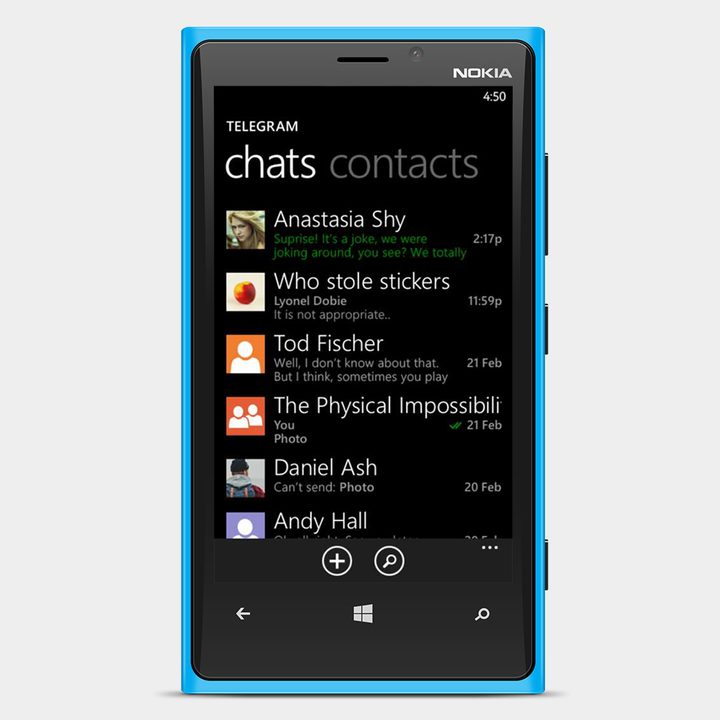
Telegram may have logged an additional 70 million users and recorded 500 million active users, but WhatsApp has a recorded 2 billion million active users and is the most used mobile messaging service on a global scale. How many of those are an overlap with WhatsApp? A considerable number, if I had to speculate based on my experience. It points to the fact that while people might be jumping over to Telegram, it isn’t their primary messaging app either.
“WhatsApp has a recorded 2 billion million active users and is the most used mobile messaging service on a global scale.”
While Telegram and Signal may have these small spikes ever so often, the users don’t stick around long term for it to matter, nor do their growth spikes remain consistent. While a person may have Telegram and open it once a week, most people in countries with high WhatsApp usage use it pretty consistently.
It goes beyond the network effect
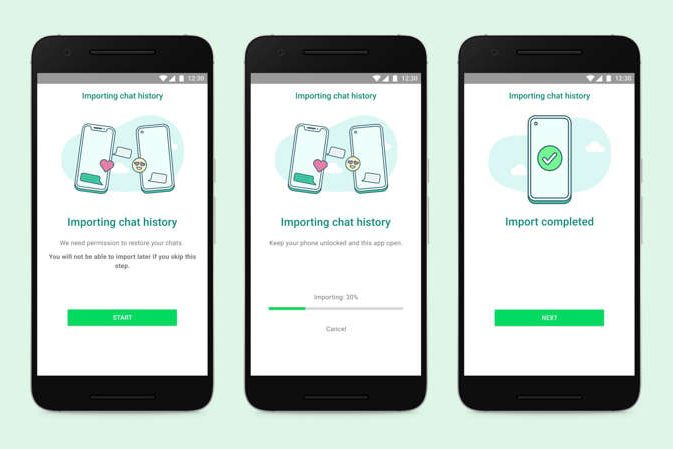
Even if one were willing to bear the pain of switching away from your friends and using Telegram for trusted friends, you’d still need WhatsApp in select cases. For a lot of countries, WhatsApp is more than a messaging platform. You can make payments on WhatsApp, you can shop in there, your plumber is in there, the government, even the mail company, etc. During the pandemic, it was not Telegram that governments turned to spread messages to their citizens, but WhatsApp (and Facebook Messenger) to some degree.
“For a lot of countries, WhatsApp is more than a messaging platform.”
During the Facebook outage, the economic effect of WhatsApp was keenly felt in India, as Slate reported. “People panicked throughout India,” said Anil Tiwari, an internet expert based out of Lucknow. Even figuring out what was going on was difficult; he pointed out that “only 2.7% [of the] population of India are on Twitter.” People in small towns were able to turn to SMS messages instead, reducing the harm to small businesses, “but in metro cities where businesses majorly run on apps, it created an impact.”
An excellent Gizmodo report further explained that WhatsApp was far more entrenched into the economic systems of several countries on more than a commercial level, with bundles and telecoms plans all built around WhatsApp’s continued existence.
Telegram is a lot like WhatsApp
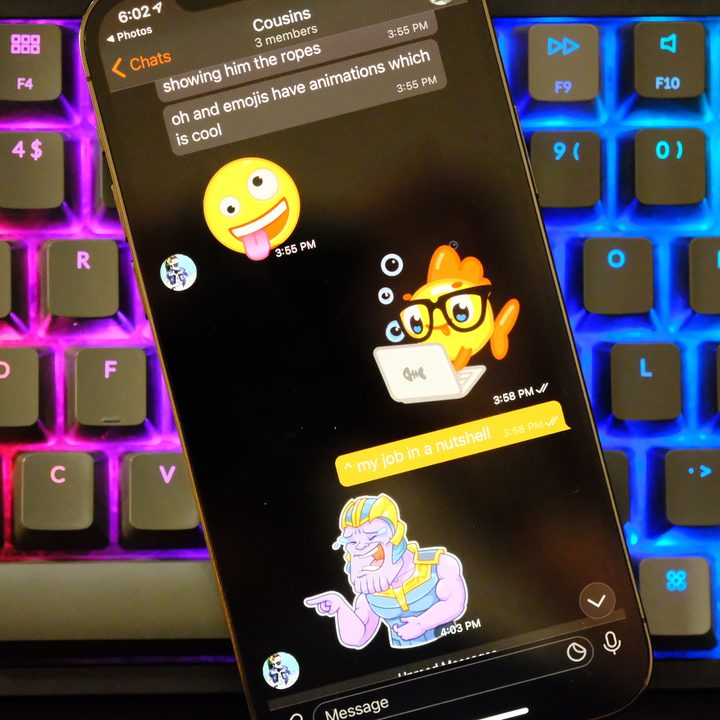
It’s quite easy to switch out Telegram for WhatsApp when both apps are quite similar in concept and execution. You could even think of Telegram as a WhatsApp+, with nifty customization features that WhatsApp doesn’t have and a more built-out set of group features. It’s an app that works for a lot of what you’d need a messaging app for, but it doesn’t do much that most people can’t accomplish in WhatsApp.
To get people to switch en masse, you’d need to be able to answer the “Why would I switch over to Telegram” in a concrete, tangible way that justifies the pain of swimming against the network effect. It’s a lot like the iMessage problem writ large.
Still, WhatsApp won’t be here forever

There was once a time where people could message each other without necessarily using the client apps. Hell, Microsoft and BlackBerry both built experiences around Facebook Messenger. That time is long gone. And so is any chance of shaking WhatsApp from its position, at least in the near term.
If WhatsApp is to be usurped (barring egregious strategic blunders), this won’t come from another app that’s just like it. Instead, it’ll be a lot more like how WhatsApp took over from Blackberry Messenger and SMS, an app that offers the core of WhatsApp’s appeal while bringing something completely different to the table. I can’t say what an app like that would look like, but it’ll be apparent when it arrives.


