
Update on August 18, 2015: Bubl Technology announced that it has completed the first round of shipment of the Bublcam 360-degree camera, fulfilling orders from Kickstarter backers and pre-order customer. The company had a successful Kickstarter campaign, and started shipping the camera to customers in June. Some customers have already started uploading original content to Bubl’s website, such as this one from New Zealand.
The company says: “Additional features include professional controls, such as HDR and time lapse via the mobile application, full access to the Bubl Cloud Service, bubl.io, for storage and management of media, and online sharing through Wi-Fi or cellular connection. Bublcam content is compatible with VR headsets, including Google Cardboard, Samsung’s Gear VR and Oculus Rift.”
Bubl Technology says the cameras are currently backordered, but new customers can join a waitlist. The camera retails for $799.
Original article: Shooting 360-degree images seems like one of those impossible feats that are reserved for pro photographers. You have to know how to line up a camera accordingly, and then you have to figure out how to stitch it together (photographer Joe Reifer shows you how here). Of course, you can always count on ever-advancing technology to automate the most complex tasks into something easy to use, like the Bublcam 360-degree camera, from Bubl, a Toronto-based startup. The small baseball-sized device lets you capture panorama pics and videos all around you, essentially putting Google Maps’ Street View tech into your hand.
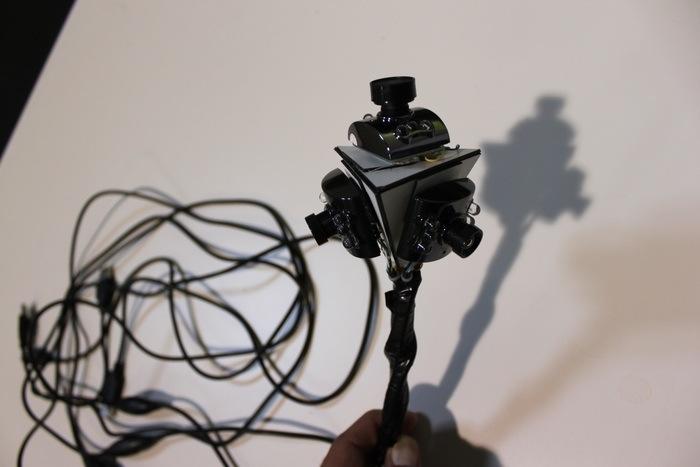
The spherical camera uses four independent 190-degreen lenses, placed around the ball in a tetrahedral design. Images captured by the lenses overlap one another, so there are no “blind spots” when the Bubl software stitches them together. The software combines the images in real-time, as they’re being shot – not in post-editing.
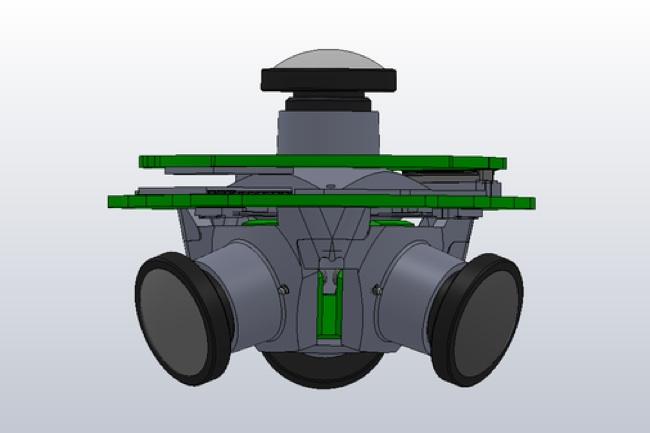
The Bublcam shoots 14-megapixel photos (3,840 x 3,840 resolution), 1080p videos at 15 frames per second, and 720p videos at 30 fps. All the content are stores on a Micro SD card. There’s also Wi-Fi built in, allowing you to live-stream your shots to a computer, mobile device, or the Web, and control the camera’s angle remotely (as there’s no way to do it from the camera itself). Wi-Fi can also be used to upload content to your Dropbox, Google Drive, and Younity accounts.

Bubl is currently using Kickstarter to help fund the project. If you want to be among the first to own a Bublcam, you’ll have to make a pledge of $449 CAD (which is around $430 USD), as the $399 CAD Early Bird option has already sold out; Bubl plans to mass-market the product sometime early next year.
In the future, Bubl plans to release an open software API and hardware SDK to allow third-party developers to create application for the Bublcam.
“Bubl has begun by creating environments for the Oculus Rift and allowing the Leap Motion to control our experiences – but I’m excited to see what the developer community will be able to create once they finally get the chance to play with it,” Bubl founder Sean Ramsay said in a release.
(This article was originally published on November 6, 2013.)


