
Facebook scientists want to know more about what vacation snaps could reveal about travel behavior and the world’s most popular locations — and they’ve trained an A.I. trained on some 58,000 geo-tagged photos to help do so.
The concept is an interesting one. Tourist destinations frequently become popular because they are shared in the form of online images. That, in turn, can have a big effect on influencing where people travel (in a time when such a thing is possible) and even the kinds of photos they take once they are there. To explore this phenomenon, Facebook A.I. researchers used artificial intelligence algorithms to analyze a massive archive of Flickr images, taken between 2004 and 2019, to uncover some of these details and unique insights.
“I was excited by our findings that the views being snapped in tourist photos were — whether consciously or unconsciously — often mimicking historical photos captured by earlier explorers of the region, like Hiram Bingham, essentially an early ‘influencer’ for how people would later experience the place,” Kristen Grauman, a research scientist at Facebook who is affiliated with the University of Texas at Austin, told Digital Trends. “I was also intrigued by our finding that policy decisions aimed at preservation or economics could percolate down to influence the distribution of photos that get captured by tourists.”
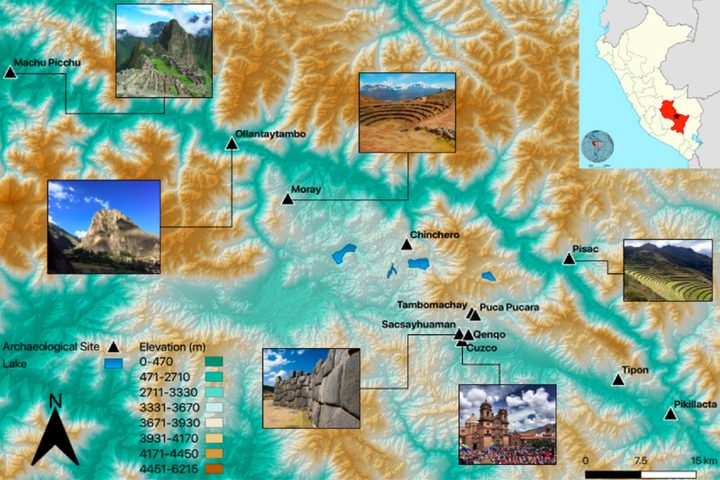
In the study, Facebook’s scientists looked at aggregated tourist movements across travel sites to uncover the popularity of each one, how often it is photographed, and factors possibly influenced by conservation and policy efforts, like entry regulations and the number of tourist passes that are sold. Using visual clustering algorithms, they were able to determine the most popular locations photographed at sites, and more. For this paper, they focused on Cuzco, Peru. However, the same technique could be used for any historical site.
Grauman said that there are no current plans for this research to be productized at Facebook. However, she said that the techniques and research could be used to “predict economic impact based on tourist movement, help brainstorm marketing campaigns surrounding a heritage site as countries begin to reopen for travel, and [examine] how usage of certain areas may affect preservation plans. The learnings could also be used to adjust regulations of heritage sites.”


