
TikTok’s stance on guns and gun-related content is clear: Do not post videos featuring firearms unless you’re in a “controlled environment.” Unfortunately, that policy isn’t enforced in any significant way. A quick look through its sprawling social network of short, goofy clips paints an alarmingly different picture — especially for a platform where one-third of the users are age 14 or under.
Videos that demonstrate the process of manufacturing ammunition at home, 3D-printing guns, crafting hiding places for illegal weapons, tours of personal arsenals, shooting heavy firearms outdoors, and more appear to run rampant on TikTok. In a cursory search, Digital Trends discovered dozens of such clips which clearly violated TikTok’s community guidelines and managed to accumulate, in several cases, over half a million views and hundreds of comments.
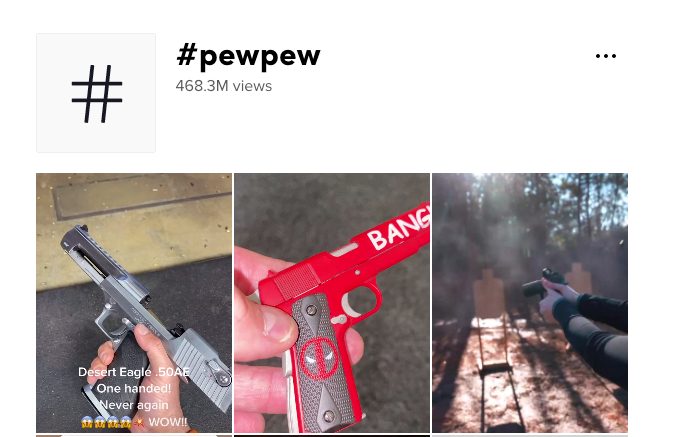
Most of these are not hard to find either. They’re filed under common hashtags like “#gun,” “#pewpew,” “#freedomseeds,” “#glock,” and more that have billions of views.
What’s more worrying is that the presence of firearm content has spawned subcultures and even fads inside TikTok. For many teens on TikTok, owning a gun and bragging about it in videos has become trendy.
In one video, a young woman can be seen romanticizing “anyone who wants to buy a gun when they turn 18.” “Just bought my first AK on my 18th bday,” comments a viewer. In another post titled “I’m almost 18,” a teen shows off his bulletproof vest and ammunition.
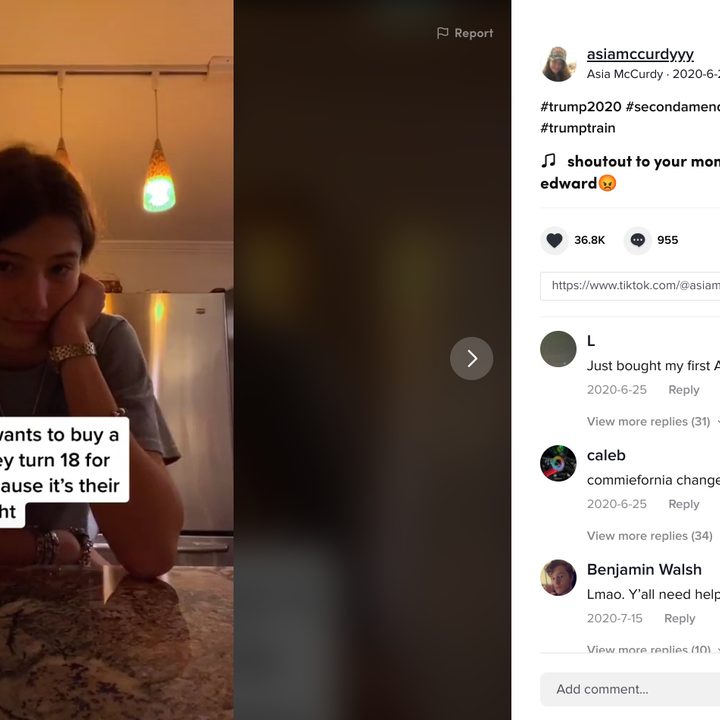
Fueling this soaring interest in firearm content is TikTok’s shockingly active community of weapon dealers and sellers, many of whom have found workarounds to TikTok’s restricted direct messaging facilities.
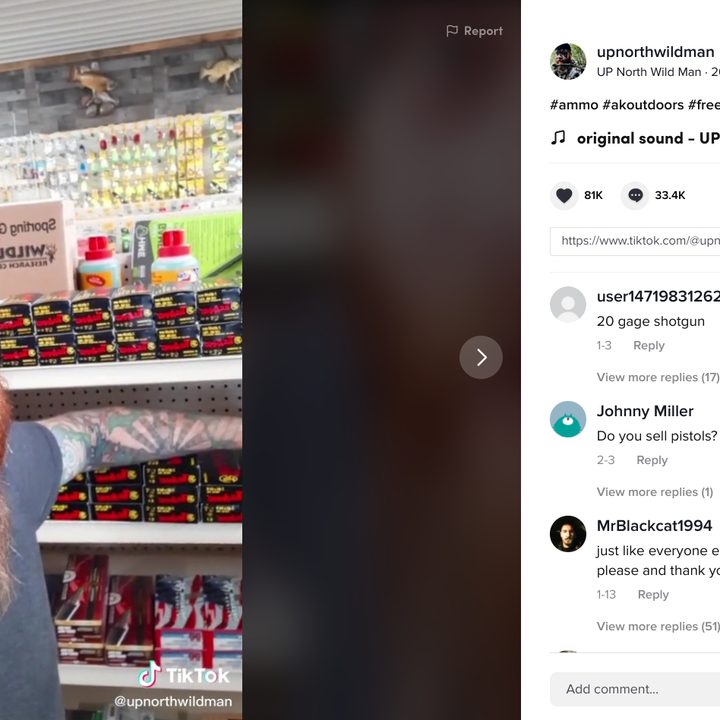
Since people can only privately chat on TikTok if they follow each other, some firearm businesses have begun to take orders through the comments section.
One such video reviewed by Digital Trends features a dealer showcasing his store’s most in-demand items and asking people to leave a comment for placing an order. TikTok took down the clip when we reported it, but by then, it already had amassed over 33,000 comments.
In a statement, TikTok told Digital Trends that it “prohibits the trade, sale, and promotion of weapons,” and removes “content and related accounts as they’re identified.”
“We further remove instructions on manufacturing weapons to help protect the safety of our community,” the spokesperson added.
It’s not a blanket ban, however, and that’s likely where it gets tricky for TikTok’s human moderators to decide which videos they can leave up.
TikTok allows content if it’s “part of a museum’s collection, carried by a police officer, in a military parade, or used in a safe and controlled environment such as a shooting range.” But what defines a shooting range? TikTok refused to expand on that, but in a follow-up email the spokesperson said that the decision “depends on the content” and shooting ranges are just one of many examples.
It’s easy to see how these loosely-defined policies can be exploited and circumvented to publish viral gun content. People have been able to post videos of themselves shooting in their backyards, abandoned fields, and more without any restrictions or warnings.
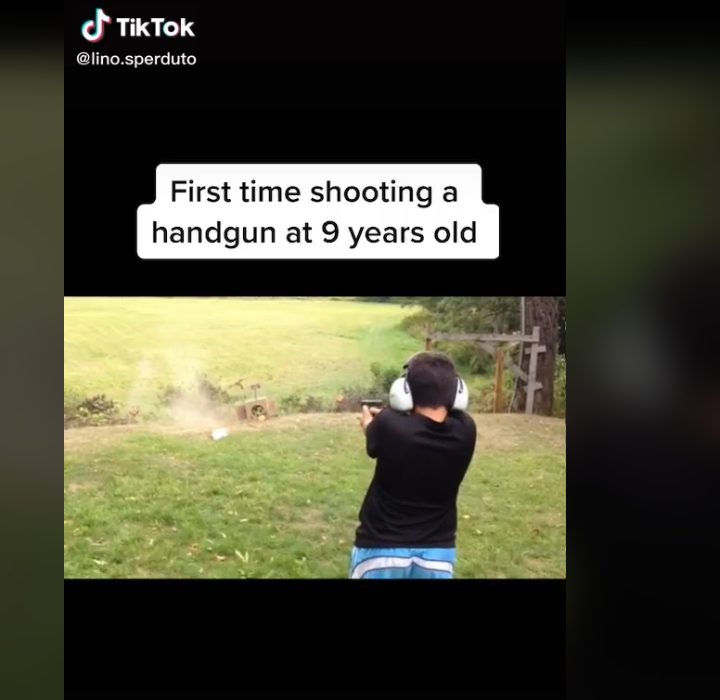
TikTok also has yet to impose any interaction limits on these videos, like how many other social networks do for violent or graphic footage.
Media Matters, a non-profit media watchdog, unearthed similar concerns and issues on TikTok. In its research, it discovered TikTok was hosting clips instructing users how to work a handgun conversion kit — which allows handguns to be fired from the shoulder like a rifle — and evade federal restrictions. The 2019 Dayton shooter employed such a workaround in the mass shooting that led to nine deaths.
“Since TikTok’s firearm policies appear to be vague and contradictory, consistent enforcement seems to be an impossible task,” Media Matters wrote in a blog post, “leaving sizable loopholes for accounts to skirt these restrictions.”
TikTok does now block a handful of hashtags that it believes only contain prohibited videos such as “#homemadepew” and “#homemadeguns.” But since it can’t shut off hashtags like “#gun,” which has more than 2 billion views, and often features harmless clips of gaming footage, this move has barely put a dent in curtailing firearm content.
The allure of viral firearm content has, however, had far graver consequences than TikTok could have anticipated.
In early 2020, an 18-year-old boy in India accidentally shot himself in the head while posing with a gun for a TikTok video. A few months ago, a 20-year-old Mexican woman was accidentally shot dead while filming a TikTok kidnapping prank. Actor LaKeith Stanfield recently posted a video of himself brandishing a gun at pictures of two men, one of whom was FBI informant William O’Neal.
TikTok has landed in trouble multiple times for mishandling children’s privacy, and it remains unclear whether it plans to impose stricter guidelines against firearm content. Since its endless feed of videos relies more on algorithms than who you follow, it also runs the risk of inadvertently promoting problematic clips on its home page — as happened when a gruesome suicide video went viral last year.
People are dying. It is time for TikTok to address its gun control problem.


