1. Home
  2. Space
  3. News

Rocket startup Astra makes its first launch but fails to reach orbit

Add as a preferred source on Google

New satellite delivery and launch company Astra attempted its first orbital launch late on Friday night with mixed results. The rocket, code-named Rocket 3.1, launched successfully but failed to reach orbit due to a problem during the first stage burn.

“Successful lift off and fly out, but the flight ended during the first stage burn,” the company confirmed on Twitter. “It does look like we got a good amount of nominal flight time. More updates to come!”

Recommended Videos

There was no live video of the launch and only some details are available, but in a briefing Astra announced that the rocket, which was not carrying any payload, fell back to Earth and landed in a safe area.

Astra was positive about the progress, however, writing in a blog post, “Tonight, we saw a beautiful launch!” and “Preliminary data review indicates the rocket performed very well.” The company founders, Chris Kemp and Adam London, also said that they had expected to need three flights before reaching orbit, reflecting the technical difficulties of rocket projects.

Even SpaceX CEO Elon Musk sent his commiserations on Twitter, saying that it took his company four launches to reach orbit.
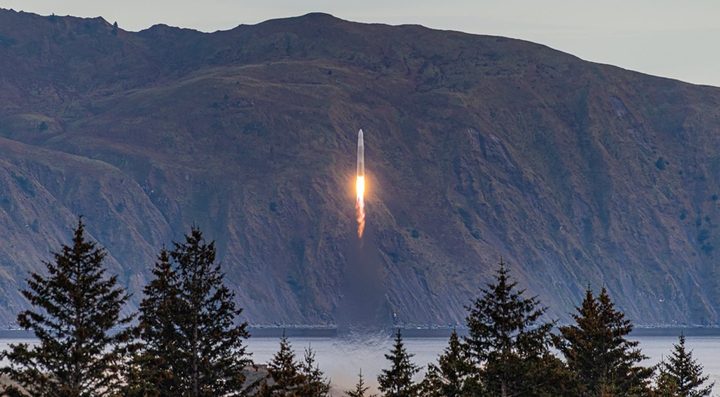
Astra's Rocket 3.1 leaving the pad at the Kodiak launch site
Astra’s Rocket 3.1 leaving the pad at the Kodiak launch site Astra/John Kraus

In terms of what went wrong, Kemp and London wrote that, “Early in the flight, our guidance system appears to have introduced some slight oscillation into the flight, causing the vehicle to drift from its planned trajectory leading to a commanded shutdown of the engines by the flight safety system.” To learn more about the issue, the company will be analyzing the flight data to see what to fix for their next launch, which will be made with a vehicle code-named Rocket 3.2 that has already been built.

If you haven’t heard of Astra before, it’s because the startup operated in “stealth mode” for three years during its development and testing phases. The company announced itself earlier this year, ambitiously saying it wishes to offer rockets to deploy satellites for as little as $1 million per launch. Based in Alameda, the company has taken up funding from various silicon valley investors to finance its development so far.

Updated 12th September: Added information about the landing of the rocket.

Georgina Torbet
Georgina has been the space writer at Digital Trends space writer for six years, covering human space exploration, planetary…
Blue Origin successfully re-uses a New Glenn rocket for the first time ever
Blue Origin achieves first New Glenn reflight despite payload setback
Blue Origin

Blue Origin has achieved a major milestone in its spaceflight ambitions by successfully reusing a booster from its heavy-lift New Glenn rocket for the first time. The historic launch, conducted on April 19, marks a significant step forward for Jeff Bezos’ space company as it seeks to compete with rivals like SpaceX in the rapidly evolving commercial launch market.

A Milestone With A Mixed Outcome

Read more
Stunning close-up footage shows NASA’s moon rocket roaring to space
On its first crewed flight, NASA's lunar rocket displays its awesome power.
NASA's SLS rocket roars skyward at the start of the Artemis II mission on April 1, 2026.

As NASA’s Artemis II astronauts journey back to Earth following their breathtaking close encounter with the moon earlier this week, the space agency has just shared some stunning footage (below) of the rocket launch that sent the crew on its way on April 1.

The close-up tracking shot shows the awesome power of the Space Launch System (SLS) rocket’s four core RS-25 engines together and its two solid rocket boosters as the 98-meter-tall vehicle roars away from the launchpad at the Kennedy Space Center in Florida.

Read more
How to watch NASA’s moon crew splash down at end of historic mission
The Orion spacecraft's final moments before splashdown will be the most perilous of the entire mission.
Earth and the moon as seen from the Orion spacecraft during the Artemis II mission in April 2026.

The Artemis II astronauts have looped around the moon, captured some extraordinary imagery (above), set a slew of records, and are now on their way back to Earth.

The 10-day mission will reach its climax on Friday, April 10, during a dramatic homecoming that will see the Orion spacecraft enter our planet’s atmosphere at a speed of nearly 25,000 miles per hour.

Read more