1. Home
  2. Space
  3. News

Colliding neutron stars create ‘paradigm-shifting’ colossal flash

Add as a preferred source on Google

Some of the most dramatic events in the universe are gamma-ray bursts (GRBs), brief pulses of light so bright that they can be seen from billions of light-years away. Researchers divide these events into short GRBs which last a few seconds and long GRBs which last up to a minute. For a long time, researchers thought that all long gamma-ray bursts were caused by the collapse of massive stars. But now, new research suggests that some long GRBs could be caused by two neutron stars merging.

A neutron star is the dense core that is left over after a huge star collapses, and is one of the densest objects in the universe — second only to black holes. Neutron stars have a very small size, at around 6 miles across, but hold more mass than the entire sun. So when two neutron stars collide and merge into each, the result is explosive. The merging of two neutron stars is called a kilonova, a rare event that produces a huge flash of light and is known to produce short GRBs.

Artist's impression of a kilonova produced by two colliding neutron stars.
This artist’s impression shows a kilonova produced by two colliding neutron stars. While studying the aftermath of a long gamma-ray burst (GRB), two independent teams of astronomers using a host of telescopes in space and on Earth, including the Gemini North telescope on Hawai‘i and the Gemini South telescope in Chile, have uncovered the unexpected hallmarks of a kilonova, the colossal explosion triggered by colliding neutron stars. NOIRLab/NSF/AURA/J. da Silva/Spaceengine 

But when two teams of scientists investigated a recently identified GRB which lasted for 50 seconds, putting it well into the long GRB classification, they found that it wasn’t caused by a massive star collapse but rather by a neutron star merger.

Recommended Videos

“This event looks unlike anything else we have seen before from a long gamma-ray burst,” said lead researcher Jillian Rastinejad of Northwestern University in a statement. “Its gamma rays resemble those of bursts produced by the collapse of massive stars. Given that all other confirmed neutron star mergers we have observed have been accompanied by bursts lasting less than two seconds, we had every reason to expect this 50-second GRB was created by the collapse of a massive star. This event represents an exciting paradigm shift for gamma-ray burst astronomy.”

This means that the causes of GRBs must be more complex than previously thought. If neutron star mergers can trigger both long and short GRBs, there must be something about neutron stars or GRBs which is yet to be understood.

“When you put two neutron stars together, there’s not really much mass there,” co-author Wen-fai Fong explained. “A little bit of mass accretes and then powers a very short-duration burst. In the case of massive star collapses, which traditionally power longer gamma-ray bursts, there is a longer feeding time.”

The research can also be used to help find more elusive kilonova events to study by following the trail of long GRBs as well as short ones.

“This discovery is a clear reminder that the Universe is never fully figured out,” said Rastinejad. “Astronomers often take it for granted that the origins of GRBs can be identified by how long the GRBs are, but this discovery shows us there’s still much more to understand about these amazing events.”

The research is published in the journal Nature.

Georgina Torbet
Georgina has been the space writer at Digital Trends space writer for six years, covering human space exploration, planetary…
Orbot Robotics’ space robot has four arms, but its Goro physique has a purpose
This four-armed robot could make routine space-station work easier for astronauts
Robot with four arms

Helios is a new four-armed robot from Zurich-based Orbit Robotics, and at first glance, it reminded me of Goro from Mortal Kombat. But unlike the prince from Outworld, Helios is not built for combat. It is designed to help astronauts on space stations with the repetitive, time-consuming work that keeps life in space running.

Orbit Robotics says that in microgravity, legs are not much help. Instead of walking or standing, Helios needs to move through tight station interiors, hold itself steady, and handle cargo, tools, or equipment. Its four-arm design turns extra limbs into both mobility aids and working hands.

Read more
A billionaire crypto bro will lead humanity to Mars atop Musk’s Starship
Chun Wang could become one of the first humans to travel toward Mars
Chun Wang in a space suit

Neil Armstrong and Buzz Aldrin became the faces of the Moon landing era. Elon Musk’s Mars era may get a very different public face in Chun Wang, a cryptocurrency billionaire whose fortune traces back to Bitcoin mining.

Wang is expected to lead a future SpaceX Starship mission that would fly past Mars and return to Earth. SpaceX has not announced a launch date, and the plan still depends on Starship proving it can safely carry humans far beyond Earth's orbit.

Read more
Elon Musk will get a historical paycheck if he builds a colony of one milliion humans on Mars
SpaceX may hand Musk a historic payday, if Mars becomes a city
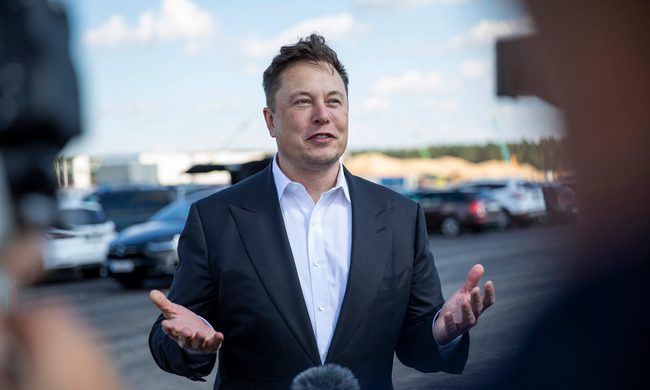
Elon Musk talks to the press as he arrives to to have a look at the construction site of the new Tesla Gigafactory near Berlin.

An executive's pay packages are typically tied to review, profit, share price, or operational targets. But SpaceX apparently has something different in mind. According to a Bloomberg report and details from SpaceX's IPO filing, Elon Musk's latest compensation plan includes a wild condition.

The company must establish a permanent human colony on Mars with at least 1 million inhabitants. However, this is only a part of the crazy deal.

Read more