  1. Home
  2. Space
  3. News

Hubble scientists update famous image of the stunning Veil Nebula

Add as a preferred source on Google

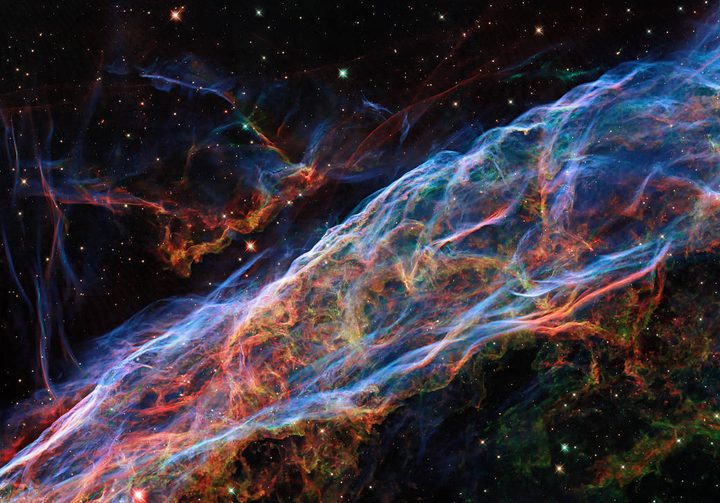
This image taken by the NASA/ESA Hubble Space Telescope revisits the Veil Nebula, which was featured in a previous Hubble image release. In this image, new processing techniques have been applied, bringing out fine details of the nebula’s delicate threads and filaments of ionized gas.
This image taken by the NASA/ESA Hubble Space Telescope revisits the Veil Nebula, which was featured in a previous Hubble image release. In this image, new processing techniques have been applied, bringing out fine details of the nebula’s delicate threads and filaments of ionized gas. ESA/Hubble & NASA, Z. Levay

Scientists at the Hubble Space Telescope have released a reworked image of the beautiful Veil Nebula, showing threads of ionized gas winding through space.

Recommended Videos

The Veil Nebula was previously imaged by Hubble, resulting in one of the telescope’s most famous images. This original image was shared in 2015, but since then image processing techniques have improved to such a degree that researchers can use these new techniques to find out more information about an older subject. The Hubble researchers ran the original Veil Nebula image through a newer set of image processing filters to show more details in the image than were previously visible.

“To create this colorful image, observations were taken by Hubble’s Wide Field Camera 3 instrument using five different filters,” Hubble scientists wrote in a statement describing the new image. “The new post-processing methods have further enhanced details of emissions from doubly ionized oxygen (seen here in blues), ionized hydrogen, and ionized nitrogen (seen here in reds).”

The Veil Nebula is located 2,100 light-years away in the constellation of Cygnus (The Swan). Even though the nebula is large, it is in fact just one small part of a much larger formation called the Cygnus Loop. The Cygnus Loop is the remnant that was left over when a star 20 times the mass of our sun went supernova, exploding outward in a dramatic phase of the end of its life. This explosion pushed dust and gas outward in a huge shockwave, creating the loop. This explosion happened around 10,000 years ago, and the remnant has since expanded 60 light-years outward from its original detonation.

The Veil Nebula is the visible part of the Cygnus Loop, although the Hubble photo only shows a small part of it. The delicate filaments of gas visible in the Veil Nebula have made it a favorite example of the beauty of space.

Georgina Torbet
Georgina has been the space writer at Digital Trends space writer for six years, covering human space exploration, planetary…
Orbot Robotics’ space robot has four arms, but its Goro physique has a purpose
This four-armed robot could make routine space-station work easier for astronauts
Robot with four arms

Helios is a new four-armed robot from Zurich-based Orbit Robotics, and at first glance, it reminded me of Goro from Mortal Kombat. But unlike the prince from Outworld, Helios is not built for combat. It is designed to help astronauts on space stations with the repetitive, time-consuming work that keeps life in space running.

Orbit Robotics says that in microgravity, legs are not much help. Instead of walking or standing, Helios needs to move through tight station interiors, hold itself steady, and handle cargo, tools, or equipment. Its four-arm design turns extra limbs into both mobility aids and working hands.

Read more
A billionaire crypto bro will lead humanity to Mars atop Musk’s Starship
Chun Wang could become one of the first humans to travel toward Mars
Chun Wang in a space suit

Neil Armstrong and Buzz Aldrin became the faces of the Moon landing era. Elon Musk’s Mars era may get a very different public face in Chun Wang, a cryptocurrency billionaire whose fortune traces back to Bitcoin mining.

Wang is expected to lead a future SpaceX Starship mission that would fly past Mars and return to Earth. SpaceX has not announced a launch date, and the plan still depends on Starship proving it can safely carry humans far beyond Earth's orbit.

Read more
Elon Musk will get a historical paycheck if he builds a colony of one milliion humans on Mars
SpaceX may hand Musk a historic payday, if Mars becomes a city
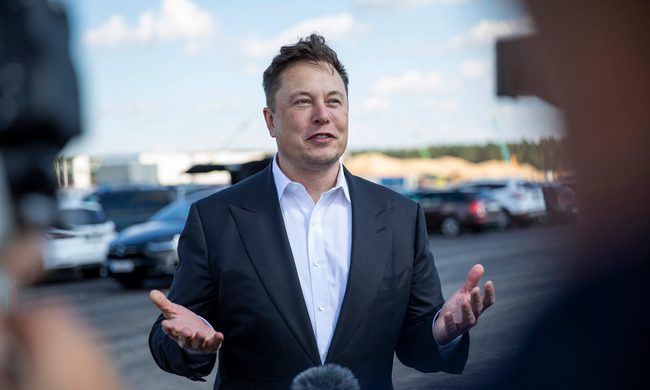
Elon Musk talks to the press as he arrives to to have a look at the construction site of the new Tesla Gigafactory near Berlin.

An executive's pay packages are typically tied to review, profit, share price, or operational targets. But SpaceX apparently has something different in mind. According to a Bloomberg report and details from SpaceX's IPO filing, Elon Musk's latest compensation plan includes a wild condition.

The company must establish a permanent human colony on Mars with at least 1 million inhabitants. However, this is only a part of the crazy deal.

Read more