  1. Home
  2. Space
  3. News

NASA highlights amazing ‘super bowls’ in our solar system

Add as a preferred source on Google

On the day of America’s most-watched sporting event, NASA has dabbled in a spot of wordplay and posted a feature highlighting “10 impressively super, bowl-shaped venues adorning worlds in our solar system.”
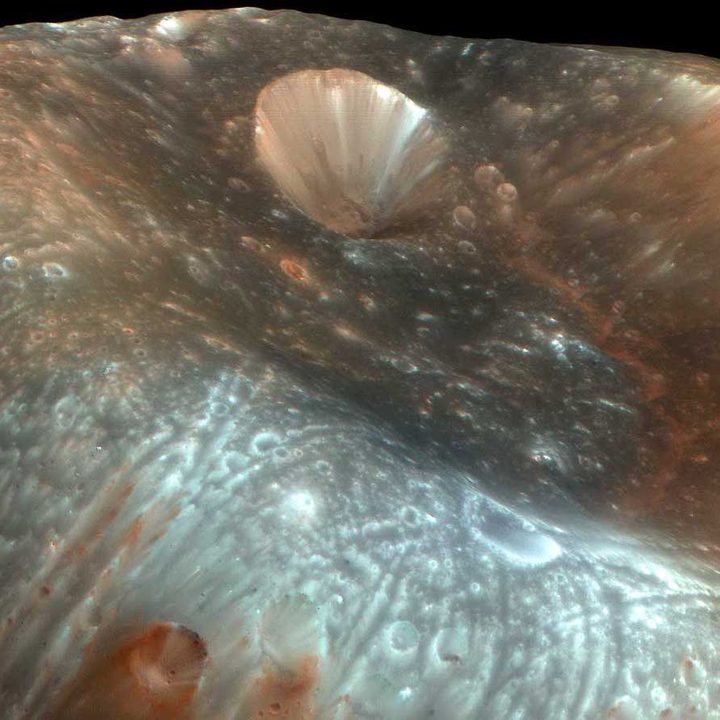
Mars' Stickney Crater.
Mars’ Stickney Crater. NASA/JPL-Caltech/University of Arizona

The list includes the extraordinary Stickney Crater on Phobos, one of the two moons of Mars.

Recommended Videos

It’s about 6 miles (10 km) in diameter and even has a smaller crater inside it.

Keeping with the Super Bowl theme, NASA’s Amanda Barnett writes: “Note that if the average speed of an NFL throw is 50-60 mph, and the escape velocity of Phobos is 25 mph, then it’s conceivable that a pro quarterback could throw a ball right off Phobos and into orbit around Mars.”
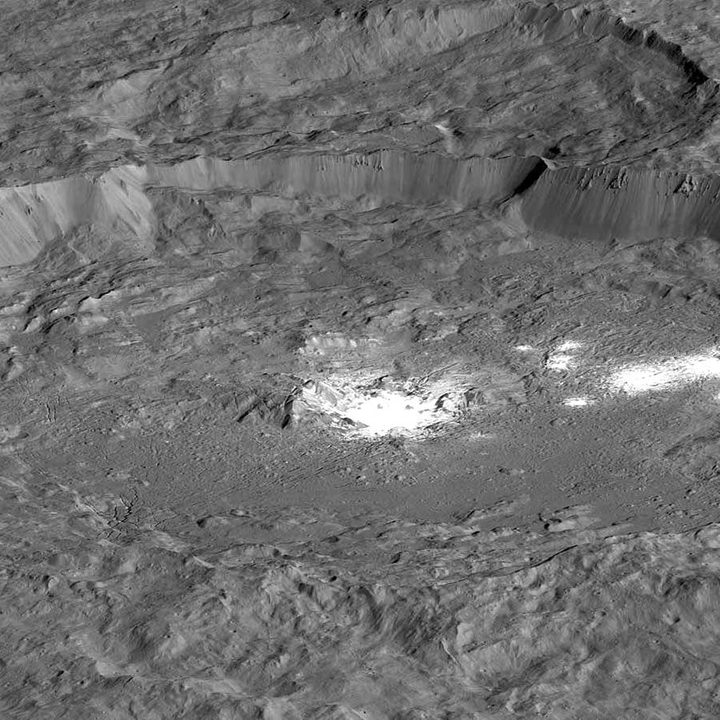
Ceres' Occator Crater.
Occator Crater on Ceres. NASA/JPL-Caltech/UCLA/MPS/DLR/IDA

Located between Mars and Jupiter, the tiny dwarf planet of Ceres is home to Occator Crater, an impact site 57 miles (92 km) across and 2.5 miles (4 km) deep. The crater is the brightest spot on Ceres, a feature the result of its highly reflective salt deposits.
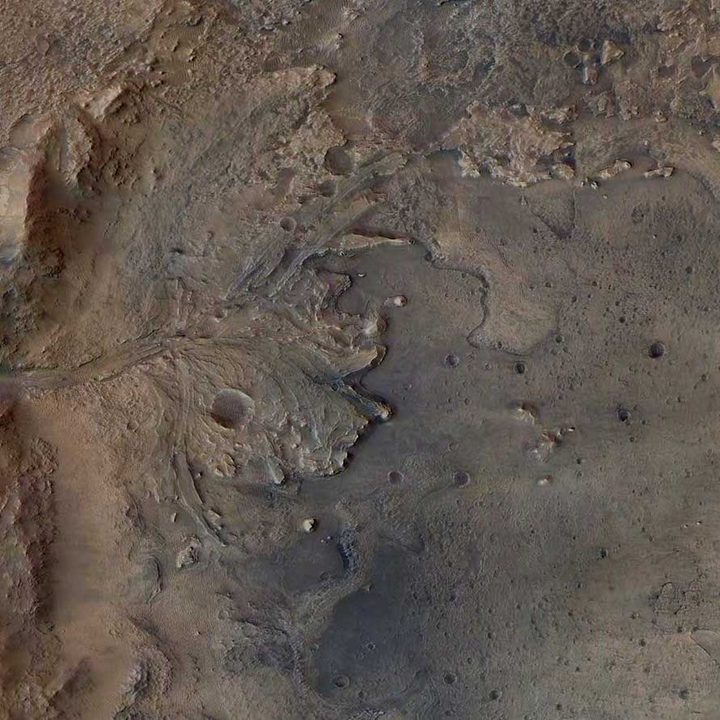
Mars' Jezero Crater.
Mars’ Jezero Crater. ESA/DLR/FU-Berlin

Jezero Crater has become something of a celebrity since the start of NASA’s Perseverance Mars mission last year. Jezero, a dried lake bed, was the landing location for the Perseverance rover in February 2021, and the site is now being explored by the vehicle in the hope of discovering evidence of ancient microbial life on the distant planet.

Rather less bowl-like than some of the craters we see here, Jezero is 28 miles (45 kilometers) wide and exists within Mars’ Isidis Planitia region, the site of an ancient meteorite impact that left behind a large crater some 750 miles (1200 kilometers) across. A subsequent, smaller meteorite strike within the Isidis impact basin led to the creation of the Jezero Crater.
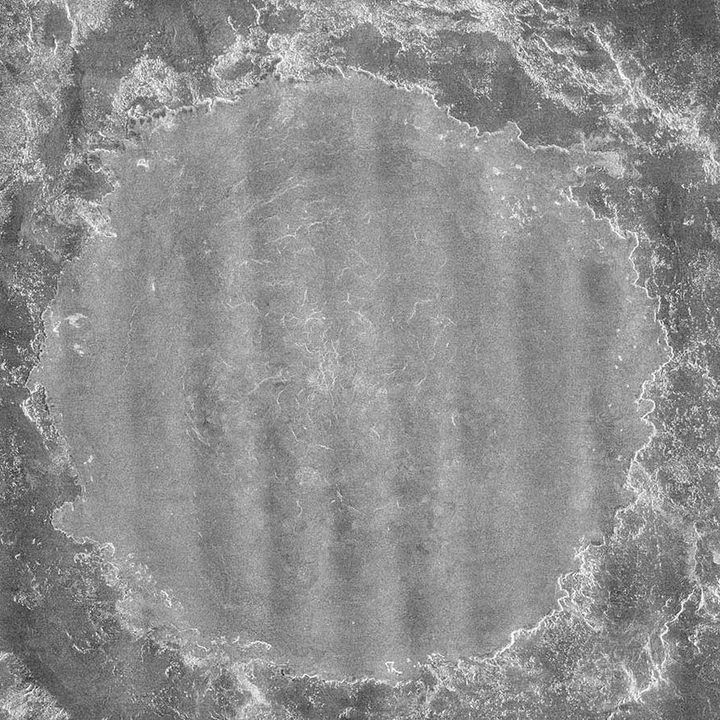
Venus' Mead Crater.
Mead Crater on Venus. NASA/JPL

At 170 miles (2745 km) across, Mead Crater on Venus is one of the planet’s largest impact sites and was created by a massive collision that took place between 300 million and a billion years ago. The remarkable image of the crater (above) was created using a collection of radar images captured by NASA’s Magellan spacecraft.
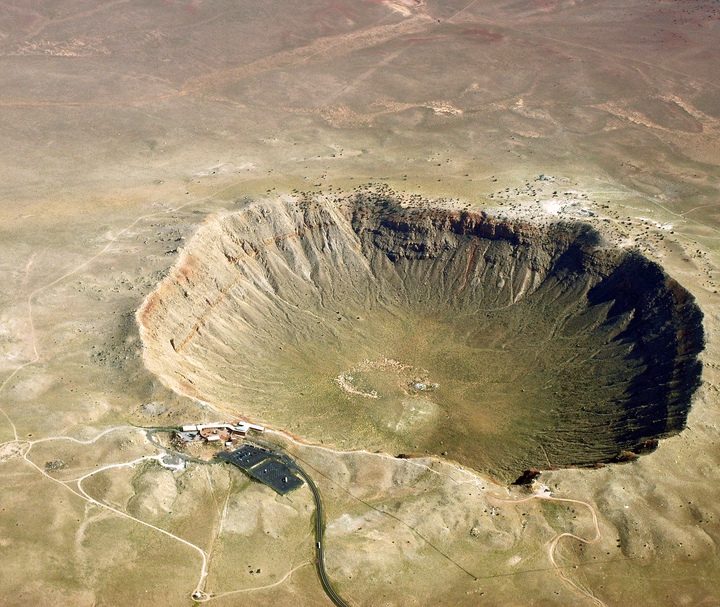
Barringer Crater in Arizona.
Arizona’s Barringer Crater. Shane Torgerson/Wikimedia Commons

A notable entry in Barnett’s collection is Meteor Crater — also known as Barringer Crater — that exists right here on Earth, in Arizona. Judging by its size (0.75 miles/1.2 km across; 600 feet/170 meters deep), it’s a spot you wouldn’t want to have been standing in when the impact occurred some 50,000 years ago.

Barnett notes that the crater is “bigger than your average stadium,” and was also a training site for the Apollo astronauts ahead of their lunar missions five decades ago.

Be sure to check out NASA’s article for all 10 of its amazing “super, bowl-shaped venues.”

Trevor Mogg
Contributing Editor
Not so many moons ago, Trevor moved from one tea-loving island nation that drives on the left (Britain) to another (Japan)…
Stunning close-up footage shows NASA’s moon rocket roaring to space
On its first crewed flight, NASA's lunar rocket displays its awesome power.
NASA's SLS rocket roars skyward at the start of the Artemis II mission on April 1, 2026.

As NASA’s Artemis II astronauts journey back to Earth following their breathtaking close encounter with the moon earlier this week, the space agency has just shared some stunning footage (below) of the rocket launch that sent the crew on its way on April 1.

The close-up tracking shot shows the awesome power of the Space Launch System (SLS) rocket’s four core RS-25 engines together and its two solid rocket boosters as the 98-meter-tall vehicle roars away from the launchpad at the Kennedy Space Center in Florida.

Read more
How to watch NASA’s moon crew splash down at end of historic mission
The Orion spacecraft's final moments before splashdown will be the most perilous of the entire mission.
Earth and the moon as seen from the Orion spacecraft during the Artemis II mission in April 2026.

The Artemis II astronauts have looped around the moon, captured some extraordinary imagery (above), set a slew of records, and are now on their way back to Earth.

The 10-day mission will reach its climax on Friday, April 10, during a dramatic homecoming that will see the Orion spacecraft enter our planet’s atmosphere at a speed of nearly 25,000 miles per hour.

Read more
Notable firsts of the Artemis II moon mission … so far
The Artemis II crew are now on their way home, so let's take a look at the mission's achievements so far.
The moon as seen from the Orion spacecraft during the Artemis II mission.

Having just looped around the moon in a historic flyby of our nearest neighbor, the Artemis II crew are now on their way back to Earth.

NASA’s Victor Glover, Reid Wiseman, and Christina Koch, along with the Canadian Space Agency’s Jeremy Hansen, launched aboard the Orion spacecraft from the Kennedy Space Center on April 1, lifted to space by the mighty SLS rocket.

Read more