1. Home
  2. Space
  3. News

How to watch NASA’s moon crew splash down at end of historic mission

The Orion spacecraft's final moments before splashdown will be the most perilous of the entire mission.

Add as a preferred source on Google
Earth and the moon as seen from the Orion spacecraft during the Artemis II mission in April 2026.
Earth and the moon as seen from the Orion spacecraft during the Artemis II mission in April 2026. NASA

The Artemis II astronauts have looped around the moon, captured some extraordinary imagery (above), set a slew of records, and are now on their way back to Earth.

The 10-day mission will reach its climax on Friday, April 10, during a dramatic homecoming that will see the Orion spacecraft enter our planet’s atmosphere at a speed of nearly 25,000 miles per hour.

Recommended Videos

During the moments that follow, Artemis II crew members Victor Glover, Reid Wiseman, Christina Koch, and Jeremy Hansen will experience a 16-minute roller coaster ride as their vehicle experiences the mission’s greatest forces yet.

At the end of the uncrewed Artemis I mission in 2022, the spacecraft suffered unexpected heat shield damage during reentry, though the vehicle splashed down in one piece. While engineers have implemented changes to ensure the spacecraft’s structural integrity, those final moments as it reenters Earth’s atmosphere later this week will nevertheless be the most perilous of the entire mission for everyone involved — not least the four crew members.

How to watch

NASA will provide a live stream of the crew’s homecoming on NASA+ and also its YouTube channel. The video player embedded above will also show the same feed.

Below is NASA’s latest schedule for Friday. If the timings change, we’ll update this information just as soon as we can. All times are in Eastern Time.

6:30 p.m.: NASA begins its coverage of the crew’s return.

7:33 p.m.: Orion crew module and service module separate.

7:37 p.m.: The Orion will briefly fire its thrusters in preparation for reentry.

7:53 p.m.: An important moment as Orion first encounters Earth’s atmosphere. The vehicle’s heat shield is designed to protect the spacecraft from temperatures of about 5,000 degrees Fahrenheit — about half as hot as the surface of the sun. Orion will decelerate at a rate up to four times the force of gravity, causing the astronauts to feel four times heavier than they do on Earth.

8:07 p.m.: Following various parachute deployments to slow Orion down, splashdown will occur in the Pacific Ocean about 50 miles off the coast of California, bringing to an end a historic mission that paves the way for a crewed lunar landing as early as 2028.

10 p.m.: A post-splashdown news conference will take place at NASA’s Johnson Space Center.

Trevor Mogg
Contributing Editor
Not so many moons ago, Trevor moved from one tea-loving island nation that drives on the left (Britain) to another (Japan)…
Getting to Mars may require a pit stop in orbit, and NASA just tested the nozzle to make that happen
A gas pump nozzle for spacecraft sounds simple. It is not, and that's what makes this test worth paying attention to.
Architecture, Building, Factory

Getting a spacecraft to Mars or beyond requires an enormous amount of fuel, most of which has to be hauled from Earth, adding to the overall cost and weight of the spacecraft. NASA has been working on a different approach, one that could be more efficient and effective.

It wants to refuel a spacecraft in orbit before heading out for the mission. What’s even more interesting is that the space agency just finished testing a component that could make that possible: a cryocoupler.

Read more
Elon Musk’ Starlink could soon offer mobile services as a US carrier
Showcase of T-Mobile Starlink service on an iPhone.

Elon Musk’s Starlink has already changed how millions of people access the internet, especially in places where traditional broadband struggles to reach. Now, the satellite internet service could be preparing for an even bigger leap — becoming your mobile carrier.

According to a Financial Times report, SpaceX has told investors it’s considering launching a retail Starlink mobile service in the US. Instead of simply partnering with wireless carriers, the company could begin selling mobile plans directly to consumers, putting it in direct competition with Verizon, AT&T, and T-Mobile.

Read more
Lightsails have hit another speed bump on the road to interstellar travel
The coolest interstellar travel idea may get betrayed by the light pushing it
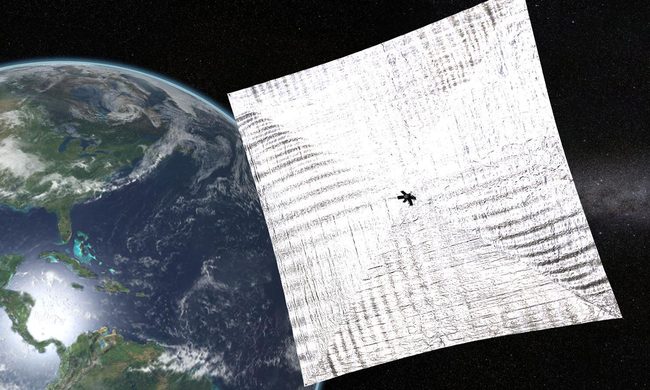
LightSail in Earth orbit

Laser-powered lightsails are one of the coolest answers to spaceflight. It might not be as sci-fi-sounding as a warp drive, but now, its practicality has also come under question. Using lightsails, a spacecraft could unfurl an ultra-thin reflective sail and let a powerful laser push it toward another star, without relying on fuel.

The tech was simple and elegant--except it's also more complicated than it sounds. A new preprint from researchers Chao Shen and Jiaze Li of the Harbin Institute of Technology suggests that relativistic lightsails may run into a hidden propulsion problem once they start moving extremely fast.

Read more