1. Home
  2. Space
  3. Emerging Tech
  4. Legacy Archives

SpaceX just got the green light to build its own spaceport in Texas

Add as a preferred source on Google

Earlier this week, SpaceX (aka Elon Musk’s other company) was granted approval from the Federal Aviation Administration to build a 56.5-acre spaceport along the Gulf of Mexico. While the company will still need approvals from local agencies before it can begin construction, the FAA’s decision is a monumental step forward on the path to making the long-planned spaceport a reality. This is major win for SpaceX, since the proposed spaceport will allow the company to launch from private property, rather than from Air Force facilities it currently uses  for rocket tests and missions to the International Space Station.

On Wednesday, the FAA, which oversees all commercial space launches in the US, issued SpaceX what’s known as a Record of Decision that states the agency will grant launch licenses to the company to operate at a private location along the Texas-Mexico border near Boca Chico State Park — about 20 miles east of Brownsville, Texas. Under the FAA decision, SpaceX may conduct 12 commercial launches per year through 2025, specifically ten Falcon 9 rockets and two Falcon Heavy rockets.

Recommended Videos

This definitely isn’t the last hurdle that SpaceX needs to overcome before it can start building (it still needs approval from various state agencies in order to build roads start construction on the site), but this should be the last federal obstacle the company will face before it breaks ground on the spaceport.

Drew Prindle
Former Senior Editor, Features
Drew Prindle is an award-winning writer, editor, and storyteller who currently serves as Senior Features Editor for Digital…
Elon Musk’ Starlink could soon offer mobile services as a US carrier
Showcase of T-Mobile Starlink service on an iPhone.

Elon Musk’s Starlink has already changed how millions of people access the internet, especially in places where traditional broadband struggles to reach. Now, the satellite internet service could be preparing for an even bigger leap — becoming your mobile carrier.

According to a Financial Times report, SpaceX has told investors it’s considering launching a retail Starlink mobile service in the US. Instead of simply partnering with wireless carriers, the company could begin selling mobile plans directly to consumers, putting it in direct competition with Verizon, AT&T, and T-Mobile.

Read more
Lightsails have hit another speed bump on the road to interstellar travel
The coolest interstellar travel idea may get betrayed by the light pushing it
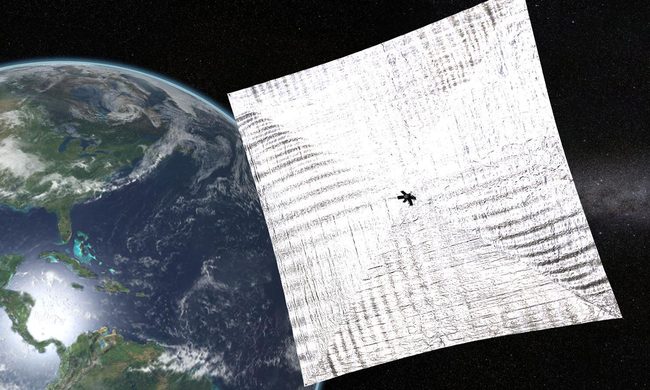
LightSail in Earth orbit

Laser-powered lightsails are one of the coolest answers to spaceflight. It might not be as sci-fi-sounding as a warp drive, but now, its practicality has also come under question. Using lightsails, a spacecraft could unfurl an ultra-thin reflective sail and let a powerful laser push it toward another star, without relying on fuel.

The tech was simple and elegant--except it's also more complicated than it sounds. A new preprint from researchers Chao Shen and Jiaze Li of the Harbin Institute of Technology suggests that relativistic lightsails may run into a hidden propulsion problem once they start moving extremely fast.

Read more
The galaxy has an exoplanet size mystery, and NASA’s EVE mission wants to solve it
This planet-hunting mission wants to catch baby worlds before they grow up
Artist’s Illustration of Exoplanets Orbiting Barnard’s Star

Mankind venturing into space ended up creating more questions than it answered, and one of the dilemmas is related to the planet sizes. Astronomers have found plenty of rocky super-Earths and plenty of puffier sub-Neptunes, but far fewer planets with a radius of about 1.8 times Earth’s.

That gap is known as the radius valley, and a proposed mission called the Early eVolution Explorer, or EVE, wants to figure out why it exists. NASA has a simple plan: look at planets while they are still young. The mission concept, detailed in a new arXiv preprint and covered by Phys.org, would focus on newly formed star clusters to see what small planets look like before billions of years of evolution.

Read more