  1. Home
  2. Space
  3. Computing
  4. News

SpaceX’s Starlink service just hit a new customer milestone

Add as a preferred source on Google

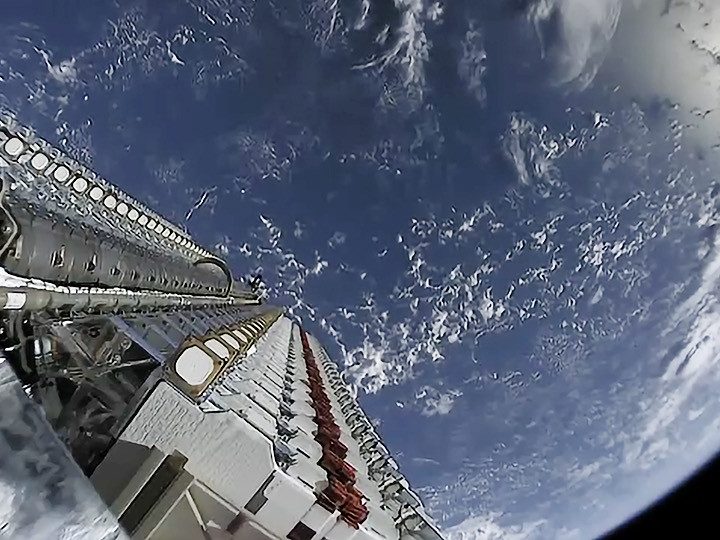
Starlink satellites being deployed by SpaceX.
Starlink satellites being deployed by SpaceX. SpaceX / SpaceX

SpaceX has revealed that its internet-from-space Starlink service now has 4 million customers globally.

Recommended Videos

“Starlink is connecting more than 4M people with high-speed internet across 100+ countries, territories, and many other markets,” the company revealed in a post on X (formerly Twitter) on Thursday.

The Elon Musk-led internet endeavor is rapidly gaining new customers, adding 1 million new ones in the last four months alone. The first Starlink customers came online in October 2020 and the service reached its first 1 million subscribers in December 2022.

Starlink has come a long way since SpaceX deployed the first batch of 60 satellites in low-Earth orbit in 2019. The constellation is now believed to comprise 6,300 satellites and is still growing as SpaceX seeks to build out its service with faster, more reliable, and wider coverage.

Besides residential customers, Starlink also serves a growing number of enterprise customers such as cruise lines and airlines. News of this latest customer milestone came on the same day that Air France announced that starting  next summer, it will begin a gradual rollout of Starlink for its fleet of aircraft to bring ultra-high-speed internet to its passengers. The service will eventually be rolled out to Air France’s entire fleet, with users required to sign up for and log into the airline’s Flying Blue loyalty program to use the service.

“During the flight, customers will be able to easily stay in touch with friends and family, follow all the world’s news live, play video games online, and, of course, stream TV, films, and series,” Air France said in a release. “The service will be accessible from smartphones, digital tablets, and laptops, and each customer will be able to connect several devices simultaneously.”

But the Starlink initiative has run into some issues along the way, with astronomers, for example, long complaining that light trails from the satellites obscure their view of deep space. Making matters worse is electromagnetic radiation being emitted from Starlink’s new generation of satellites, which is interfering with Earth-based radio telescopes and causing further disruptions to astronomers’ work, the BBC reported.

Trevor Mogg
Contributing Editor
Not so many moons ago, Trevor moved from one tea-loving island nation that drives on the left (Britain) to another (Japan)…
Amazon’s Starlink rival just crossed a major milestone, but don’t expect perfect internet just yet
Amazon finally showed up to the space internet party
Amazon Leo satellite layout across all launch vehicles

Amazon has taken a significant step toward launching its long-awaited satellite internet service. Following its latest rocket launch, the company now has 396 Project Kuiper satellites in low-Earth orbit, enough to begin offering continuous service across select regions. The milestone keeps Amazon on track for its previously announced goal of launching commercial service by mid-2026.

https://twitter.com/Weber44Chris/status/2072575499461963938?ref_src=twsrc%5Etfw%7Ctwcamp%5Etweetembed%7Ctwterm%5E2072575499461963938%7Ctwgr%5Ed727a1b853cbf519585e7bf2655943afb2f91bb8%7Ctwcon%5Es1_&ref_url=https%3A%2F%2Fwww.theverge.com%2Fscience%2F960563%2Famazon-leo-service-tipping-point

Read more
Amazon’s Starlink rival is set to launch satellite internet later this year
After launching nearly 400 satellites, Amazon says its Leo broadband service will go live later this year.
Atlas V launches 29 Amazon Leo satellites from Cape Canaveral, Florida

Amazon's long-awaited answer to SpaceX's Starlink is finally nearing liftoff. According to an exclusive report from Reuters, the company plans to begin offering its Leo satellite internet service later this year, after its latest rocket launch pushed the constellation to 394 satellites in orbit.

The pieces are finally falling into place for Project Kuiper

Read more
NASA is investing $590 million in private contractors to build humanity’s first Moon outpost
NASA is counting on private companies to land its Moon Base dream.
Artist impression of a Moon Base concept, with solar arrays for energy generation, greenhouses for food production, and habitats shielded with regolith.

Building a permanent base on the Moon sounds like science fiction, but NASA is making it feel a lot more real. The agency just handed $590 million in contracts to three private companies for four uncrewed lunar lander missions launching in late 2028.

These missions are part of Phase 1 of NASA's broader $30 billion Moon Base program, which needs to deliver landers, rovers, and scientific cargo up there before astronauts eventually move in. These efforts are closely tied NASA's Artemis program, which sent humans on a lunar flyby in April for the first time since the Apollo era.

Read more