
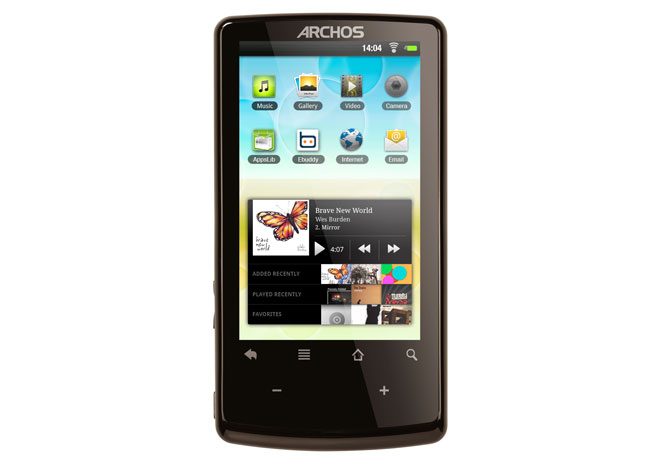
“A 3.2-inch screen and Android 2.1 sound like a winning combination for $150, but poor audio quality, a dim screen and numerous other problems prevent the Archos 32 from posing any threat to Apple's iPod Touch.”
- None
- Voices in music and video sound faint or missing
- Fuzzy screen
- Limited number of Archos-optimized Android apps
- Slow processor
- Poor VGA camera
- No expandable memory
“Why you can trust Digital Trends – We have a 20-year history of testing, reviewing, and rating products, services and apps to help you make a sound buying decision. Find out more about how we test and score products.“
Introduction
Normally, critics chuckle with maniacal glee given the chance to savage a really awful product. But we take no joy in reporting the Archos 32, the company’s 3.2-inch Android-based portable media player (or, as the company pretentiously calls it, an “Internet tablet”), is a complete disaster. We have tried two units, thinking the first must be a manufacturing aberration, used them with different headphones, and different file types, and the results have always been the same: sound so broken there has to be something fundamentally wrong with its audio chipset. Even discounting a serious silicon slip-up, the rest of the device, positioned as a smaller alternative to Apple’s iPod Touch, isn’t too hot, either.
Features and Design
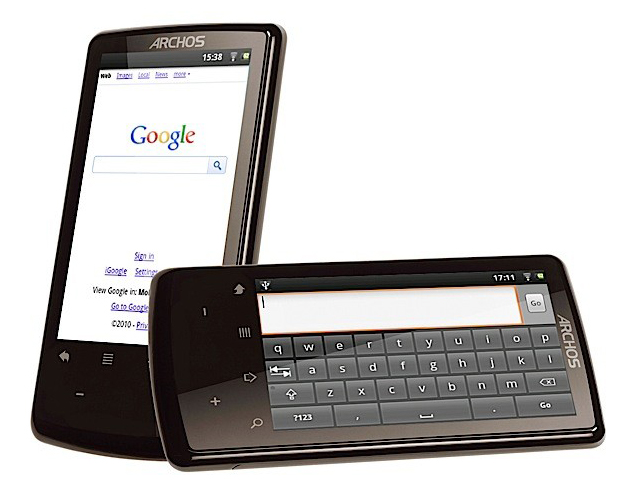
The 32, actually printed with a large 3 and a small 2 indicating its 3.2-inch screen size, resembles a small, thin Android cellphone such as the HTC Aria. The whole family encompasses three other models with the same nomenclature: the 24 (2.4-inch screen), the 43 (4.3-inch screen), the 70 (10-inch screen) and the 101 (10.1-inch screen). As for the 32, it’s a dark maroon slab with the familiar four Android touch controls (back, menu, home, search) beneath the screen and, underneath these, touch volume plus and minus keys. The microUSB jack and 3.5-inch headphone jack are on the bottom perimeter, and physical volume toggle and screen off buttons are on the bottom left side.
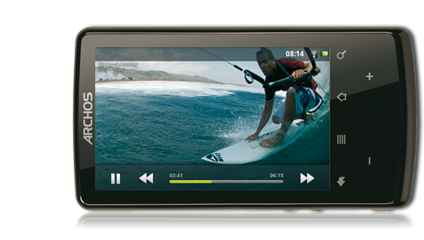
Looking at the 32’s screen is like looking at a photo or painting behind a sheet of glass – the actual display is under a visible protective layer. This layer has no affect on 32’s touch sensitivity, it’s just disconcerting. The display also isn’t as crisp as you’d expect; icons and text are fuzzy, with clearly visible pixels. As a result, videos and photos lack definition and brightness.
Inside, you get 8GB of memory (actually 6.88 GB of user space), Wi-Fi for Web browsing, Twitter (via a pre-installed app called Touiteur), e-mail, and a phonebook. Archos’ Android 2.1 iteration has five home screens, with quick access to video viewing on the first screen swipe right, to music on the first swipe left. There’s no Android Marketplace; you search for apps specifically optimized for these Archos tablets in the AppsLib app.
Sound Quality
Even if the 32 were perfect in every way – and it obviously isn’t – it doesn’t work for sound reproduction. It doesn’t “sound bad” – it plain doesn’t work. We loaded ordinary MP3 files ripped from our own collection, all of which play and sound fine on every other music player or cellphone we’ve loaded them on to. But vocals on the 32, when you can hear them at all, sound like faint echoes in the distance. Many tracks sound like original Beatles’ stereo recordings, which had half the instruments on the left, half on the right, and if you shifted the balance, you heard only half the mix. On the 32, you often lose the cohesive stereo mix and get distinct left-and-right instrument segregation. For sound reproduction, this fundamentally off. There must be something wrong with the circuitry.
Even when vocals are properly mixed – maybe one track out of 10 – music sound muddy and tinny.
These problems aren’t limited to music. Archos pre-loaded some AVI clips, including a complete copies of Batman Begins, You’ve Got Mail and Saving Private Ryan. Even with pre-loaded test videos, not ours, dialog again sounded faint or non-existent, like watching a silent movie with only music and some sound effects audible.
Camera
The Archos 32 has an included VGA camera and camcorder that’s barely worth the effort – even most free cellphones include a megapixel imager. Aside from the small-but-average VGA images, the lens is on the right rear edge (it’s on the left on all other cellphones), which makes it tough to avoid getting a finger in the picture as you grip the device and try to hit the touchscreen shutter release. Even though there’s a setting for audible shutter release, we heard none, and there’s no LCD screen pause or review to let you know you’ve captured a shot, just a pop-up “Picture Taken” with date message.

Conclusion
There is no reason to delve any deeper into the Archos 32. You can’t listen to music on it. Whether this sound reproduction flaw extends to Archos’ other “Internet tablets” I don’t know, but caveat emptor. But even if other functions performed moderately well – and the opposite is true – if you can’t hear the music, this tiny tablet is totally useless.
Highs:
- None
Lows:
- Voices in music and video sound faint or missing
- Fuzzy screen
- Limited number of Archos-optimized Android apps
- Slow processor
- Poor VGA camera
- No expandable memory


