
“Why you can trust Digital Trends – We have a 20-year history of testing, reviewing, and rating products, services and apps to help you make a sound buying decision. Find out more about how we test and score products.“
Huawei’s MediaPad M3 is so good, it may make you put down your phablet and pick up a tablet again
Tablets may have taken a backseat to big-screen smartphones in the last couple years, but Huawei has made one that you’ll definitely want to take notice of. Since it has been in our hands, we’ve found it hard to put down. It’s the MediaPad M3, and it’s absolutely gorgeous to look at and hold, with all the internal tech power found in the best smartphones, matched with a super display. Should you put down your phablet for it?
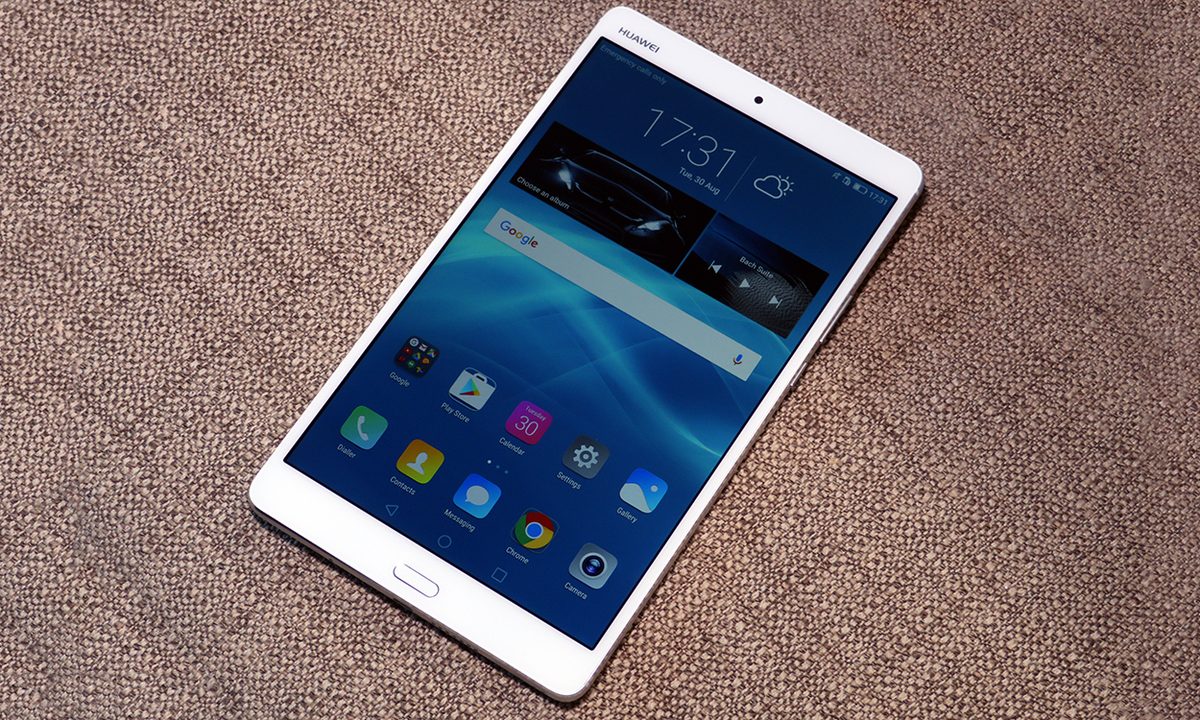
Forget worries about Huawei’s second-rate design or build quality. Those days are long gone. The metal unibody MediaPad M3 looks and feels high end. From the flowing curves around the top corners, to the diamond-cut chamfered edges, the tablet has a wonderfully cohesive style. It borrows plenty from the Huawei P9 and the Mate 8 too, including the subtly textured power button to make it easier to identify by touch.
The screen measures 8.4 inches, larger than the M3’s most obvious competitor, the Apple iPad Mini 4. However, the body is incredibly compact, and despite having relatively small hands, I can cradle the Huawei slate in one hand and still reach the volume and power buttons without adjusting my grip. It’s all thanks to the super slim bezels around the IPS-LCD display, which has a stunning 2,560 x 1,600 pixel resolution.
Lower-end options, availability and price
The MediaPad M3 launched internationally first, but it’s now available in the U.S. exclusively via Amazon. The international variant had multiple prices and models, but you can only order the 32GB Wi-Fi model in the U.S.
Huawei is also releasing two lower-tier tablets, but there’s a catch — they run software from 2013.
That’s right — they run Android 4.4 KitKat and are unlikely to ever get updated to a more modern version of the Android operating system. As the name suggests, the T1 comes in a 7-inch and a 9.6-inch size, and unsurprisingly they’re dirt cheap at $100 and 160, respectively. Both devices, like the M3, are available on Amazon right now, though they will begin shipping later in the week.
Monster sound system
Going back to the M3, Huawei has added a blue light filter that it calls Eye Protection — useful when you’re getting ready to go to sleep. It’s also capable of falling to just 4 nits of brightness — ideal for reading or watching video in a darkened room. Videos looks gorgeous, although the 16:10 aspect ratio of the screen leaves black bars above and below movies.
Huawei has teamed up with Harmon Kardon to co-engineer the audio on the MediaPad M3, creating a monstrously loud 1-watt stereo speaker system that vibrates through the tablet’s body, powered by a dedicated digital sound processor (DSP) that handles 192kHz/24-bit high definition music files. Huawei says the speakers “smartly adapt,” and adjust according to the tablet’s orientation, always providing optimum staging. The effect is very subtle; it retains a spacious sound regardless of the way you hold the tablet.


The screen, coupled with the sound system, makes the MediaPad M3 live up to its name — it’s a superb device for watching video — but it’s also a strong gaming machine. The Kirin 950 processor inside is the same one powering the Huawei P9 smartphone, along with 4GB of RAM. It’s properly fast, and handled the insane Extreme mode in bullet-hell shooter Danmaku Unlimited with ease, barely even getting warm to the touch.
Android 6.0 with Huawei’s own user interface is installed, and like Apple’s iOS operating system, all the apps are displayed on scrolling home screens. The UI is a vast improvement over any Huawei device you may have used in the past, but anyone used to standard Android on a Motorola or Nexus phone will need a period of adjustment. The pull-down notification shade is different for example, and needlessly so, as it adds a second swipe to find useful shortcuts.
Fingerprint sensor
In the four days we spent using the MediaPad M3, the 5,100mAh battery drained by 52 percent through a mixture of games, video, and general usage. There’s also an interesting mode to decrease the screen resolution to 1,920 x 1,200, which gives you a few hours extra use if you need it. The M3 has a fingerprint sensor below the screen, that’s almost flush with the body itself, making it very comfortable. It’s a fourth-gen sensor with the highest level of security, and a cool gesture where swiping left or right on it shows the running apps. If there’s a downside to the M3, it’s the 8-megapixel camera, which took only average pictures without much detail.
IFA 2016: Pebble 4.0 smartwatch update revamps Health app and quick launcher
The MediaPad M3 tablet has the right size, the right amount of power, and the screen and speaker system to make it a fabulous all-rounder. It even has a SIM card slot to add data for use on the move. However, it’s not a phone, and big-screen devices like the iPhone 6S Plus and Huawei’s own Mate 8 lessen our need for tablets.
The device launched first in China, Malaysia, Saudi Arabia, France, New Zealand, Spain, Germany, Philippines, Thailand, Italy, Portugal, and the U.K.
Highs
- Beautiful screen
- Compact body
- High-class design and build
- Tremendous speaker system
- Plenty of gaming power
Lows
- Poor camera
- Huawei’s Android UI may frustrate
Article originally published in September. Updated on 11-17-16 by Julian Chokkattu: Added news about the M3’s availability and price in the U.S.