1. Home
  2. Trash
  3. News

Bill Gates is funding an at-home coronavirus testing program

Add as a preferred source on Google
 

To find out how the coronavirus spreads through communities, Microsoft co-founder Bill Gates said he is funding an at-home self-swab test for those who live in Seattle. 

The Seattle Coronavirus Assessment Network (SCAN) is a “disease surveillance program” whose goal is to provide a clearer picture of how the coronavirus spreads through a community by testing healthy people as well as those who are sick, Gates announced in a blog post on Tuesday, May 12.

“As SCAN gathers more test results in the weeks ahead, researchers expect the new data to provide a better sense of the number of infections and serve as one source to help answer other questions, like when physical distancing measures can be relaxed,” Gates wrote on his blog.

SCAN will test a sample of a diverse group of people and use the results, as well as other demographic data — including age, gender, race, and ZIP code — to learn more about who is at a higher risk for coronavirus and to see if social distancing is actually working. 

SCAN

People in Seattle interested in participating can enroll in the voluntary program starting Wednesday, May 13. Those chosen for the program will receive an at-home nasal-swab test kit and can review their results on SCAN’s web portal.

Gates is funding the program privately, as well we through his investment firm and his foundation. 

Gates has repeatedly stressed the importance of testing as one of the critical factors needed to end coronavirus quarantines since the beginning of the outbreak. 

Gates said in the past that getting the United States organized on testing will allow us to overcome the rapid spread of the virus until a vaccine can be made.

There are already a few other at-home coronavirus test kits available on the market, including one that has been authorized by the Food and Drug Administration and costs $119. 

For the latest updates on the novel coronavirus outbreak, visit the World Health Organization’s COVID-19 page.

Allison Matyus
Former Digital Trends Contributor
Allison Matyus is a general news reporter at Digital Trends. She covers any and all tech news, including issues around social…
The Digital Trends App Bundle is yours to try for a whole week, free
Digital Trends App Bundle

Recently, we've entered an exciting collaboration with Maple Media, creating a bundle of 17 apps worth having on your phone. From relaxed fun to serious productivity boosts, these apps cover all your bases and provide a fun boost to your phone. Normally, the bundle is $9.99 per month (far lower than the cost of using the apps individually), but for your first 7 days you can get access to the bundle for free. View the full Digital Trends App Bundle for a complete list of the apps, or read on for a summarized take.

Start your free trial

Read more
The Galaxy S26 Ultra might not see much of a battery upgrade after all
It looks like it will stay the same as the last five years.
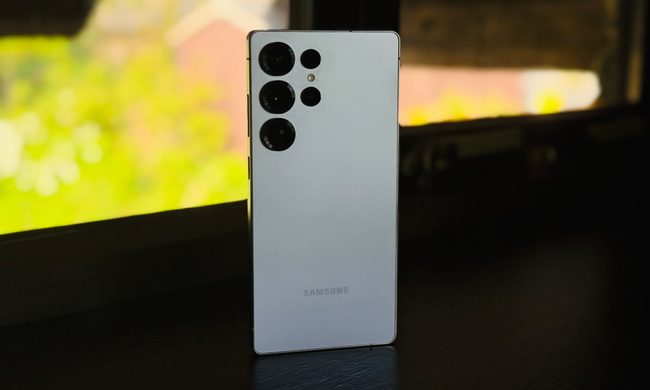
The back of the Samsung Galaxy S25 Ultra.

What's happened? This week, China's Quality Certification Center released information about a battery (EB-BS04898ABY) with a maximum capacity of 4,855mAh. That's the same capacity as was previously seen in the Samsung Galaxy S25 Ultra, and fans have taken this certification to mean the Galaxy S26 Ultra will not see a capacity increase after all.

The Samsung Galaxy Ultra models have had the same battery capacity for the last five years.

Read more
The Galaxy Tab S10 Lite is official, and it’ll be here sooner than you think
Galaxy Tab S10 Lite

What's happened? Samsung has officially announced the Galaxy Tab S10 Lite, a budget-friendly alternative to the Galaxy Tab S10. The device has been rumored for months, but this is the first time Samsung has officially acknowledged its existence.

The Galaxy Tab S10 Lite will have a 10.9-inch display and a peak brightness of 600 nits — a bit on the lower side, versus the iPad Pro's maximum brightness of 1,600 nits.

Read more