  1. Home
  2. Trash
  3. News

This AI algorithm could save lives in quake zones

Add as a preferred source on Google
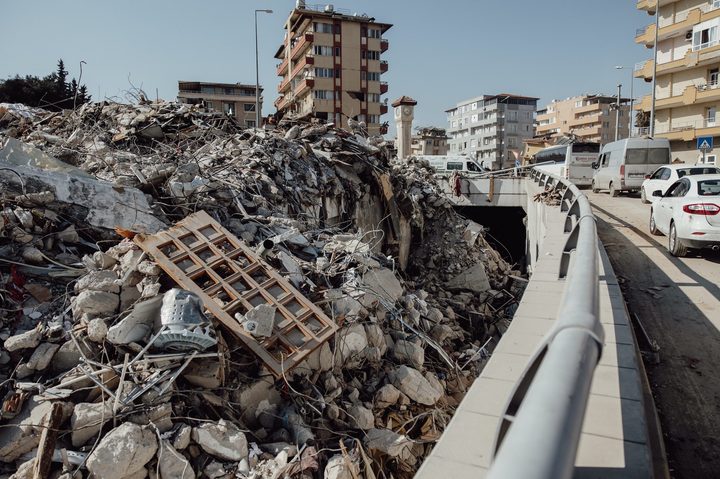
An urban area devastated by an earthquake.
Faruk Tokluoğlu/Pexels
Promotional image for Tech For Change. Person standing on solar panel looking at sunset.
This story is part of Tech for Change: an ongoing series in which we shine a spotlight on positive uses of technology, and showcase how they're helping to make the world a better place.

Powerful earthquakes in urban areas can cause a shocking amount of devastation, with lives lost and buildings destroyed. Indeed, more than 60,000 people have already died in such events this year alone.

Ever since scientists discovered what causes these awful catastrophes, they’ve also been trying to predict them in a bid to save lives and reduce damage. But the way in which tectonic plates behave as pressure builds up between them makes the task of forecasting earthquakes incredibly difficult.

However, researchers at the University of Texas (UT) recently reported an exciting breakthrough that utilizes an AI-generated algorithm to predict the timing, location, and intensity of an earthquake.

In trials that took place in China over a period of seven months, the algorithm accurately predicted 70% of earthquakes a whole week before they occurred.

It forecast 14 earthquakes within a 200-mile area of the estimated epicenter and also made a very accurate forecast regarding their intensity, a report on the university’s website said. It failed to warn of just one earthquake and gave eight false predictions.

The research team trained the AI to detect statistical bumps in real-time seismic data that the research team had paired with previous earthquakes, the report explained. Once trained, the AI monitored for signs of approaching earthquakes.

“Predicting earthquakes is the holy grail,” said Sergey Fomel, a professor at UT’s Bureau of Economic Geology and a member of the research team, adding: “What we achieved tells us that what we thought was an impossible problem is solvable in principle.”

The researchers said that by deploying the AI system in locations with effective seismic tracking networks such as California, Italy, Japan, Greece, Turkey, and Texas, it can be trained to increase its success rate and potentially improve its accuracy to within just tens of miles.

Alexandros Savvaidis, a senior research scientist who leads the bureau’s Texas Seismological Network Program, the state’s seismic network, said: “You don’t see earthquakes coming. It’s a matter of milliseconds, and the only thing you can control is how prepared you are. Even with 70%, that’s a huge result and could help minimize economic and human losses and has the potential to dramatically improve earthquake preparedness worldwide.”

Trevor Mogg
Contributing Editor
Not so many moons ago, Trevor moved from one tea-loving island nation that drives on the left (Britain) to another (Japan)…
The Digital Trends App Bundle is yours to try for a whole week, free
Digital Trends App Bundle

Recently, we've entered an exciting collaboration with Maple Media, creating a bundle of 17 apps worth having on your phone. From relaxed fun to serious productivity boosts, these apps cover all your bases and provide a fun boost to your phone. Normally, the bundle is $9.99 per month (far lower than the cost of using the apps individually), but for your first 7 days you can get access to the bundle for free. View the full Digital Trends App Bundle for a complete list of the apps, or read on for a summarized take.

Start your free trial

Read more
The Galaxy S26 Ultra might not see much of a battery upgrade after all
It looks like it will stay the same as the last five years.
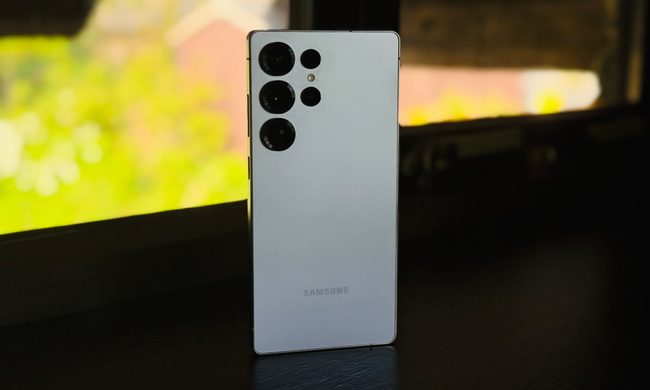
The back of the Samsung Galaxy S25 Ultra.

What's happened? This week, China's Quality Certification Center released information about a battery (EB-BS04898ABY) with a maximum capacity of 4,855mAh. That's the same capacity as was previously seen in the Samsung Galaxy S25 Ultra, and fans have taken this certification to mean the Galaxy S26 Ultra will not see a capacity increase after all.

The Samsung Galaxy Ultra models have had the same battery capacity for the last five years.

Read more
The Galaxy Tab S10 Lite is official, and it’ll be here sooner than you think
Galaxy Tab S10 Lite

What's happened? Samsung has officially announced the Galaxy Tab S10 Lite, a budget-friendly alternative to the Galaxy Tab S10. The device has been rumored for months, but this is the first time Samsung has officially acknowledged its existence.

The Galaxy Tab S10 Lite will have a 10.9-inch display and a peak brightness of 600 nits — a bit on the lower side, versus the iPad Pro's maximum brightness of 1,600 nits.

Read more