On February 24, most residents of Kharkiv awoke at 5 a.m. to the same sound: Explosions. Russia had begun its invasion of Ukraine by attacking military locations surrounding major cities including Kharkiv and Kyiv.
Following the initial wave of explosions, there was panic. Where were the blasts coming from? Were there more coming? Was the whole city being bombed? One thing was clear, however: A war had started.
As my neighbors in Oregon looked on with concern, I felt a special twinge of horror. In my role as the head of engineering here at Digital Trends Media Group, I remotely oversee a team of nine people based out of Kharkiv. I have been working with people from this city for over 13 years, and have developed close ties with many of them. They have welcomed me into their homes, I’ve met their families, and we’ve laughed together.
So as their worlds have turned upside down over the last week, I’ve watched and heard their stories firsthand, from afar. And I feel a special obligation to share them. While the lives of Ukrainian refugees are well-documented, the unique dilemma of Ukrainian tech workers is especially bizarre. Through a laptop screen, many find themselves working in an outside world that continues to spin, while their personal reality quite literally collapses around them.
My small team is the tip of the iceberg. An estimated 85,000 to 100,000 outsourced tech workers call Ukraine home, according to Gartner, and Kharkiv is a major hub for outsourced development companies like Ciklum, NIX Solutions, Sigma Software Group and Exadel. Whether you realize it or not, many of the devices and applications we use daily are developed by people in Ukraine.
Here are their stories.
Anna’s story
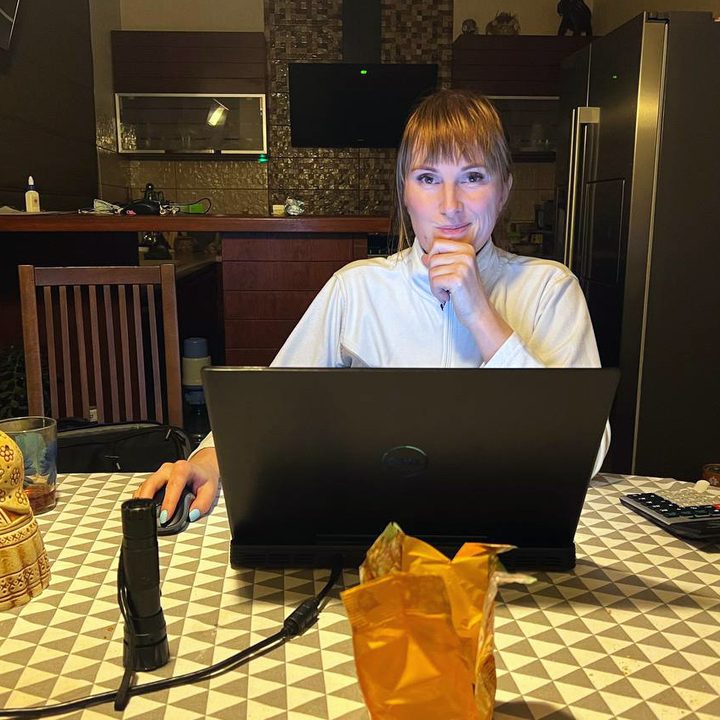
“They’re bombing us,” Anna said when she called a couple hours after the bombing began. “I don’t understand why, but they are bombing us.”
Following the initial wave of explosions, all nine of our engineers had a decision to make: Do I pack all my belongings and leave my home? Or do I stay here and potentially risk my life?
Anna decided to stay. She and her husband own a home in Kharkiv and raised their daughter there. If they left, then where would they go? She leads a team of 53 developers and quality assurance (QA) testers in Kharkiv, and is responsible for numerous software projects for her clients overseas. Staying will ensure that she can stay in contact with the team, have reliable internet, and hopefully continue to work and support her family.
Unfortunately, the next day an explosion took out the electricity to her house. She huddled with her family downstairs, mattresses on the floor, blinds drawn, and lights out. They heard explosions and artillery fire numerous times through the day and night. “We are OK, but I am afraid on this night,” Anna confided.
After two days without electricity, power came back on and allowed her and her husband to connect with overseas clients. Despite all the uncertainty surrounding her, she wanted to ensure that the projects she was responsible for could continue, providing jobs for everyone on her team.
But the longer they stayed in Kharkiv, the worse the situation seemed to get. “So many people killed. So many families destroyed,” Anna mourned on our company messaging system that we normally use to discuss new features and bugs. “Nobody will return our lives and our cities.”
Many of the team members continued working from their houses. When air raid sirens sounded, they would pack away their computers and head for shelter. The work provided a distraction and a way to pass time between news updates they received about the status of the invasion.
Six days after the initial explosions, Anna and the bulk of her team decided to leave their homes and flee west. “The situation is worse with every new day,” Anna updated us. Civilians had become targets of the aerial attacks and bombings.
But traveling on the roads had become complicated. Most bridges in the area had been destroyed by the Ukrainian forces to protect the city. Many roads were littered with shrapnel and other debris from the constant fighting in the preceding days. A flat tire during the drive could leave them stranded outside, in the middle of winter, during a war. The path away from the city involved skirting through fields on dirt roads, and then a full day of driving once they made it onto the asphalt.
Their destination was not a panacea. Western Ukraine had become mobbed with displaced citizens, all looking to get as far away from the front line as possible. “It’s hard to find a flat or hotel,” Anna said. “Everything is busy.”
The European Union is allowing Ukrainian citizens to enter the EU and stay for up to three years, but the Ukrainian government is not allowing any man between the ages of 18 and 60 to leave the country, or even board westbound trains from the city. Instead, they must stay and are heavily encouraged to enlist in the military and defend their country. Those left behind must decide between hunkering down in their homes, or risking their lives to fight for their country.
Anna remains on the run with her family and many of the members of her development team. She’s unsure of their final destination, or how long that location might be safe for. Trying to communicate with her clients and provide them with any sort of expectations is impossible. The projects that her team is supporting are on pause, and even if some of the team want to work, they don’t know how long they’ll be able. Two of her team have decided to join the military and fight for Ukraine.
Eugene’s story
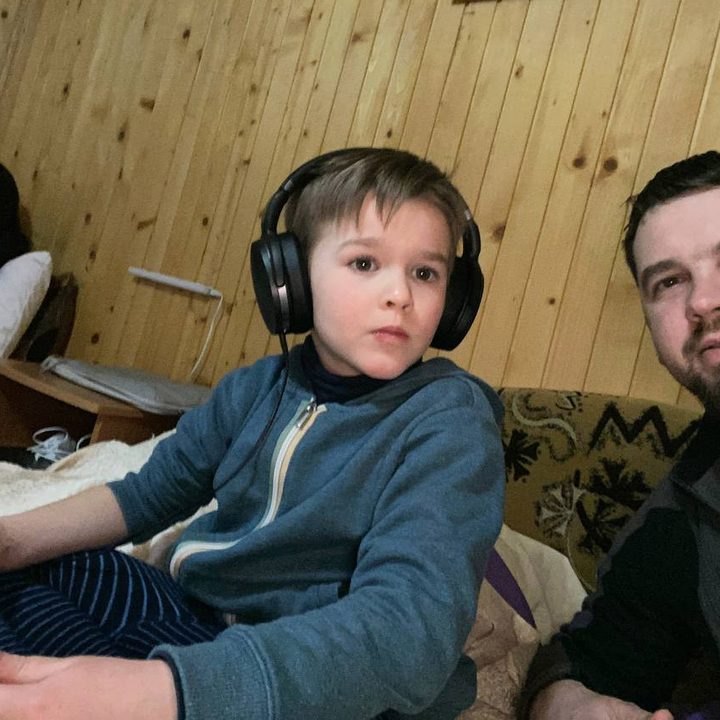
Eugene is a developer and senior team leader working for a small, outsourced development company called Techstack, also in Kharkiv. Even before the invasion, he had started to think about leaving Ukraine, but his deep roots made it a difficult decision. His wife has started a growing coffee shop chain within different malls in Kharkiv, and their 5-year-old son was about to start school. They each have parents living nearby. Leaving Ukraine would mean pressing reset on a life they had just begun building for themselves in Kharkiv.
When they awoke to the sounds of explosions on that fateful Thursday, the decision was made for them. They threw together as many things as they could into their car and headed west, without a clear idea of where they were heading.
Leaving the city was terribly slow. “I drove for 16 hours straight,” remembers Eugene. “Many people were doing the same thing, and checkpoints had been setup along the way where Ukrainian officials would stop every car to check the identification of people in each car.” This created hours long traffic jams in many places on the path west.
Eugene arrived in the city of Kropyvnytskyi, normally a mere six-hour drive, the next day. Despite their exhaustion, they couldn’t sit still for long: They had only made it a third of the way across the country. The family rested for a day before driving another whole day to get to Ternopil, about 370 miles away. The following day, they made it all the way to the Slovakian border to a small town in the mountains called Uzhhorod.
The journey was hard on Eugene’s young son. “Yaroslav looked green when we arrived because he was so tired,” Eugene recalls. Four days of driving had exhausted the entire family. Yaroslav is too young to understand what is happening, and why anyone would want to inflict this kind of pain and destruction on the people of Ukraine.
Eugene’s wife, Olena, left behind all her coffee shops, unsure if they will be looted, or if the buildings they are in would still be standing when they get back. If they get back. Their apartment is still full of many personal possessions that they did not have the time to pack.
All three of them are now sharing a house with other co-workers in Uzghorod. They can physically see the border, but cannot cross it without leaving Eugene behind.
As a leader in his company, Eugene is responsible for more than just his own family. To keep track of their employees’ safety, TechStack gave every leader 10 people to check in on. They formed group Telegram chats, and used them to track each other’s location and determine if they needed anything. About half the company fled the city, while the other half remained. Many of them spend their days and nights hunkering down in the basement of their apartment complex or in the subway stations throughout the city.
Eugene is now taking things day by day. He’s talented at writing code, not firing a gun. He is afraid to leave the house they are staying in because of the pressure to enlist he knows he will encounter. Only his wife leaves the house to get supplies. He continues working, but if the invasion gets closer or the country changes hands, he isn’t sure how long that will last.
An uncertain future
Anna and Eugene’s stories are not unique. The once-thriving outsourced development industry in Ukraine stands on the precipice of collapse. Individual developers and tech workers have gone from enjoying a super-hot job market with increasing salaries to being lucky to still have jobs.
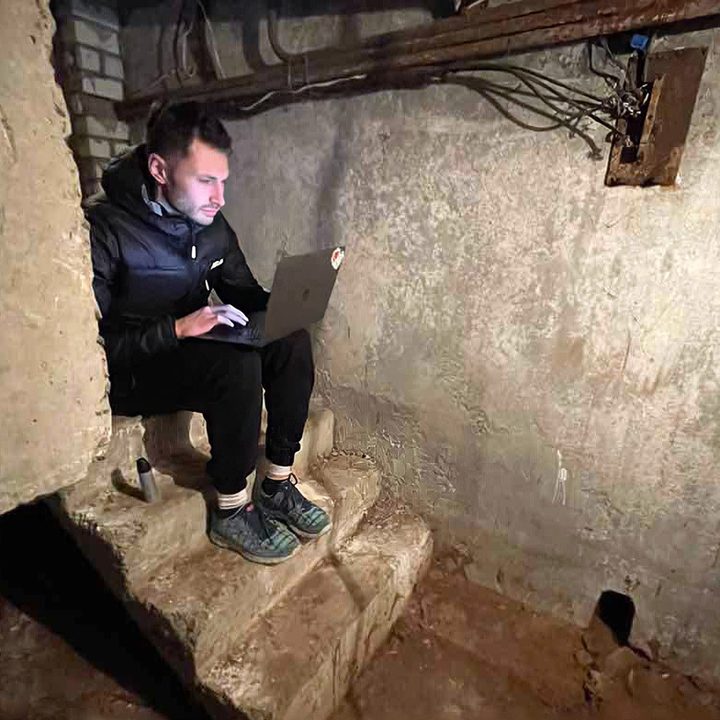
IT workers feel an internal pressure to work and keep their job security, but lack stable housing, electricity, or internet. For those who have stayed in the cities, even getting access to food and clean water has become difficult. Small houses, flats, and underground shelters have become impromptu offices.
Most markets are now only taking cash, and the lines can be over an hour. ATMs are also running out of money. Checking in with family and friends who are spread out across the country has become like a second job.
For the IT businesses that employ these workers, the once-metaphorical challenge of “keeping the lights on” has become all too literal. How can anything get done when you can’t even guarantee your workers have clean water, much less steady electricity and Wi-Fi? How do you even pay those workers when they’re scattered across the country? How can you win new business in a war zone?
The challenges spiral. But the businesses and workers alike struggle on. For them, work doesn’t just mean steady income, it means holding on to some shred of the normal lives they left behind.